
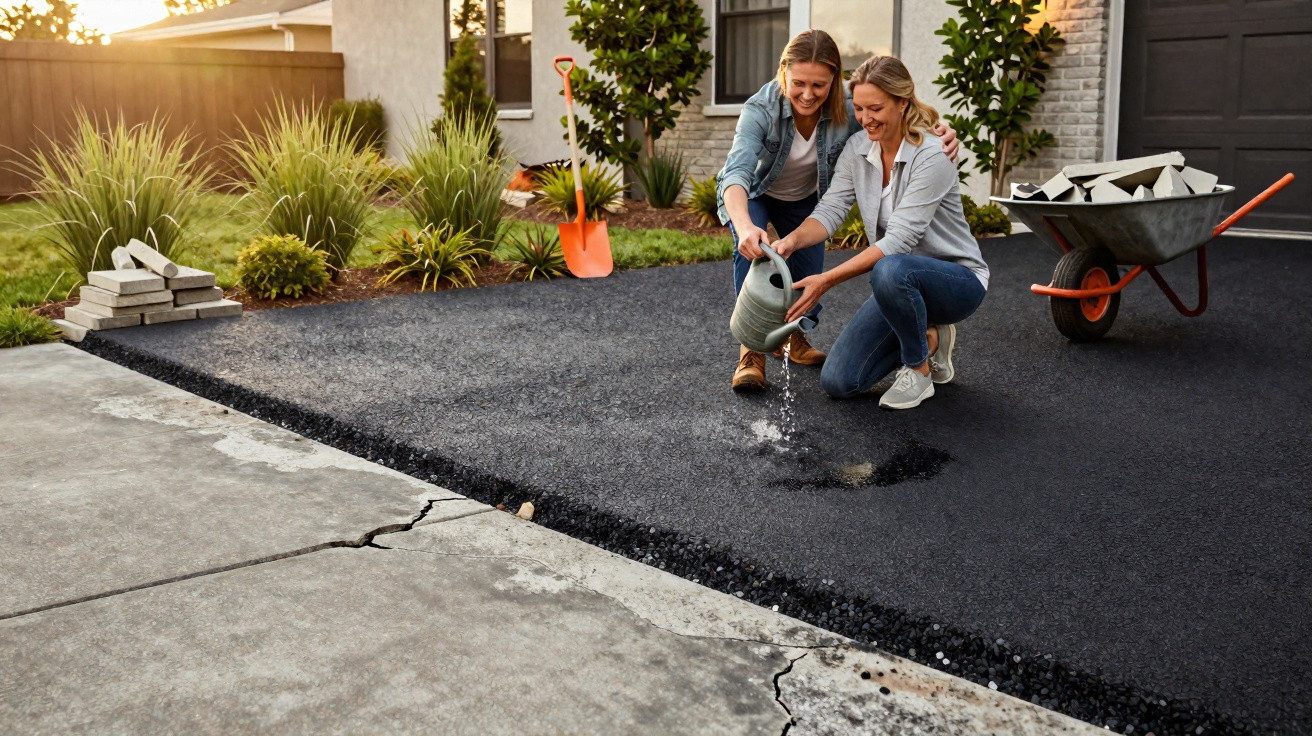
Homeowners across Europe and North America are increasingly turning away from the traditional concrete driveway, opting instead for recycled, water-friendly surfaces that look more modern and place a lighter burden on the climate.
Why concrete driveways are losing their shine
For years, concrete looked like the obvious choice: durable, widely used, and marketed as “fit-and-forget”. That reputation is now being questioned.
A major driver is the climate impact. The strength of concrete comes from cement, and cement is made in kilns that run at extremely high temperatures, typically powered by fossil fuels. Global research links cement manufacture on its own to close to 10% of worldwide greenhouse gas emissions. When a home is designed to be “low‑carbon”, a large sealed slab at the front can start to feel at odds with the overall aim.
Practical performance is another weak point. Because concrete is stiff, it can struggle where the ground shifts, where freeze–thaw cycles are common, or where the sub-base was not prepared properly. Small fractures can open up, water gets into the breaks, and frost can accelerate deterioration. Repairs are rarely subtle: patches tend to stand out and seldom match the surrounding surface.
Price can also be a shock. In Europe, decorative or coloured concrete that delivers a tidy finish is commonly €70–€120 per square metre installed, with broadly comparable figures in pounds in the UK. In North America, a premium concrete driveway can reach $20 per square foot.
Concrete driveways can last a long time, but they lock in emissions, trap heat, and are expensive to repair once things start to go wrong.
With that backdrop, many households are searching for a surface that can still carry the weight of a car, while allowing rain to soak away and relying on fewer virgin materials.
What recycled asphalt can offer that concrete cannot
One of the strongest alternatives is sourced from a place few people expect: worn-out roads.
From motorway to front drive
Driveways sold as “recycled asphalt” are typically built around what the trade calls RAP (Reclaimed Asphalt Pavement). The process is straightforward: contractors mill or plane off tired road surfaces, crush the material, and then rework it with fresh binder to form a new top layer.
Asphalt is made from aggregates (sand, gravel and crushed stone) bound with bitumen, a petroleum-derived binder. It is not the old coal-based tar, which is now avoided for health reasons. Using RAP means much of the stone is recovered, and some of the existing binder is retained too.
That closed-loop approach brings several benefits:
- Less material sent to landfill
- Reduced need for newly quarried aggregate
- Lower energy use and water use during production
- Fewer haulage miles when processing happens locally
Cost is often what grabs attention first. North American case studies commonly put a RAP driveway at about $7.50 per square foot, compared with up to $20 for concrete. Across Europe, installed recycled asphalt frequently lands in the €30 to €70 per square metre bracket, making it cheaper than many decorative concrete finishes.
Recycled asphalt driveways tend to cost a fraction of high-end concrete, while still enduring 15 to 30 years with sensible maintenance.
It is true that concrete can sometimes run to 30 to 40 years when laid perfectly and cared for well, which may mean it outlasts a recycled asphalt surface by around a decade. However, when recycled asphalt starts to wear, it is usually more forgiving: localised patches or a new overlay are comparatively simple. With concrete that has cracked, the options often involve cutting, conspicuous repairs, or removing the slab altogether.
Drainage: letting rain go where it should
Standard concrete acts much like a roof laid flat: rainfall sheds quickly, heading for gullies or washing onto neighbouring ground. In places where drainage networks are already overloaded, that fast runoff can add to local flood risk.
Policy in many areas is now steering development away from sealed surfaces. In France, “Zéro Artificialisation Nette” measures are intended to curb the continued sealing of land. In England, planning guidance increasingly supports permeable choices for front gardens and driveways.
This is where permeable, or “draining”, asphalts come in. They are designed with a carefully graded aggregate mix that leaves more voids between stones, allowing water to pass through the surface and percolate into the sub-base.
These porous mixes are more expensive to manufacture-often 15% to 25% above standard asphalt-but they can reduce puddling, ease pressure on sewers, and help maintain healthier soil activity beneath the driveway.
Draining asphalt turns the driveway into a sponge rather than a slide, cutting standing water and easing local flood pressure.
Greener binders: from petroleum to plants
Even with recycling, bitumen remains fossil-based. To reduce reliance on petroleum, some producers now substitute a portion of the binder with plant-based resins or bio-sourced oils. These so-called “vegetable binders” do not make asphalt impact-free, but they do cut direct dependence on oil.
At the same time, mixes increasingly incorporate 30% to 35% recycled aggregates. When that is paired with low-temperature production methods, overall emissions can drop substantially versus conventional asphalt and concrete-particularly once transport distance is included.
Planning a recycled driveway: questions to ask
Moving from concrete to recycled asphalt is not as simple as choosing a different material on the day. The sub-base specification and the competence of the installation team are decisive.
Choosing the right contractor
It is usually safest to hire a specialist who regularly works with RAP and permeable surfaces. Many homeowners find that, once they start comparing quotes, only some contractors can point to genuine hands-on experience with these newer mixes.
Before committing, it helps to get unambiguous answers on three areas:
| Key point | What to ask |
|---|---|
| Recycled content | What percentage of the mix comes from reclaimed asphalt or recycled aggregates? |
| Thickness | How many centimetres of base and surface layers will be laid for a car-rated driveway? |
| Drainage | Is the surface permeable, and where does infiltrated water go? |
Climate should also shape the conversation. Where winters are severe, ask how the system handles frost, and what upkeep is recommended to stop water freezing within the structure.
Everyday use and maintenance
A recycled asphalt drive will not feel identical to concrete. It is typically darker in colour, has a little more flex, and can feel slightly softer during hot spells-particularly in the first few months after it is laid.
Straightforward upkeep usually means:
- Avoiding tight, on-the-spot turning by heavy vehicles immediately after installation
- Keeping oil spills and solvents away from the surface as much as possible
- Inspecting edges and borders from time to time, especially where the drive meets lawn or flowerbeds
Unlike concrete, small surface issues can often be dealt with using light patching or a thin overlay, rather than breaking out and rebuilding the entire area.
How eco is “eco-friendly” really?
No driveway choice is without impact. Recycled asphalt still contains bitumen, needs industrial processing, and is delivered by heavy lorries. Concrete, meanwhile, carries a high production footprint, even though it can remain serviceable for a long time.
For people trying to reduce overall impact, the comparison often comes down to three practical questions: How much virgin material is required? How much water can the surface absorb? And how easy is it to repair rather than replace?
A well-designed recycled, permeable drive that lasts 20 years and can be refreshed in stages may cause less lifetime impact than a longer-lived but fully sealed concrete slab that ends up in a skip.
Regulatory pressure is also moving the market. Across many European towns, permission for new driveways is increasingly tied to demonstrating that rainfall will not simply be diverted into drains. Some insurers are already more positive about homes that can manage surface water on-site.
Practical scenarios and tips for homeowners
Take a typical suburban home with space for two cars, where the existing driveway is ageing and cracked concrete. One option is to break it out and pour a new slab. Another is to lift the old surface, lay a compacted draining sub-base, and finish with recycled asphalt designed to let water infiltrate.
Even at the quotation stage, the permeable recycled approach can come in below high-spec decorative concrete. Over 20 years, the ability to resurface parts of the drive, combined with reduced standing water near the house and lower flood risk, often strengthens the case.
In tighter urban settings, a mixed design is also becoming common. Some households retain narrow concrete strips under the wheel tracks for extra stiffness, while filling the middle section with permeable recycled material or gravel held in honeycomb stabilisation grids. The result is lower overall embodied carbon and improved drainage, without fully giving up the familiarity of concrete.
Appearance still plays a role, especially when resale is in mind. Recycled asphalt is no longer confined to the rough black finish associated with old car parks. With coloured aggregates, crisp edging stones and careful compaction, it can deliver a clean contemporary look-making older slabs seem dated rather than “solid”.
For anyone renovating, one final question can pay dividends: ask whether the milled waste from your existing driveway can be reused in the new mix, either on site or at a nearby plant. Keeping the material in circulation reduces lorry trips, cuts disposal charges, and turns yesterday’s cracked surface into a key component of a quieter, cooler and more climate-conscious driveway.




Comments
No comments yet. Be the first to comment!
Leave a Comment