
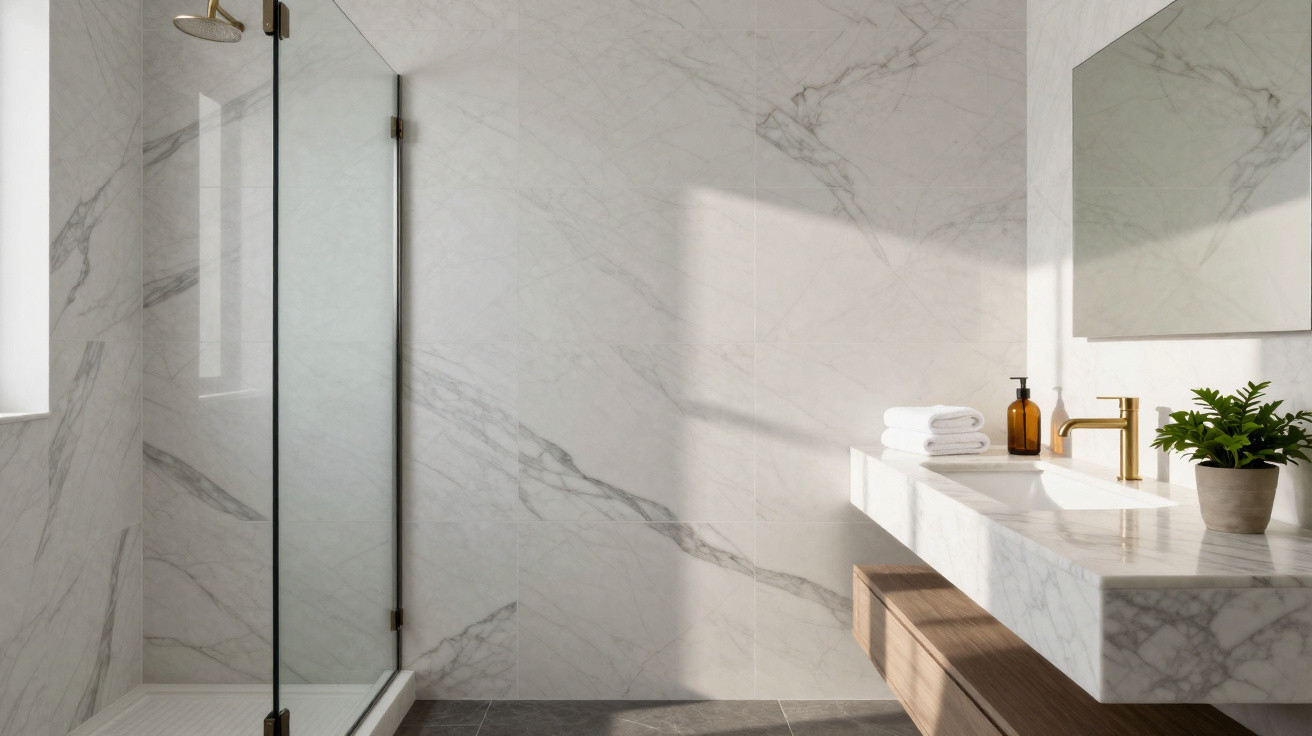
Anyone planning a new bathroom or weighing up a refurbishment quickly runs into a clear shift in taste: away from the standard grey tile and towards large, refined surfaces. Right at the top is a material that once belonged mainly in palaces and luxury hotels - and is now turning up as a perfectly normal choice in a family home: marble.
Why classic tiles are losing their shine
For years, tiles felt non-negotiable in bathrooms: easy to look after, affordable, and available in endless styles. But those very strengths have started to backfire. So many bathrooms now look almost identical, and the familiar 30 × 60 cm tile format is increasingly seen as generic.
At the same time, expectations of what a bathroom should be have changed dramatically. It’s no longer meant to be purely practical; it’s expected to feel like a mini spa - a retreat that gives a hint of hotel living every day. A standard tiled finish and a wellness lounge don’t naturally sit together.
"People building today no longer plan the bathroom as a ‘wet room’, but as a lifestyle space - and they’re looking for materials with character."
That’s where marble comes into its own: no two slabs are alike, and the veining reads like natural watercolours across stone. This one-of-a-kind look is steadily pushing the sterile, repetitive appearance of typical tiling into the background.
Marble in the bathroom: timeless, luxurious, and suddenly practical
Marble isn’t a new fashion - for centuries it has stood for elegance: in historic villas, sculpture, and grand entrance halls. What’s changed is that the stone has now arrived in everyday bathrooms, even appearing in smaller spaces such as a guest WC.
One reason is how well marble fits today’s interior trends. Many schemes blend 1950s-inspired retro notes with clean, modern minimalism. In that mix, marble acts as the connector between nostalgia and clarity. It can feel classic and contemporary at the same time.
There’s also the tactile experience. The surface is cool and smooth, it feels premium under the hand, light reflects softly off it, and colours shift subtly depending on the time of day. The room gains depth and movement - without becoming visually noisy.
More than looks: the hard facts about marble
When people think of marble, they often think first of high-end prices. Yet the material comes with practical advantages that matter when you run the numbers.
- Durability: When treated correctly, marble can last for decades. It ages gracefully and can be refurbished.
- Added value: A well-finished, high-quality bathroom can lift a property’s value, and marble is often a persuasive selling point in the listing.
- Versatility: From floors and walls to a vanity top, marble can be integrated in almost any part of the room.
That higher upfront cost can therefore pay off over time - especially compared with budget tiles that can look tired after ten years and are often replaced.
How marble is edging tiles out in the bathroom
Marble’s rise in bathrooms isn’t subtle - it’s clearly visible. Interior professionals use it deliberately to break up the familiar “all-tile” feel.
Large-format surfaces instead of a sea of grout lines
A major advantage is that marble is typically installed in larger slabs on walls and floors. That dramatically reduces grout lines, which can make many bathrooms feel rigid and busy. With fewer breaks, the space reads calmer, more open, and more modern.
Targeted features rather than full cladding
No one has to wrap an entire bathroom in marble. Often, a few well-placed details are enough to outshine the tiles visually:
- a continuous marble feature wall behind the shower or bath
- a solid stone vanity top instead of standard ceramic
- a niche shelf or ledge that acts as a strong focal point
The rest can remain tiled - but in combination, it looks noticeably more premium.
Current design trends with marble in the bathroom
It gets particularly interesting when marble isn’t used on its own but paired with other finishes. Designers intentionally lean into contrast here.
Bold contrast with dark tones
Highly sought-after are combinations of light marble with dark accents. Black taps, anthracite cabinetry, or deep, dark marble varieties create a graphic, almost opulent effect. The result feels like a boutique hotel rather than a standard new-build bathroom.
Metal and marble: warmth with elegance
If you prefer a softer look, fixtures and lighting in brass or copper are popular choices. These warmer metals take the edge off marble’s coolness and create a more homely, almost living-room-like atmosphere.
Soft colours for a spa feel
Pastel shades around the stone quieten the room and make it more relaxing. Popular options include:
| Shade | Effect in the bathroom |
|---|---|
| Rose | romantic, soft, subtly glamorous |
| Sage green | natural, calming, feels fresh |
| Light blue | crisp, clean, slightly coastal |
Paired with marble, the bathroom can quickly become an understated wellness zone without looking overdone.
How to care for marble properly
For all its appeal, marble contains limestone and is therefore more sensitive than many porcelain tiles. If you bring it into the bathroom, it’s worth knowing a few basics.
Protection from day one
Right after installation, the surface should be treated with a quality impregnating sealer or hydrophobic protection. This invisible layer helps stop water, shampoo, or soap from soaking too deeply into the stone.
Rule number two: avoid harsh cleaners. Acid-based bathroom products, vinegar, or abrasive cream cleaners can attack the surface and leave it dull. Better choices include:
- pH-neutral stone cleaners
- mild soapy solutions
- soft cloths instead of abrasive scouring pads
Dealing with everyday damage
If a heavy object hits a sharp edge, marble can chip or crack. In most cases, a specialist can help by grinding and repairing the area. Small stains or dull patches can often be improved with repolishing.
"Marble needs a little more attention than a run-of-the-mill tile - but it rewards you with a look you never really tire of."
Who should consider switching to marble?
Marble in the bathroom won’t suit every project. A few questions make the decision clearer:
- Will the bathroom be used long term, or is the property likely to be sold within a few years?
- How important are minimal maintenance and maximum resistance?
- Does distinctive design matter for resale value?
If you’re building for quality, longevity, and value uplift, marble is a strong alternative to the standard tile. For busy family bathrooms with lots of small children, hard-wearing porcelain may be more practical - or a smart combination of both materials.
Alternatives and additions: when the budget is tight
Not every budget stretches to real stone. Over recent years, ceramic and porcelain tiles with a marble effect have become well established. They replicate veining convincingly, are easier to care for, and cost far less.
A particularly effective approach is a “materials mix”:
- real marble in a prominent spot, such as behind the bath
- more affordable marble-effect tiles in peripheral areas
- simple, plain tiles in zones that aren’t a visual focus
This way you can achieve the look of a luxurious stone bathroom without the budget spiralling.
What else you should know about marble in the bathroom
From a sustainability perspective, natural stone can look questionable at first glance because it must be quarried and transported. At the same time, it scores highly for an exceptionally long service life and the option to regrind and reuse surfaces rather than ripping them out and discarding them. If short transport distances matter to you, it’s worth asking for regional stone or, at least, a European source.
Heated floors beneath marble are also worth considering. The contrast between the stone’s cool visual character and a pleasantly warmed surface creates a very comfortable feel - even barefoot in winter. It also underlines why so many homeowners are leaving their old tiles behind and choosing a material that can turn a purely functional bathroom into a genuine favourite room.
Comments
No comments yet. Be the first to comment!
Leave a Comment