
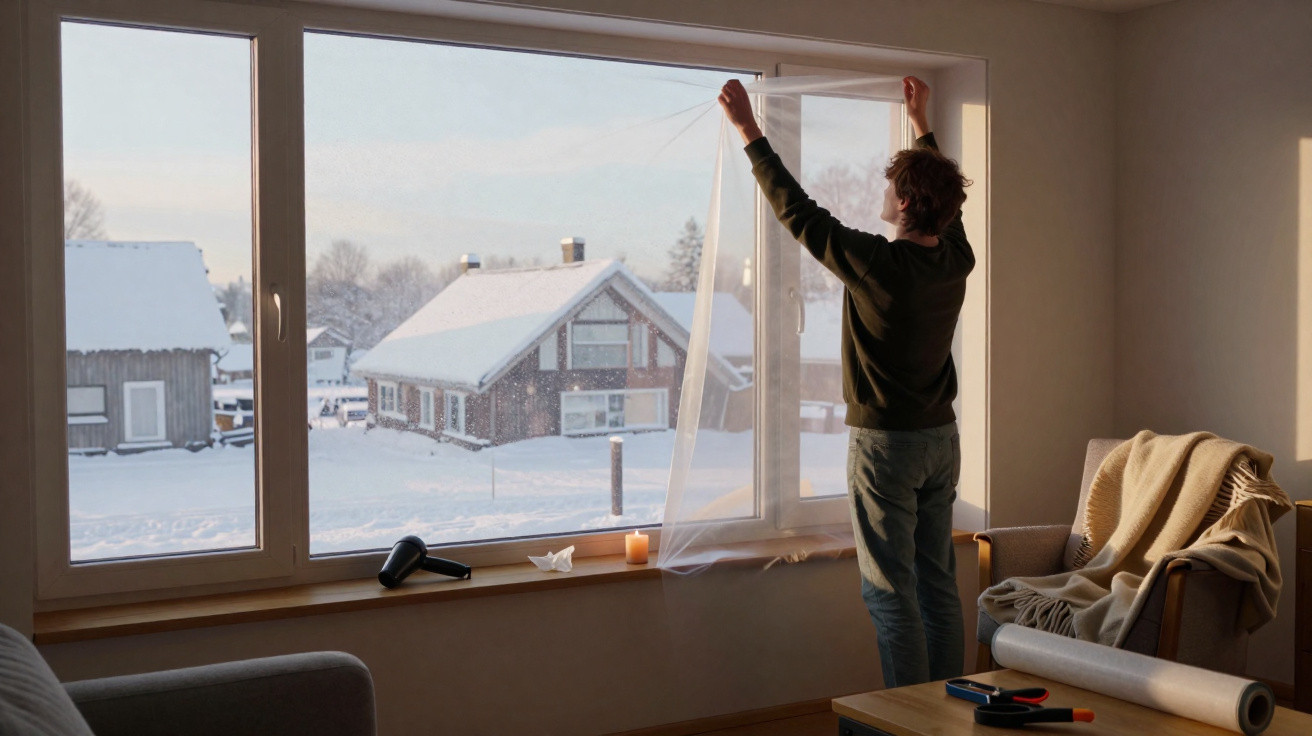
In Northern Europe, where winters can be unforgiving, many households treat windows as a first line of defence against the cold. A humble item from the kitchen drawer, used in a particular way, is a common Scandinavian tactic for keeping hard-won heat inside.
Why your windows are quietly costing you money
Energy assessments frequently flag windows as a major source of heat leakage. Glass is not a strong insulator, and frames can effectively become miniature wind tunnels when they are not properly sealed.
With age, rubber gaskets can stiffen, split, or contract. Putty around timber frames can dry and crumble. Even relatively modern units may shift slightly after years of opening and closing, leaving the frame subtly out of true. Each of these small issues can allow cold air in while letting paid-for warmth escape.
Up to a quarter of a home’s heating loss can come from poorly sealed windows and doors, especially in older buildings.
The impact is not limited to comfort. It translates straight into higher running costs, because even a couple of seemingly insignificant gaps can force a boiler or heat pump to run longer and harder.
How to spot hidden draughts in minutes
Before you try any Scandinavian-style fix, it helps to pinpoint exactly where the cold air is entering. Professionals may use specialist equipment, but several quick checks work well at home.
The hand, feather and candle tests
- The hand test: On a cold or blustery day, slowly trace your hand around the window edges and where the sashes meet. A cold spot or a faint “jet” of air is usually a sign of leakage.
- The feather or tissue test: Hold a feather or a thin strip of tissue close to the frame. If it flickers or lifts, air is passing through.
- The candle test: Safely place a lit candle or tealight on the sill and move it along the line of the frame. If the flame wavers, that often indicates a draught.
Check the entire perimeter of every window, including the lower edge and the meeting rail where two panes slide or close together. It is common to discover multiple leak points on a single frame.
The Scandinavian plastic-film trick
Across the Nordic countries, where long winters are normal, people tend to be uncompromising about stopping draughts. One popular, inexpensive approach uses thin plastic film and a few minutes of careful fitting.
The method involves placing a tight layer of plastic film over the window rails or sash, creating a discreet air barrier that stops cold air sneaking through gaps.
This is not a new idea, but in Scandinavia it is often treated less like a “DIY hack” and more like a seasonal habit-similar to changing a car’s tyres. Used as a temporary extra seal, it can be particularly useful on sliding windows or older timber frames that have warped slightly.
How it works in practice
Plastic film helps by blocking narrow draught routes and holding a still layer of air. It is not a substitute for proper double glazing, but it can make a room feel noticeably less cold.
This is the usual process:
- Clean the surface: Dry-wipe the rails and the adjacent frame so the film can grip or sit neatly.
- Cut the film: Take kitchen cling film or dedicated window insulation film and cut it a little wider than the section you want to cover.
- Position the film: Apply or lay the film along the rails and the areas where the moving sash typically allows air to pass. With some window types, people stretch it across the whole frame to form a “second skin”.
- Seal the edges: Firmly press the film onto the frame. Many insulation packs use double-sided tape; with standard cling film, overlap and tension can provide a reasonably close seal.
When fitted, the film forms a low-profile barrier that breaks up the fine air channels you identified with the tissue or candle. On very cold days, the improvement in comfort near the window can be substantial-especially if a desk or sofa sits right next to it.
Why Scandinavians pair film with regular maintenance
In northern climates, homeowners rarely depend on a single measure. The film approach is commonly used alongside ongoing checks of seals, caulking, and overall window condition.
Regularly renewing flexible sealant around the frame edges often delivers faster comfort gains than upgrading the entire window.
Once draught locations are identified, many people apply or replace flexible mastic or silicone at the joints around the frame. This addresses underlying gaps that plastic film alone cannot fully resolve.
In day-to-day use, the film is a quick seasonal add-on-helpful when temperatures drop suddenly or when replacing windows is not yet affordable. Because it can be removed, it is also a practical option for renters who want to avoid jeopardising a deposit.
Longer-term fixes for a warmer, quieter home
Going beyond the temporary film
If you expect to stay in your home for years, longer-lasting improvements may be worthwhile. They cost more upfront, but the comfort benefits extend well beyond a single winter.
| Solution | What it does | Best for |
|---|---|---|
| Double or triple glazing | Adds one or two extra panes with air or gas between them to cut heat loss and noise | Homes on busy roads or in very cold regions |
| Brush-style seals | Flexible “bristles” fill gaps in sliding or older windows | Sliding sashes and patio doors |
| Draught excluders | Fabric or foam rolls blocking gaps at the bottom of frames | Wide gaps and rental properties |
Modern double glazing, often filled with argon or another inert gas, can drastically reduce heat loss through the glass and noticeably cut outside noise. Many Scandinavian homes have had this type of glazing for decades, which helps explain why indoor temperatures can remain steady even when conditions outdoors are harsh.
Simple add-ons that still help
Alongside glazing and sealing, a few low-cost extras can reinforce the Scandinavian mindset:
- Heavy curtains or thermal blinds to form a thick fabric barrier at night.
- Window cushions or “sausage” draught stoppers placed along sills to reduce cold air pooling near floor level.
- Reflective panels behind radiators on external walls to direct warmth back into the room instead of letting it soak into the brickwork.
Health, moisture and safety: what to keep in mind
Draught-proofing can make a home far more comfortable, but it is important to stay alert to a few practical risks. If a property becomes very airtight without adequate ventilation, moisture from cooking, showers, and breathing can build up.
Good draught-proofing should work hand in hand with controlled ventilation, not against it.
In practical terms, keep trickle vents or purpose-made air inlets open while sealing unintended gaps. Otherwise, condensation may form on the glass, increasing the likelihood of mould and causing damage to timber frames or plaster.
Safety also matters. In some properties, small gaps around windows or trickle vents contribute to safe operation of gas appliances by allowing fresh air in. If you have an older boiler, gas fire, or stove, do not block every airflow route without checking the manufacturer’s instructions or taking professional advice.
What a “Scandinavian-style” winter might look like in your home
Picture a typical UK (or US) semi-detached house on a windy January evening. The thermostat is set to 20°C, yet the sofa near the bay window still feels cold. After using a tissue to find draughts and sealing the worst joints with flexible mastic, you apply plastic film over the sliding rails, then add a heavy curtain and a draught excluder along the bottom.
A week on, you realise you are no longer constantly turning the thermostat up. The room temperature feels more consistent, with fewer chilly patches. Your heating cycles shorten. Over the course of a winter, that modest change can take a meaningful bite out of energy costs-particularly while gas and electricity prices remain volatile.
This reflects how many Scandinavian households approach winter: not as a search for one magic product, but as a set of routines. Plastic film in autumn. A seal check every few years. Curtains adjusted with the seasons. Together, these small actions change how well a home retains heat.
Key terms and combinations that make a difference
Two phrases show up repeatedly in discussions about window performance: “thermal comfort” and “airtightness”. Thermal comfort is essentially how you feel in a room, factoring in temperature, draughts, and radiant chill from surfaces such as glass. Airtightness describes the amount of uncontrolled airflow slipping through cracks and gaps.
The Scandinavian plastic-film trick improves both. It reduces unwanted air movement around the window and slightly increases the surface temperature of the glass and frame. Combine that with decent glazing, heavy curtains at night, and sensible ventilation, and the home can feel much warmer without changing the thermostat setting.






Comments
No comments yet. Be the first to comment!
Leave a Comment