
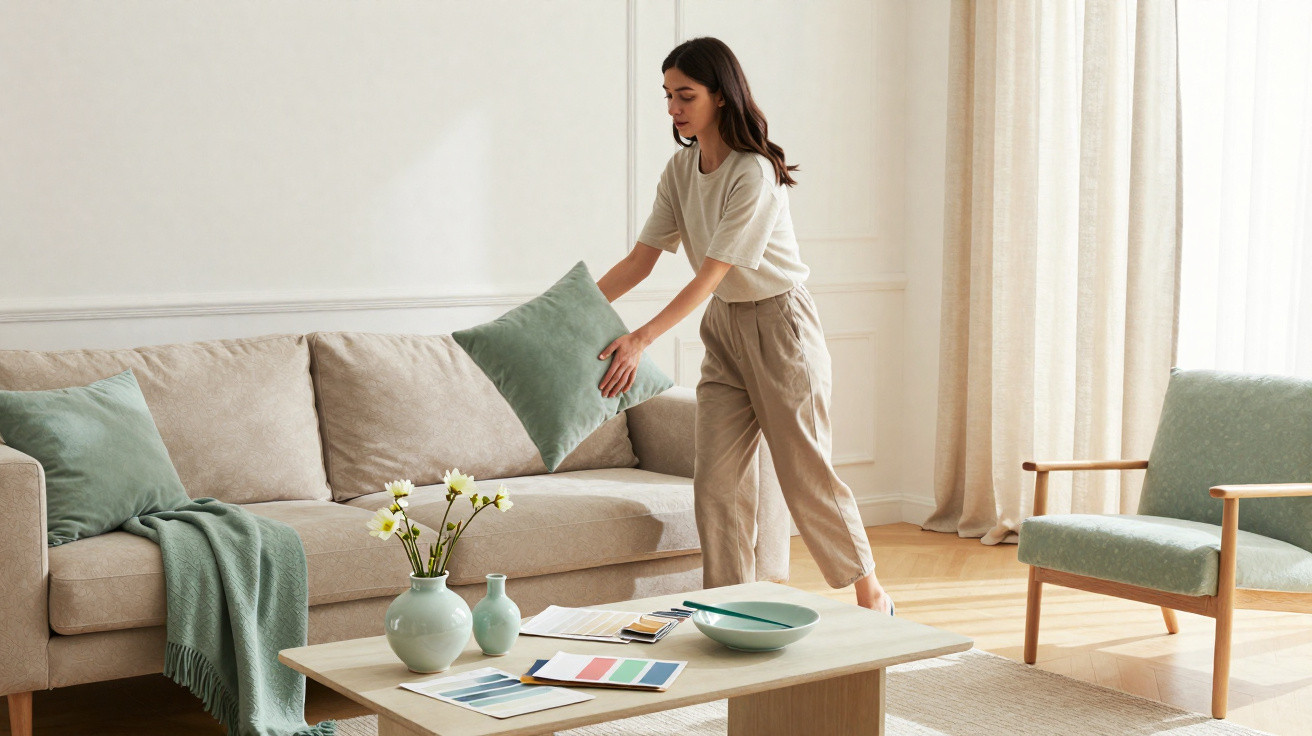
If you’ve repainted your home in the last few years, you’ll recognise the pattern: soft off-whites everywhere, plenty of grey, and the ever-present sage green. For 2026, a shift is emerging-quietly but unmistakably-towards a greener shade that feels fresher and brighter. It makes rooms look more modern and clean-lined, without losing that calm, lived-in comfort.
Why Sage Green Is Starting to Feel Tired
Between 2020 and 2025, sage green was the reliable choice in interior design. Kitchen cabinets, sofas, wall paint, bedding-almost everything picked up that muted green with a greyish cast. Platforms such as Pinterest reported huge jumps in searches for sage-green décor pieces and textures, and even nail art latched onto the look.
That popularity is now part of the issue. What once felt new and distinctive has become so widespread that many people experience it as interchangeable. Interior designers say clients still ask for a peaceful, natural atmosphere, but they’re looking for a shade that reads more contemporary and brings a lighter feel into the room.
At the same time, interior magazines are signalling a 2026 move towards richer tones: warm browns, deeper blues, and layered greens used together. The key remains balance-bolder colours need soft counterparts so rooms feel lively rather than overwhelming.
"Many people still want calm and nature at home – but without feeling like they’re living in a cookie-cutter look."
What Makes Celadon Green So Special
Celadon green fits this direction perfectly. The colour originally comes from ceramics: traditional Asian vessels with a delicate, milky green glaze-somewhere between jade and a very restrained mint. Applied to walls, textiles and furniture, it becomes a soft, light-reflecting green that visually opens up a space.
Compared with sage green, celadon green contains less grey, so it looks cleaner and more refreshing. It bounces light around more effectively, makes darker corners feel friendlier, and still carries a soothing undertone. Many designers use it as a gentle backdrop, allowing wooden furniture, artwork or architectural features to stand out more clearly.
What’s especially interesting is how changeable the shade is: depending on its surroundings, it can appear cool with a hint of blue, or warmer and creamier. In rooms with plenty of daylight it can read slightly minty; in north-facing spaces it tends to develop a softer, jade-like depth.
Which Rooms Celadon Green Works Best In
- Living room: adds freshness without undermining a cosy feel
- Bedroom: calming and crisp, ideal for fans of minimalism
- Kitchen: makes cabinet fronts look more contemporary, especially alongside wood
- Hallway: noticeably brightens narrow or dim areas
- Home office: gives a sense of calm without being sleep-inducing
How to Bring the Trend Colour Home – Without Repainting Everything
Most people don’t have the time or the desire to repaint every wall. The good news is that celadon green doesn’t need to dominate to make an impact. Used strategically as an accent, small but smart tweaks can make a room feel far more current-even if 90% of what you own stays exactly where it is.
Small Areas of Colour That Make a Big Difference
If you do want to get the paintbrush out, you don’t have to tackle the whole room. A few carefully chosen surfaces can be enough:
- one feature wall in the living room, for example behind the sofa
- the fronts of upper kitchen cabinets
- panelling in the hallway or dining area
- the inside of a door, or a narrow strip of wall beside a window
Celadon green looks especially cohesive on a warm base. Shades such as beige, greige, sand, caramel or gentle browns make it feel refined. Pair it with natural materials-wood, rattan, linen, stone-and you get a quiet, timeless foundation.
"Often a narrow band of colour or a single celadon-green cabinet front is enough to make an entire room suddenly look up to date."
Textiles and Accessories: A Quick Trial Run
If you’re unsure, it’s easier to start with items you can swap out without hassle-and without spending a fortune. Celadon green is ideal for this, because it isn’t harsh and it slips into existing palettes with very little effort.
Good entry points include:
- cushion covers or throws on the sofa
- a small rug under the coffee table
- lampshades in the living room or bedroom
- decorative bowls, vases or plant pots
- towels, a soap dispenser or a shower curtain in the bathroom
Many stylists suggest buying a few budget-friendly pieces first and living with the colour for a few days. If it feels right, you can gradually add larger items-such as an armchair or a low sideboard-in celadon green.
Which Colours Pair Well With Celadon Green
Celadon green depends heavily on its partner colours. Some combinations feel particularly harmonious:
| Combination | Effect in the room |
|---|---|
| Celadon green + ivory white | very calm, bright and airy, ideal for the bedroom |
| Celadon green + warm wood tones | natural and homely, suits Scandinavian-style interiors |
| Celadon green + navy blue | elegant with a subtle coastal note, great for the living room or study |
| Celadon green + plum purple | modern with a lightly luxurious edge, best used in small doses |
| Celadon green + rust orange | warm and full of character, perfect for bold accents |
If you prefer an overall quiet look, stick with ivory, creamy white, sand and wood. If you want more personality, add small hits of cooler blues or warmer reds-perhaps a dark blue cushion, an art print, or a single chair in a stronger shade.
Accents Instead of a Full Refurb: How to Switch in Stages
In homes that already lean heavily on sage green, the changeover can happen gradually. One practical approach is:
- Take stock: Where does sage green appear-wall colour, textiles, décor, furniture?
- Swap the small items: Replace cushions, throws, vases and picture frames-out with sage, in with celadon green.
- Check your neutral base: Do your wall and floor tones still work? If needed, repaint selected areas in warmer neutrals.
- Make one statement: Create a celadon-green feature surface or choose one standout piece of furniture in the shade.
- Refine the details: Build depth with metal accents (brass, black steel) and textures (bouclé, linen, wool).
This way, most of your existing pieces can remain. Your home feels noticeably refreshed, without pouring lots of money or time into a complete redesign.
Why This Trend Is Likely to Last Longer Than Many Before It
Celadon green has something that many short-lived trend colours don’t: it’s subtle enough not to irritate over time, yet distinctive enough to feel like a genuine change. It clearly sits within a nature-led palette, but looks less “Instagram-filter” than the familiar sage green.
At a time when more people are working from home, the demand is rising for rooms that feel low-stress without becoming clinical. Celadon green meets that need: it’s calming, it feels fresh, and it’s easy to combine with what you already own-whether your style is country, Scandi, minimalist or mid-century.
So if your current look no longer feels right, you don’t have to reach for the roller across every room. A handful of well-placed celadon-green accents, paired thoughtfully with warm neutrals and natural materials, is often enough for your home to feel like a newer, more modern version of itself.

Comments
No comments yet. Be the first to comment!
Leave a Comment