
If you’ve opened a heating bill over the last few winters, you’ll know the frustration: you’ve spent a fortune on heating, yet you’re still shivering on the sofa. And the next winter in 2025 is already around the corner. Rather than endlessly nudging the thermostat up, it’s worth using three simple, surprisingly effective tricks that researchers have recommended for years - including a cleverly placed sheet of aluminium foil and an unassuming kitchen helper: the electric kettle.
Keeping heat indoors: small gaps, big impact
The first step sounds almost too obvious, yet it often delivers the biggest change: stop draughts. Energy bodies estimate that up to a third of heat can disappear through gaps around windows, doors and poorly sealed joints. It’s money - quite literally - going straight out of the window.
In physical terms, it’s driven by heat transfer: cold outside air creeps in while warm indoor air escapes. The result is your heating system constantly fighting a steady stream of cold. Sealing those tiny leaks can noticeably ease the load on the system.
Even a few metres of sealing tape and a thick curtain can raise the perceived room temperature significantly - without turning the thermostat up by a single degree.
Practical steps to tackle draughts
- Add or replace seals: Self-adhesive rubber or foam seals around windows and doors reduce air gaps. They’re inexpensive, but they can make a room feel far less chilly.
- Block the gap under doors: Door-bottom seals or simple draught excluders (“door sausages”) stop cold air sweeping through beneath the door.
- Use heavy curtains: Dense fabrics across windows create an extra layer of still air that works like a thermal buffer - especially in the evening.
- Deal with cold floors: Rugs on cold surfaces can lift the perceived temperature near the floor by up to two degrees. In older properties with tile or laminate, the difference is very noticeable.
If you spend an hour fitting seals and laying rugs, you’ll often feel the benefit on the very next cold night. In many cases, a lower heating setting is then enough to stay comfortable.
Aluminium foil behind the radiator: a low-cost heat reflector
The second trick relies on radiant heat. A radiator sends energy in every direction - including backwards into the wall. When that wall is external, a meaningful share of the heat can be lost outward with little benefit to the room.
Aluminium reflects this radiation extremely well. Put a reflective surface behind the radiator and a large portion of that heat is redirected back into the room. Energy agencies cite potential savings of between 5 and 10% in heating demand, depending on the condition of the building.
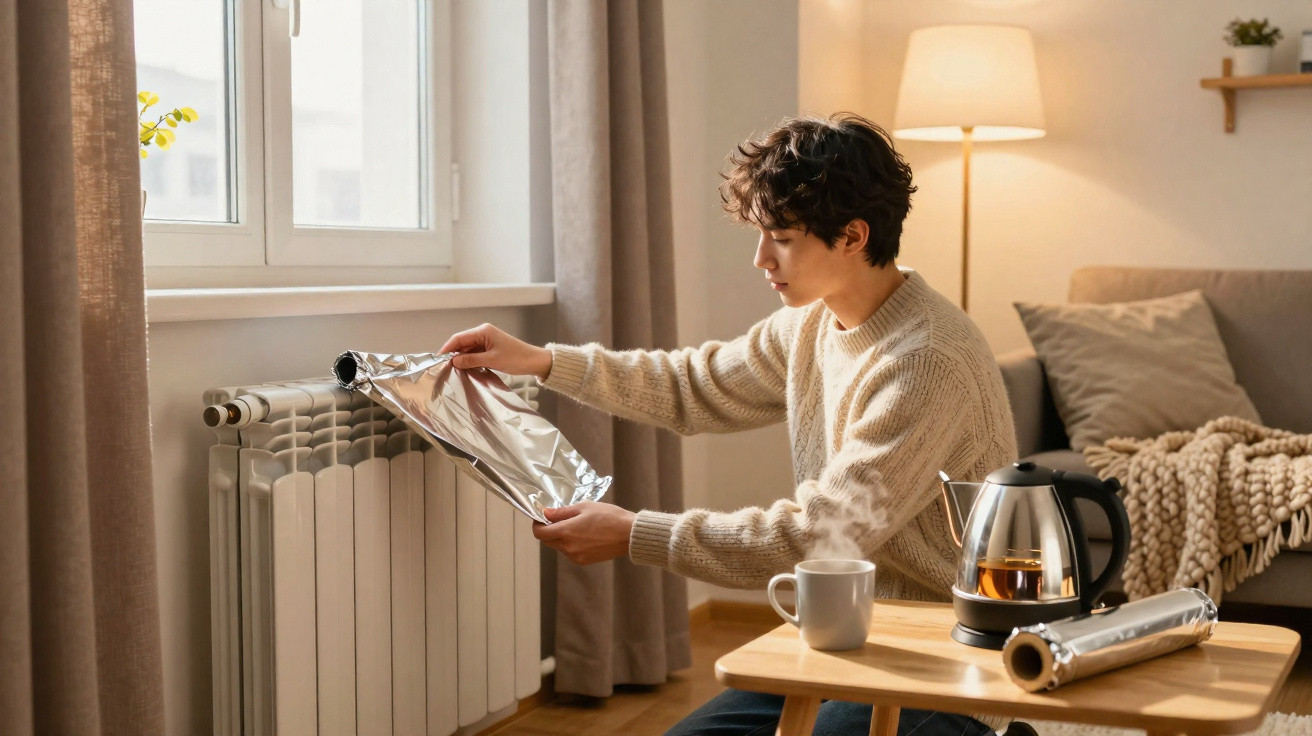
A piece of cardboard and kitchen aluminium foil are enough to turn the wall behind a radiator into a heat mirror.
How to make a DIY heat reflector
- Cut the cardboard: Measure the radiator’s height and width, then cut a sturdy piece of cardboard to size.
- Stick on the aluminium foil: Fix the foil on tightly with the shiny side facing outwards. Creases rarely matter - the key is a reflective surface.
- Position the board behind the radiator: Place it between the wall and the radiator, leaving a small air gap. That trapped layer of air improves the effect.
If you don’t fancy making one, DIY shops sell ready-made reflective panels. Depending on size and finish they cost a few pounds and are quick to fit.
Where the aluminium foil trick has limits
- With very modern electric heaters or underfloor heating, the reflector tends to make far less difference.
- In humid rooms, condensation can form behind the foil and mould becomes a risk - in those spaces, it’s better to use purpose-designed systems or avoid the idea altogether.
- Never stick foil directly to the wall; always use a board in between.
Even with these caveats, it’s often worth trying in older homes. Where radiators sit against thin external walls, rooms frequently feel more evenly warm after a few hours of heating.
Heat from people and daily life: overlooked sources
The third lever focuses on heat that’s already there. A single person at rest gives off roughly 80 to 100 watts. In a small room with several people, that adds up - similar to having several old-style incandescent bulbs on all the time.
On top of that you have the hob, oven, standby electronics and, above all, hot liquids. Together they add extra radiant heat and gradually warm the air.
If you group activities and heat sources sensibly, you can gain noticeable cosiness - without any new technology.
How to use “everyday heat” more effectively
- Share one room: During cold spells, spend time together in the same room and heat that space properly, rather than keeping several rooms mildly warm.
- Cook with intent: After baking, let the oven cool with the door open (naturally, only when children cannot reach it) - the residual heat warms the room.
- Use candles thoughtfully: A few tea lights in stable glass or ceramic holders provide not only light but also a noticeable amount of warmth. Always ensure good ventilation and never leave them unattended.
Electric kettle: a small helper with big saving potential
One often-missed detail is how we heat water. An electric kettle is usually more efficient than a hob or microwave because its element heats the water directly with relatively little loss. Used properly, it saves electricity - and it also adds a little warmth to the kitchen.
| Method | Typical energy use | Typical mistakes |
|---|---|---|
| Electric kettle | the most efficient, up to 30 % less than a hob | too much water, limescale build-up |
| Pan on the hob | clearly higher losses, especially with older hobs | no lid on the pan, quantities that are too small |
| Microwave | fine for small amounts, otherwise inefficient | overheating, uneven heating |
What matters with a kettle
- Boil only the amount of water you actually need - every unnecessary litre wastes energy.
- Descale regularly: limescale insulates the element, so it takes longer and uses more electricity.
- Use residual heat: if you have hot water left, use it straight away for tea, a soup, or washing up.
Even though a kettle won’t replace your boiler, it can improve comfort: while the water is boiling, the air warms slightly, and a hot drink very directly increases how warm you feel.
Using light and looks: warmth you can feel
Warmth isn’t just about the actual number of degrees - it’s also about perception. Warm lighting and certain materials make a space feel more snug, so many people can cope with one to two degrees less room temperature.
LED bulbs with a warm-white spectrum around 2,700 Kelvin give a similar look to traditional incandescent lighting. Combined with wood, fabrics and warm colours on the sofa, cushions or rugs, a room quickly feels more inviting.
- Choose warm-white LEDs rather than cool-white lighting.
- Use wool or fleece textiles intentionally - for example, throws on the sofa.
- Create a clear “winter zone” in the living room: armchair, reading lamp, blanket, rug.
Many people then find that 20 degrees is enough where 22 degrees was previously set. Every degree you drop reduces heating energy demand by roughly six percent - an effect that’s widely underestimated.
Smart combination: how the three tricks work together
The approach becomes genuinely powerful when you combine the measures. On a winter evening, if you block draughts, place a reflector behind the radiator, use warm lighting, cook, and then spend time with family or friends in the same room, you can create a clear comfort boost - without cranking the heating to maximum.
The interesting part is the cumulative effect: each trick on its own might only add half a degree to one degree in perceived warmth. Together, it can quickly feel like two to three degrees. That margin often decides whether you sit on the sofa wrapped up and shivering, or relax and enjoy the evening.
If you’re thinking longer-term, you can also pair these ideas with structural improvements such as better insulation, modern heating systems or smart thermostats. That way, small daily habits and a few square centimetres of aluminium foil can become a real strategy - making your home feel warmer in winter 2025 while keeping the bill far more manageable.

Comments
No comments yet. Be the first to comment!
Leave a Comment