
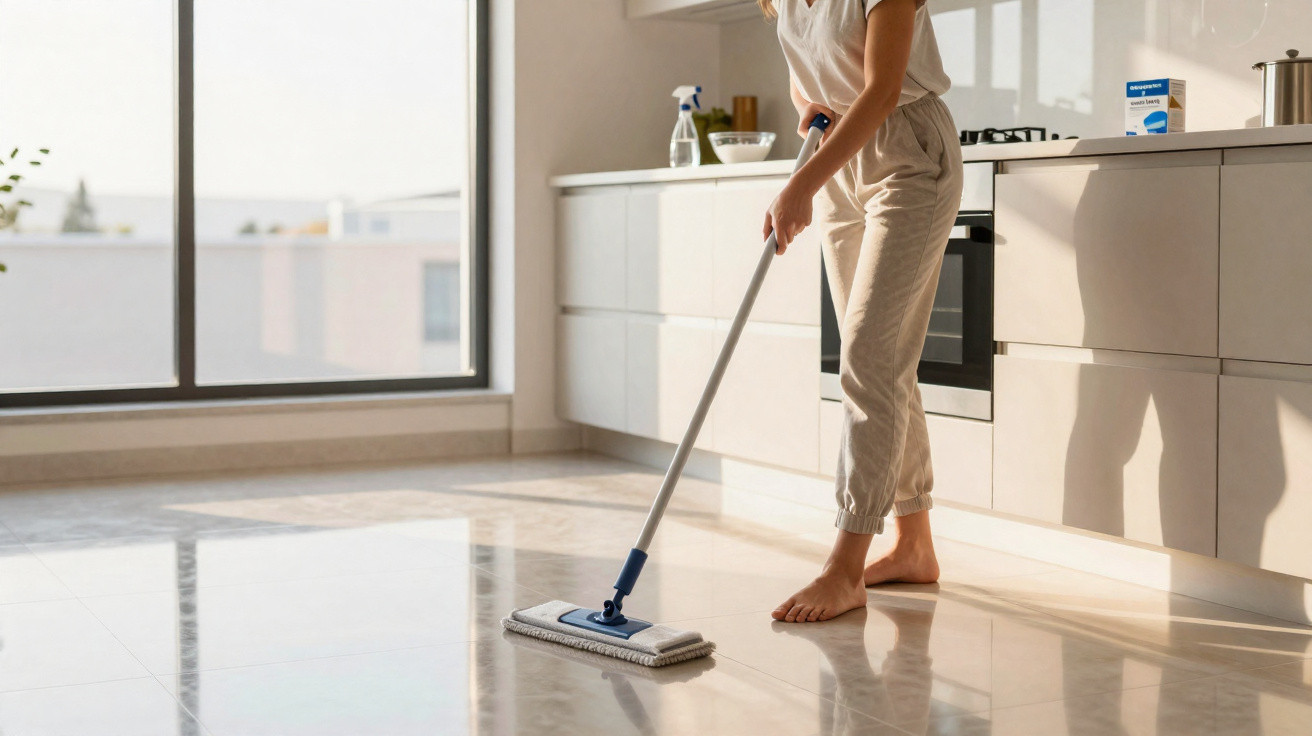
When guests check out of a hotel, they rarely remember the cleaning products - but they do remember that mirror-like floor in the lobby.
That small, easy-to-miss detail is often what creates the famous “wow” moment. And it usually doesn’t come from pricey professional-grade chemicals, but from a surprisingly simple routine that can work just as well in an ordinary kitchen.
Why hotel floors always look like they’ve just been laid
The moment you walk into a good hotel, you notice it. The floor has a sheen, yet it doesn’t feel greasy. No streaks, no dull patches. Most people assume it’s down to specialist polishes, secret brands, or expensive machinery. People who clean hotels describe something far less mysterious: the shine is mostly about a system, not luxury chemistry.
The real difference comes down to three things: preparation, correct dilution, and consistent upkeep. Those same principles are remarkably easy to replicate at home - even on a hard-wearing kitchen floor that’s seen better days.
Hotel cleaning relies on mild products, a clear order of steps and consistent repetition rather than “miracle products” from adverts.
The professional rule: deep-clean first, then maintain
A floor can’t look glossy until it’s genuinely clean. Not just “looks OK”, but free from grease film, old detergent build-up and fine dust. In many homes, layers gradually accumulate from harsh all-purpose cleaners, splashes of fabric softener and kitchen grease. That film absorbs light - no matter how much “shine” product you pour over the top.
Step 1: remove invisible residue
Professionals begin in a surprisingly no-nonsense way: hot water, a neutral cleaner and patience. In many hotels, the approach is simple: less chemistry, more frequent mopping.
- Fill a bucket with very hot water
- Add a splash of mild, pH-neutral cleaner (no “shine” claims)
- Work section by section with a well-wrung mop
- Change the water as soon as it turns visibly cloudy
At home, it’s worth planning for at least two to three passes. The first round loosens the old film; the second and third gradually remove what’s left. Only when the floor looks even while wet is it worth judging how much sheen you’re going to get.
Step 2: the “hotel trick” using everyday cupboard items
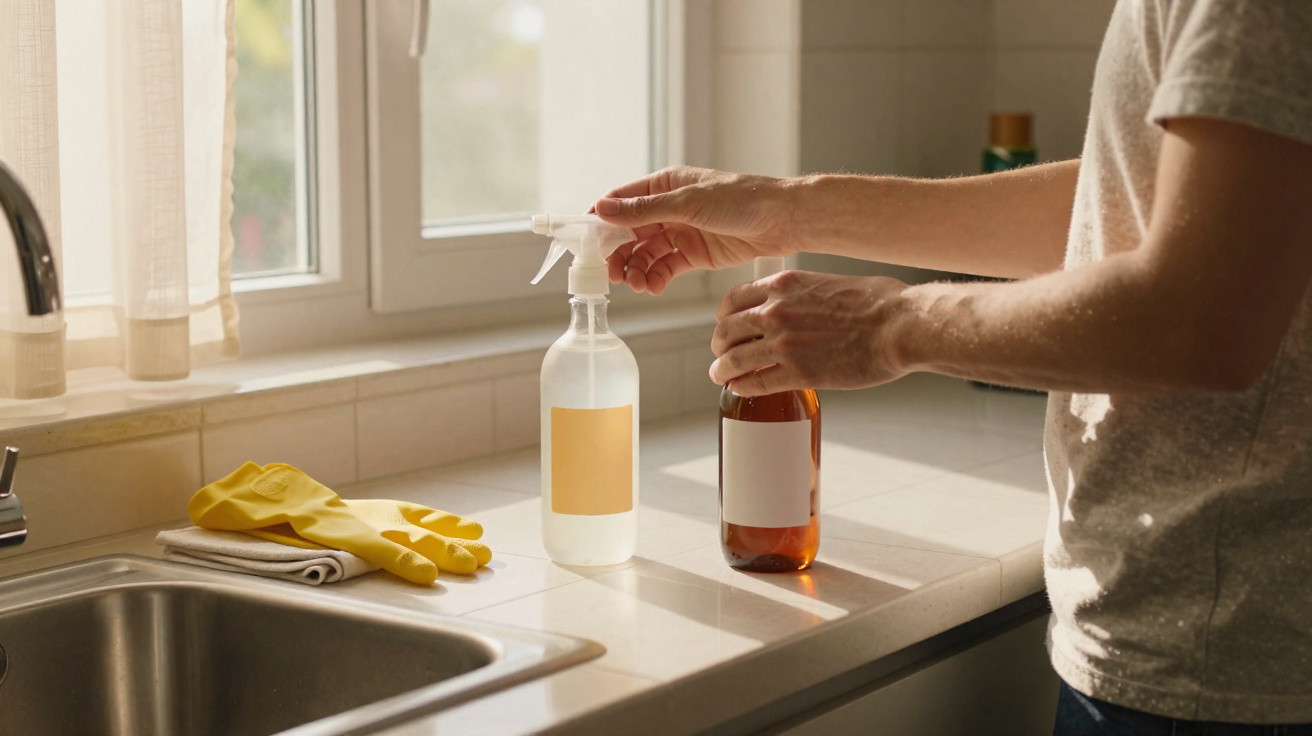
On hard-wearing floors, many places use a mix of things most people already have: warm water, a little vinegar and a tiny hint of oil or alcohol. Here, the amounts matter more than the ingredients.
Shine appears when the floor can “breathe” - a thin, almost invisible care film is more than enough.
| Component | Purpose | Note |
|---|---|---|
| Warm water | Loosens dirt and distributes the mixture | As warm as is still comfortable for your hands |
| Vinegar or citric acid (very little!) | Breaks down limescale and old residue | Not suitable for natural stone or delicate marble |
| A splash of alcohol (e.g. clear household alcohol) | Degreases and helps it dry without streaks | Ventilate well; keep away from flames |
| A hint of neutral oil (e.g. a few drops of vegetable oil) | Forms a light care film that reflects light | Use extremely sparingly or the floor will feel greasy |
In many kitchens, warm water plus a dash of vinegar cleaner and a tablespoon of alcohol per bucket is enough. If you have robust tile or vinyl, you can also put two or three drops of oil onto the mop head - not into the whole bucket. That way, you stay in control of the amount.
The right technique: how a floor genuinely starts to reflect like a mirror
Professionals don’t just “wipe over it”. Technique determines whether the light reflects evenly - or gets caught in streaks.
Mop, not a cloth; zigzags, not circles
In hotels you’ll almost always see flat mops with wide pads. They cover more area and spread moisture evenly. The same idea works at home. An old cloth is more likely to push dirt around.
- Wring the mop well - the floor should be damp, not flooded
- Clean in long passes from the far end of the room towards the door
- Overlap slightly to prevent lines
- Don’t scrub in tight circles, which can create dull, scuffed-looking patches
While it’s wet, the floor won’t look impressive. The payoff comes as it dries: with light coming in from the side, you can see whether the film has levelled out evenly. In hotels, staff often check this shortly before the shift ends - at home, a glance while you’re having a cup of tea does the job.
Why my kitchen suddenly looked like a hotel corridor
Testing the method produced a surprising result. After two thorough cleaning rounds and one pass with the mild “hotel mix”, the ceiling light reflected clearly in the floor. Not a plasticky gloss - more that calm, clean shimmer many people associate with hotel corridors.
The visible shine didn’t come from “more product”, but from fewer residues and precisely measured care.
The comparison was telling: on one side of the room, an area had only been cleaned with standard all-purpose cleaner. It looked clean, but flat. On the other side, chair legs and window frames were visibly reflected in the surface.
Which floors benefit - and where restraint matters
Not every surface can handle every method. Professionals adjust what they do depending on the material and finish. If you try this at home, you need to know what your floor is made of - or at least test it in an inconspicuous spot first.
Tiles, vinyl, laminate: big impact with small tweaks
Ceramic tiles and modern vinyl respond particularly well to this routine. They’re relatively robust and can tolerate mildly acidic cleaners in low dilution. Laminate needs more caution: too much water can seep into joints, so a very well-wrung mop is essential.
- Tiles: you can use a slightly higher vinegar proportion; keep oil to a minimum
- Vinyl: keep the mix gentle; reduce the alcohol
- Laminate: barely any vinegar, wipe almost dry, and avoid any oil film
Wood, parquet, natural stone: where the professional approach matters
Sensitive surfaces such as oiled parquet or limestone react quickly to the wrong products. In hotels, those areas are treated with specific care oils or stone soaps, often in carefully calculated dilution. If you have one of these floors at home, follow the manufacturer’s guidance. Vinegar, citric acid or alcohol can leave permanent marks.
Even then, the principle remains the same: mild, correctly matched care in the right order works better than aggressive “quick mopping” with heavy-duty cleaners.
How often does a floor really need this treatment?
In hotels, the schedule depends on footfall. Lobby floors are mopped daily, sometimes several times a day. Corridors are often handled on an interval plan: occasional deep cleaning, light maintenance and targeted touch-ups. At home, a kitchen floor rarely needs that pace.
If you cook, bake and have children coming in with muddy shoes, this simple rule of thumb works well:
- Sweep or vacuum daily or every other day
- Mop once or twice a week with a mild cleaner
- Every two to four weeks, do a “hotel pass” with thorough prep and light care
That way, you maintain the sheen without starting from scratch each time. A new grime film doesn’t get the chance to build up and then require hard work to remove.
Risks, myths, and what hotel professionals clearly avoid
Many households reach for strongly scented products, assuming that a bigger fragrance means better hygiene. In hotel circles you often hear the opposite: intense perfume doesn’t automatically mean better cleaning - it often means more residue left in the surface.
Too much cleaner in the water causes streaks, sticky surfaces and a greasy-looking shine that magically attracts every speck of dust.
Another risk is online trends that promote straight cooking oil or fabric softener as “shine miracles”. In the short term the floor may look reflective, but in the medium to long term you end up with a slippery film that increases the risk of falls and is difficult to strip back off.
That’s why hotel cleaning staff are strict about concentrations. Many trolleys have small mixing guides attached: one capful, two capfuls, at most a splash. You can mirror this at home by writing down your exact bucket mix once and sticking to it.
What really creates the “hotel shine”
The lobby effect - that glossy hotel-corridor look - is less about secret chemicals and more about straightforward logic: a clean base, mild care, controlled moisture and even distribution. Apply that logic to your kitchen, and you get a floor that visibly throws light back.
There’s an everyday side effect, too: a reflective floor makes crumbs and marks easier to see. At first that can feel like a drawback. In practice, it means dirt doesn’t go unnoticed for days. The home stays genuinely cleaner because small blemishes show up immediately.
Once you’ve worked through the method, you’ll likely notice a psychological shift as well. The room looks tidier, even though the only change is how the floor was treated. Kitchen units, chairs and even older tiles look better when the surface beneath them reflects light instead of swallowing it.
That’s exactly why the “hotel trick” is so appealing day to day: no new cleaner, no polishing machine - just a different way of thinking about the order of steps. If you’re willing to do two or three thorough rounds, you can get a look at home that previously felt reserved for hotel corridors.

Comments
No comments yet. Be the first to comment!
Leave a Comment