
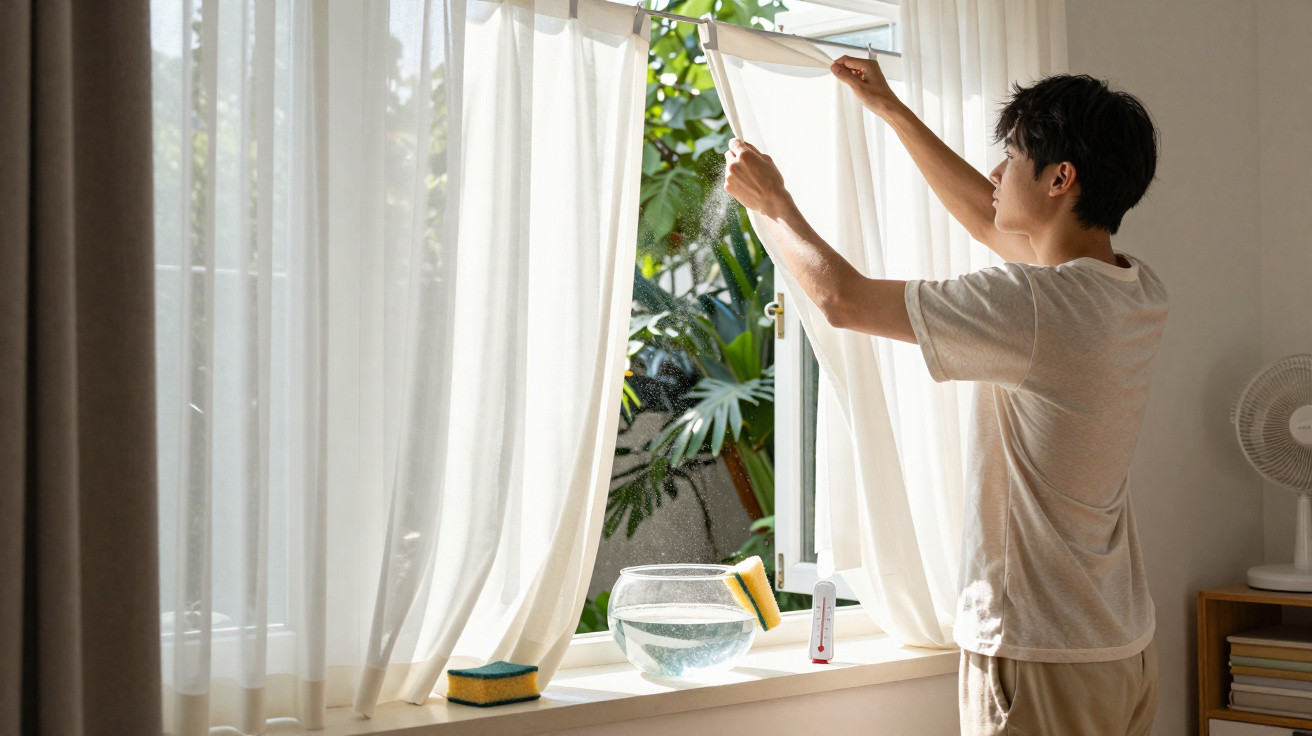
Keeping the house cool without air conditioning can be easier than it sounds with a method borrowed from hot, dry regions: hanging wet curtains over windows to cool the air as it comes in. This relies on evaporative cooling - as water evaporates, it draws heat from the surrounding air, making the incoming airflow feel cooler when there is ventilation and the humidity is low.
How does the wet-curtains technique work?
A damp curtain forms a simple, natural buffer between the heat outside and the room indoors. When a breeze passes through the wet fabric, some of the water evaporates and removes heat from the air - much like the chill you feel after stepping out of a swimming pool on a hot day.
It works best in dry conditions, or at times when the air contains less moisture. If humidity is already high, evaporation slows down, the cooling effect weakens, and the room can end up feeling muggy rather than comfortable.
Which type of curtain works best?
The most effective curtains are lightweight, washable, and able to hold moisture without dripping. Very heavy fabrics take longer to dry, can strain the curtain rail, and may encourage mould if they stay wet for many hours.
- Choose thin cotton, light linen, or cotton voile.
- Avoid blackout curtains, velvet, or tightly woven synthetic fabrics.
- Go for curtains that are easy to take down, wash, and dry in the sun.
- Pick light colours to reduce heat absorption at the window.
- Use only clean water - no fragrance, fabric conditioner, or cleaning products.
How do you apply it correctly to windows?
To use the method, wet the curtain and wring it out thoroughly before hanging it. It should feel damp to the touch, not soaking, to prevent water dripping onto the floor, sockets, walls, furniture, or the window track.
For best results, keep air moving through the curtain. Open a second window, door, or top-hung vent on the opposite side to create cross-ventilation - air needs a way in and a way out to carry heat away.
How do you keep the cooling effect for longer?
The cooling lasts only while the curtain remains damp and air continues to circulate. On very hot days, the water evaporates quickly, so it can help to repeat the process at key times such as late morning, afternoon, and early evening.
- Re-dampen the fabric once it starts to dry.
- Close blinds or dry curtains on the side that receives direct sun.
- Use a fan aimed towards the window, without getting the appliance wet.
- Place a dry towel on the floor if there is any risk of drips.
- Take the curtain down to dry completely at the end of the day.
Why can it work better than a simple fan?
A fan only circulates the air already in the room; if the space is very hot, it simply moves that heat around. A wet curtain adds evaporation to the process, so air passing through the fabric can feel cooler - provided the room’s humidity still allows the water to evaporate.
To use the technique safely, keep it well away from sockets, extension leads, electronic devices, and any walls that already show signs of mould. In modern houses and flats, it tends to work best as a targeted, occasional solution: a light curtain, clean water, a ventilated window, and full drying afterwards to freshen the room without creating lingering dampness.



Comments
No comments yet. Be the first to comment!
Leave a Comment