
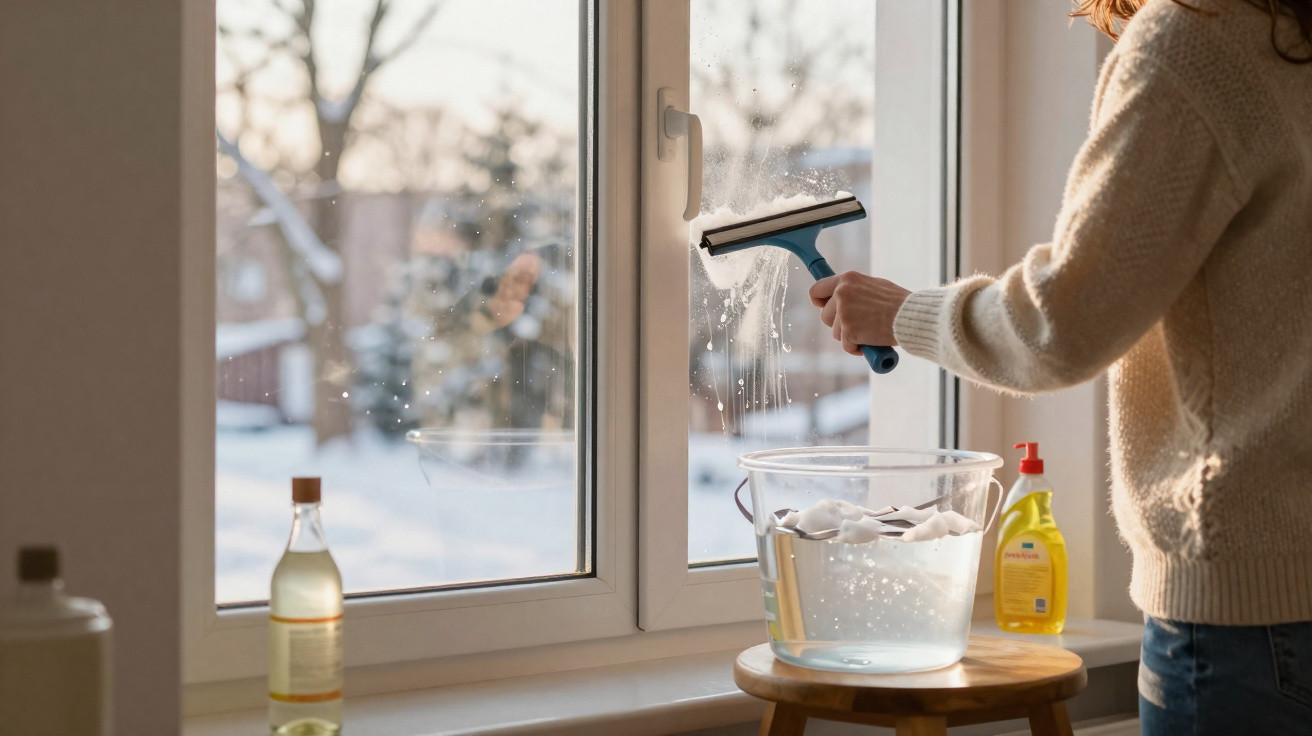
A minor change to what you put in your bucket can make each clean last for weeks, with barely any extra work.
In winter, windows attract condensation, road film and clingy dust. By adding one straightforward ingredient to your usual mix, the glass can repel grime, water marks and fingerprints long after the squeegee has been packed away.
Why this small tweak keeps glass clearer
Most window-cleaning routines end once the pane looks clean: grease is removed, the surface is dried, and that’s it. The trouble comes afterwards. Static electricity draws dust back in. Hard water dries into pale rings. Condensation runs down the glass and sets into streaks as it evaporates. Before the week is out, you’re back where you started.
A small amount of glycerin helps break that cycle. Glycerin (also called glycerol) attracts a tiny amount of moisture and reduces static on the glass. That barely-there, invisible layer makes it harder for fine particles to latch on, and it helps water spread rather than forming heavy droplets that leave trails as they dry.
"One spoonful of glycerin in your wash water can slow dust build-up and cut fresh streaks for weeks, not days."
How the mix works
Because glycerin is hygroscopic, it retains a little water at the surface. Instead of water gathering into small beads that merge into runs, it tends to form a thinner sheet. The result is fewer drips and fewer drying marks. At the same time, static is reduced, so airborne fluff is more likely to drift by than cling to the pane.
To handle mineral residue, combine glycerin with white vinegar, and include a couple of drops of washing-up liquid to lift traffic film. Together, these three components address common winter issues: grease, limescale and fine dust.
What to put in the bucket
- Water: 1 litre (about 4 cups), warm but not hot
- Glycerin: 1 tablespoon (about 15 ml)
- White vinegar: 1 tablespoon (about 15 ml)
- Dish soap: 2–3 drops, not a full squeeze
"Stick to the spoonful. More glycerin can leave a soft film you’ll feel on frames and edges."
Step-by-step cleaning routine
- Remove dust first. Wipe down frames and sills so you don’t drag grit across the pane.
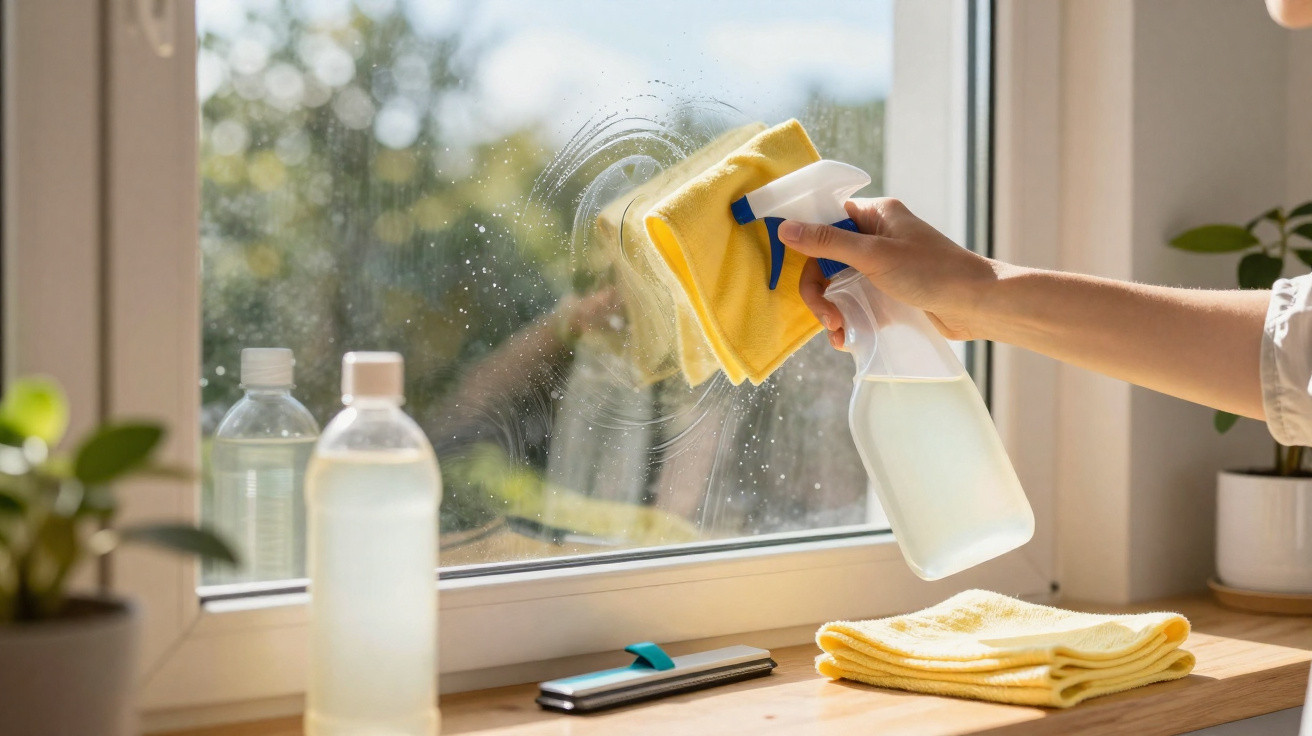
- Wash the glass. Use a soft cloth or sponge dipped in the mix, working from top to bottom.
- Dry with a squeegee. Pull it down in straight passes, wiping the blade after each one. If you don’t have a squeegee, dry-buff with a clean microfibre cloth.
- Finish the details. Use a dry microfibre to polish edges and corners and pick up any remaining residue.
Does it actually last longer?
Home trials show a noticeable difference. With plain soap and water, a window can look good on day one, then lose clarity as dust settles. When cleaned using the glycerin blend, the pane keeps a sharper, clearer finish for longer. You’ll still need to clean the glass-just less frequently. In high-traffic rooms or on windows facing the road, the time between cleans often shifts from about one week to two weeks or more.
| Method | Day-one shine | Dust resistance | Water spot control | Notes |
|---|---|---|---|---|
| Soap + water | Good | Low | Low | Fast, but dust returns quickly |
| Vinegar + water | Good | Medium | Medium | Great for hard water marks |
| Glycerin mix | Good | Higher | Higher | Slows re-soiling between cleans |
Where it works and where to be careful
- Standard window glass: Performs well inside and out.
- Mirrors and shower screens: Can help reduce fresh spotting after steam.
- Car windows: Use only on side glass and interior screens. Avoid front windscreens if wiper chatter increases.
- Frames: Fine on painted wood, vinyl and aluminium when used lightly. Dry the frames to avoid a slightly soft feel.
- Tinted or coated glass: Try a small corner first. Many coatings cope with the mix, but follow the manufacturer’s care advice.
"Test on a small area before doing a full set of panes, especially on specialty glass or films."
Why glycerin plays nicely with winter
Cold air carries less moisture, and central heating dries out indoor air even more. That combination increases static, which encourages dust to cling to glass. Glycerin reduces that effect right at the surface. Meanwhile, vinegar helps cut through the chalky rings left by hard water and condensation. Used together, they help keep panes looking crisp as temperatures drop and windows mist up more often.
Cost, sourcing, and storage
A small bottle of glycerin from a pharmacy or the craft aisle can last for months when you’re only using a spoonful per bucket. Keep it sealed and stored in a cool cupboard. Vegetable-derived glycerin is widely available and typically biodegradable, which suits a lower-impact approach. White vinegar and basic washing-up liquid are already in most kitchens, so the change usually costs pennies per clean.
Common mistakes to avoid
- Pouring in too much glycerin. Too much can leave a slightly tacky film around the edges.
- Overdoing the soap. Extra suds can leave a haze and slow down drying.
- Missing the final dry buff. Corners and edges need a last pass to stay streak-free.
- Cleaning in strong sunshine. Fast evaporation can lock in streaks before you can squeegee.
Simple tweaks for even better results
Hard water areas
If you’re seeing chalky spotting, increase vinegar to 2 tablespoons per litre (about 8 cups per gallon). Rinse your cloth frequently so minerals aren’t spread back onto the glass.
Allergy season and dusty roads
After about ten minutes, do a second dry buff using a fresh microfibre cloth. That extra pass can lift any particles that landed while the pane was drying.
Cold-weather car care
For vehicle glass, keep the solution on the mild side and steer clear of the swept area of the front wipers if you notice smearing or blade noise. For windscreens, a dedicated automotive glass cleaner can still be the better choice.
How often to clean and what to expect
In busy kitchens and bathrooms, a weekly wipe is still worthwhile. Bedrooms and upper floors can often go two to four weeks between full cleans when using the glycerin blend. The main difference is that the glass stays clear for longer, and the next clean generally needs less scrubbing.
Extra context that helps you choose
If you prefer an alcohol-based spray, it’s worth noting that it evaporates quickly and cuts grease effectively, but it doesn’t provide an anti-static benefit. Glycerin, by contrast, leaves a light protective finish that can be especially helpful through winter. You can use both approaches: a quick alcohol wipe for fingerprints, followed by an occasional wash with the glycerin mix for longer-lasting clarity.
If condensation is leaving puddles on sills, it also helps to look at ventilation and humidity. A small dehumidifier, running the kitchen extractor for longer after cooking, or warmer glass through improved glazing can reduce misting that leads to repeated streaking. The mix deals with what ends up on the pane, while moisture control tackles the root cause.




Comments
No comments yet. Be the first to comment!
Leave a Comment