
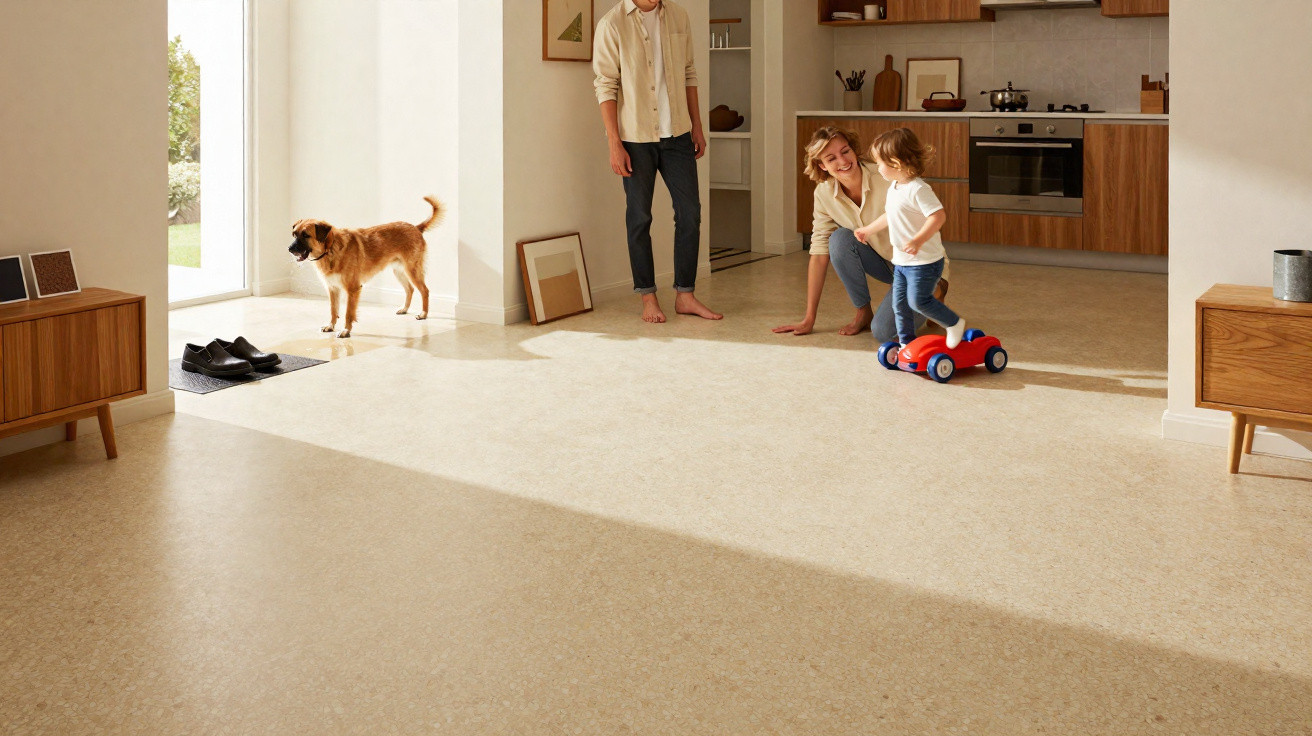
In plenty of homes you still find dated laminate, rustic tiles or chilly exposed concrete. When it’s time to refurbish, the same question crops up: install what was there before - or rethink the space from the ground up? More and more interior designers are opting for a surface that reads as one continuous plane: poured mineral finishes such as Micro-Terrazzo and mineral design resins. It may sound like something reserved for architect-designed houses and galleries, yet it performs remarkably well in everyday family life.
Why a seamless floor can make rooms feel instantly larger
The first thing you notice when you look into the room is the scale: the floor reads like a single, uninterrupted sheet of stone - no grid, no breaks, no grout lines. Unlike tiles, where the joints impose a strict pattern, or parquet, which tends to pull the eye in one direction, a poured surface looks calmer and more settled.
"The fewer lines and interruptions in the floor, the more generous the room feels - even a narrow hallway or a small bathroom gains a sense of space."
Because the finish is smooth and continuous, light spreads more evenly. Especially in the darker months, it works like a subtle visual trick: daylight and artificial lighting pick up softly across the surface without glaring reflections. The result is a gentle, almost velvety atmosphere that many people associate with boutique hotels.
Visually, the look blends several familiar styles:
- a hint of marble character, but less cold and far less showy
- the clarity of a concrete effect, only warmer and more finely nuanced
- the playful spirit of terrazzo, scaled down into a restrained micro version
Open-plan layouts - kitchen, dining area and living room - benefit in particular because the floor ties everything together. Where tiles in the kitchen and timber flooring in the living space used to create a hard boundary, a single continuous surface now forms one connected room that feels noticeably easier on the eye.
Technology behind poured mineral floors: tougher than tiles, more pleasant than concrete
Under the refined appearance sits a fairly sophisticated material blend. Typically, mineral components such as quartz or fine aggregates are combined with high-strength resins. The result is a very dense, abrasion-resistant finish designed to cope with heavy day-to-day wear.
Everyday living with children, a dog and wet shoes
In practical terms, that means the floor can take a lot in its stride. Children racing toy cars along the hall, chairs constantly being pulled in and out, paw prints, sand tracked in from the playground - a high-quality mineral floor usually handles this better than standard tiles or delicate timber.
- high scratch resistance thanks to mineral content
- no swelling with moisture as can happen with laminate or wood
- well suited to kitchens, entrances and heavily used bathrooms
Many people still picture mineral flooring as a cold industrial surface. That perception has shifted in recent years. Thanks to the resin content, it feels noticeably warmer underfoot than traditional ceramic tiles. If you don’t have underfloor heating, the difference is immediate when walking barefoot.
Hygiene advantage: no more filthy grout lines
There’s another clear benefit: there are no joints. No cement grout that gradually yellows. No narrow channels where dirt and soap residue can lodge. In kitchens and bathrooms, that’s a genuine comfort upgrade.
"In daily life, cleanliness often comes down to one thing: how quickly can I get the floor looking tidy again? That’s exactly where a seamless finish scores with minimal effort."
Most of the time, a quick mop with a mild cleaner is enough. Specialist care products do exist, but in normal use, standard routine cleaning usually does the job. For busy households - or anyone short on time - the easier upkeep is a compelling point.
From bathroom to kitchen: where the new finish is being used
The trend becomes particularly interesting once you look beyond the floor itself. These mineral mixes can be applied not only to floors but also to walls and furniture surfaces.
- a walk-in shower without a tiled grid
- worktop and splashback in the same look
- sideboards, steps or window sills finished in the same material
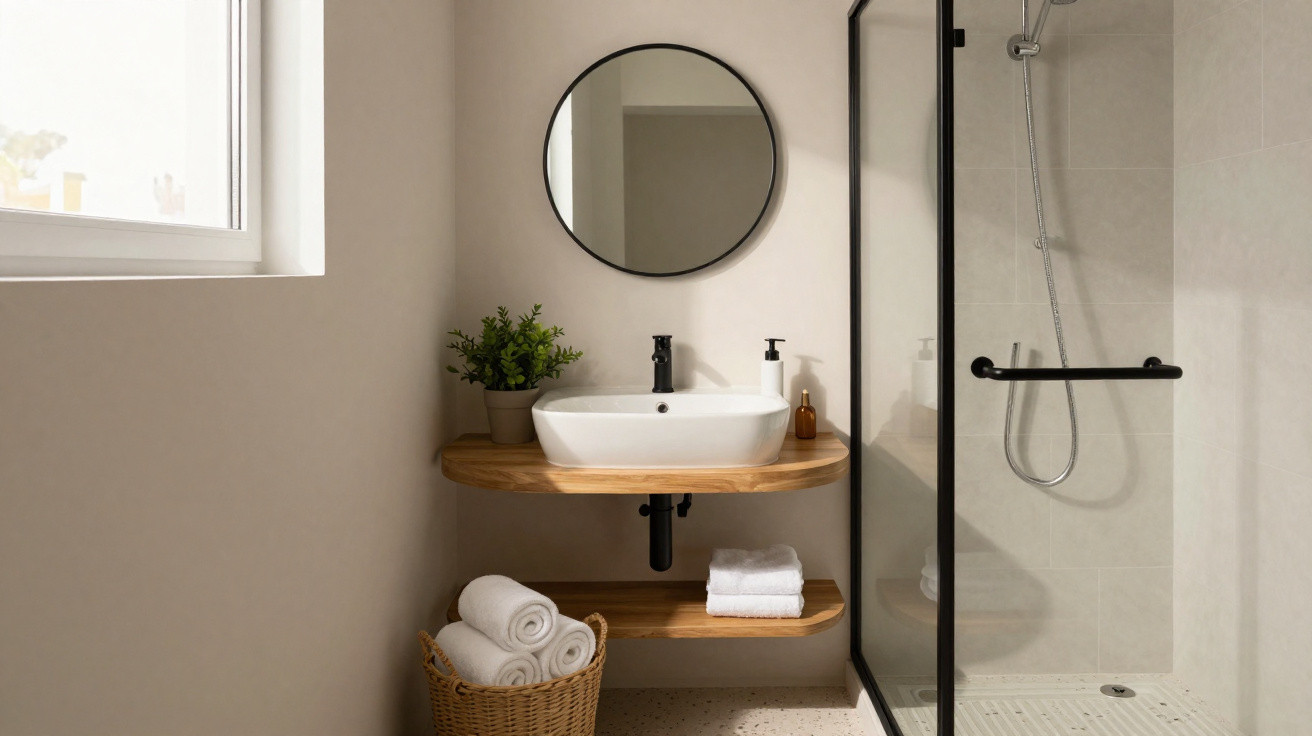
A fully continuous shower or bath surround can be especially striking: floor, walls and perhaps even the basin all in one tone. No visual breaks and no silicone joint in the eyeline. It recalls spa areas in design hotels, but it can now be achieved in an ordinary bathroom.
Almost limitless design options - from subtle to bold
Personalisation comes through aggregate size, colour and sheen level. In practice, three levers matter most:
- Aggregate size: very fine grain can read almost like a single-colour surface, ideal for minimalists. Larger inclusions of marble or glass create a clear terrazzo effect.
- Shade: from warm off-white tones through greige and taupe to stronger accents such as terracotta or sage green, a great deal is possible.
- Finish: matte emphasises a pared-back look; satin-matte feels more homely; glossy amplifies the light-reflecting effect.
This makes it possible to create very different moods: Scandinavian-bright, urban-industrial, Mediterranean-warm or cool-elegant. If you’re confident with colour, you can also differentiate specific zones - for instance, the kitchen - with a slightly different tone without disrupting the calm overall feel.
Refurbishing without a major building site: thin layer, big impact
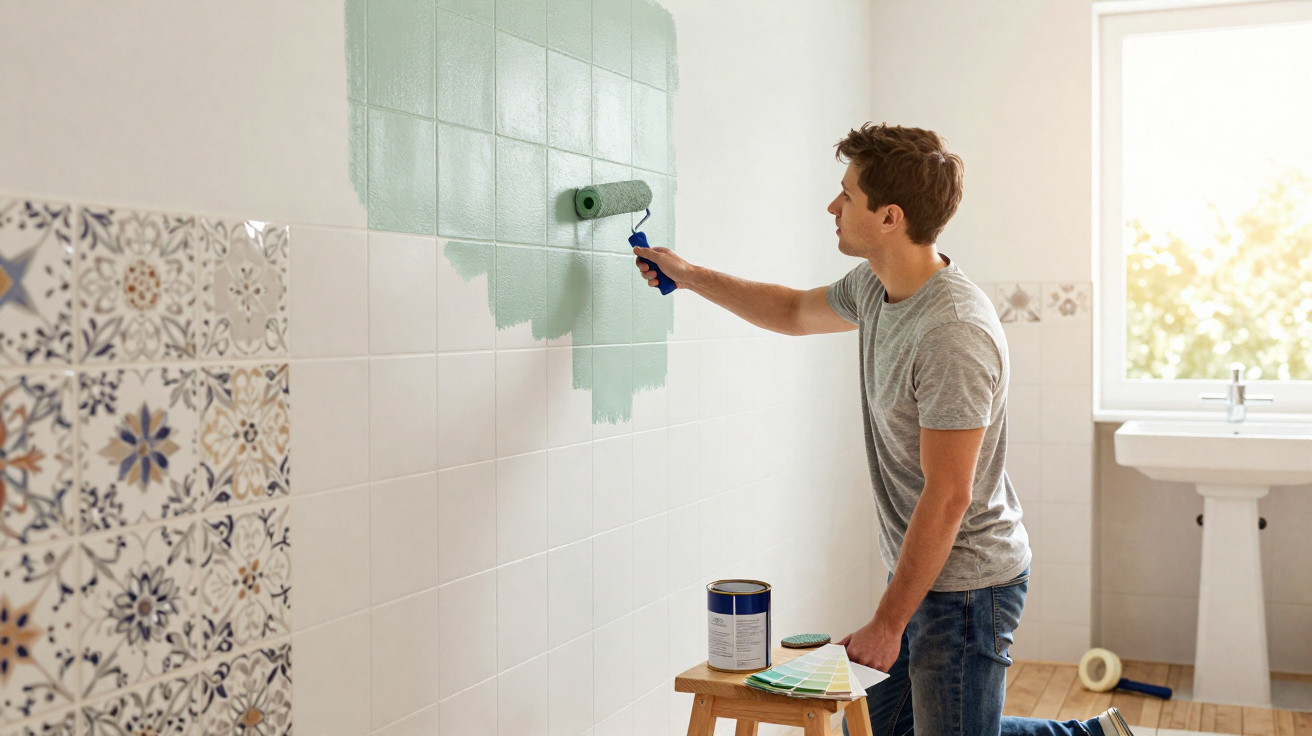
Another reason for the boom is the build-up. The layer thickness is often just a few millimetres. Under the right conditions, the new finish can even be applied directly over old tiles. That can save demolition, noise and skips full of rubble.
Typical steps in a renovation:
- inspect and clean the existing substrate
- fill and level tile joints or uneven areas
- apply a bonding primer
- pour or trowel on the mineral mix
- apply a protective seal coat
For many homeowners, that’s what makes a bathroom refurb or a ground-floor update feel achievable in the first place. The work is quicker, often taking only a few days, and doors rarely need trimming because the added height is so small.
What you should know before deciding
Despite the advantages, this isn’t a “fit and forget” option. The final result depends heavily on correct installation. Mistakes in the substrate preparation or in the sealing layer can come back later as cracks or stains. If you want longevity, it’s worth choosing specialist tradespeople who have experience with seamless flooring systems.
In rented homes, the finish is only suitable to a limited extent because removing it later would be labour-intensive. In owner-occupied flats and houses, the investment tends to make more sense because the planning horizon is longer. Cost-wise, it usually sits above standard DIY-store tiles, but often below premium natural stone floors.
It’s also worth noting the pairing with underfloor heating. Because the layer is thin and the structure is dense, the surface responds fairly quickly to temperature changes. Many users find the warmth feels more immediate than with thick screed beneath tiles.
If you’re still unsure, you can trial it in smaller areas first: a seamless cloakroom WC, a walk-in shower or the entrance. Everyday use quickly reveals whether the look and maintenance fit your lifestyle. Once you’ve experienced how freeing a floor without grout lines can feel, you’re unlikely to plan your next refurb around a conventional tiled grid.

Comments
No comments yet. Be the first to comment!
Leave a Comment