
Many people instinctively reach for a pressure washer or harsh products from the cleaning cupboard. In reality, that grimy film can often be lifted with a straightforward blend of two inexpensive household staples - with no noise, no vinegar, and without wrecking the joints between the slabs.
Why the terrace looks so bad after winter
After months of rain, frost and weak sunshine, terrace slabs quickly collect a combination of algae, moss, lichen and a general layer of grime. On top of that, you often get rust marks from chair legs, plant pots or fire pits. What barely registers during a dull winter suddenly looks awful in the first sharp light of spring.
Most people respond the same way: hours of roaring away with a pressure washer, or pouring strong cleaners into a watering can. Both approaches come with downsides. A powerful jet can wash out jointing material, roughen the stone surface and, on older slabs, even break pieces away. Aggressive cleaners can attack jointing compound, stain natural stone and end up in flower beds and lawns via the run-off.
Vinegar is another popular suggestion because it’s seen as “natural”. But it’s still an acid. On calcareous natural stone it can etch the surface, leave dull patches and, over time, alter the stone’s structure. If larger amounts seep into the soil, it can put stress on micro-organisms and plant roots.
"If you go at your terrace every year with a pressure washer and harsh chemicals, you make it more delicate and more prone to getting dirty in the long run."
The simple two-product method for clean slabs
A British DIY professional demonstrates a much gentler routine. He avoids vinegar, strong chlorine cleaners and specialist chemicals altogether, and instead relies on two familiar cupboard basics: soda crystals and washing-up liquid.
What soda crystals do
Soda crystals (washing soda) are a classic laundry product. They help cut through grease, soften dried-on dirt and loosen organic build-up on hard surfaces. Compared with drain cleaners based on caustic soda, they’re far milder and are generally suitable for typical terrace surfaces - provided you use the right amount.
You’ll usually find them in the laundry or household cleaning aisle in many supermarkets, sold as a powder or coarse crystals. If you have sensitive skin, it’s best to wear thin gloves when handling them, as soda can strip oils from the skin slightly.
Why ordinary washing-up liquid is enough
Washing-up liquid helps shift greasy or oily residues - for instance from barbecues, soot, or dust from traffic. It also helps the soda solution spread more evenly across the slabs. A plain, colourless product without bleaching additives is all you need. If you want to be as garden-friendly as possible, choose an eco version.
Step by step: how the cleaning works
The approach is deliberately straightforward. You only need a few items:
- Soda crystals (washing soda, not drain cleaner)
- Ordinary washing-up liquid
- A stiff yard broom or scrubbing brush
- A small shovel or joint scraper
- A garden hose or watering can with water
- Optional: a bucket and hot water
Preparation: remove loose dirt
Start by clearing away leaves, twigs and any loose debris. Use a joint scraper or a narrow trowel to pull weeds and moss out of the joints. Then sweep the whole area thoroughly. The better you do this stage, the more effectively the mixture can work.
Next, wet the terrace using a hose or watering can. The slabs should be damp, but not flooded. That moisture helps the soda crystals dissolve right on the surface.
Apply the mixture and scrub it in
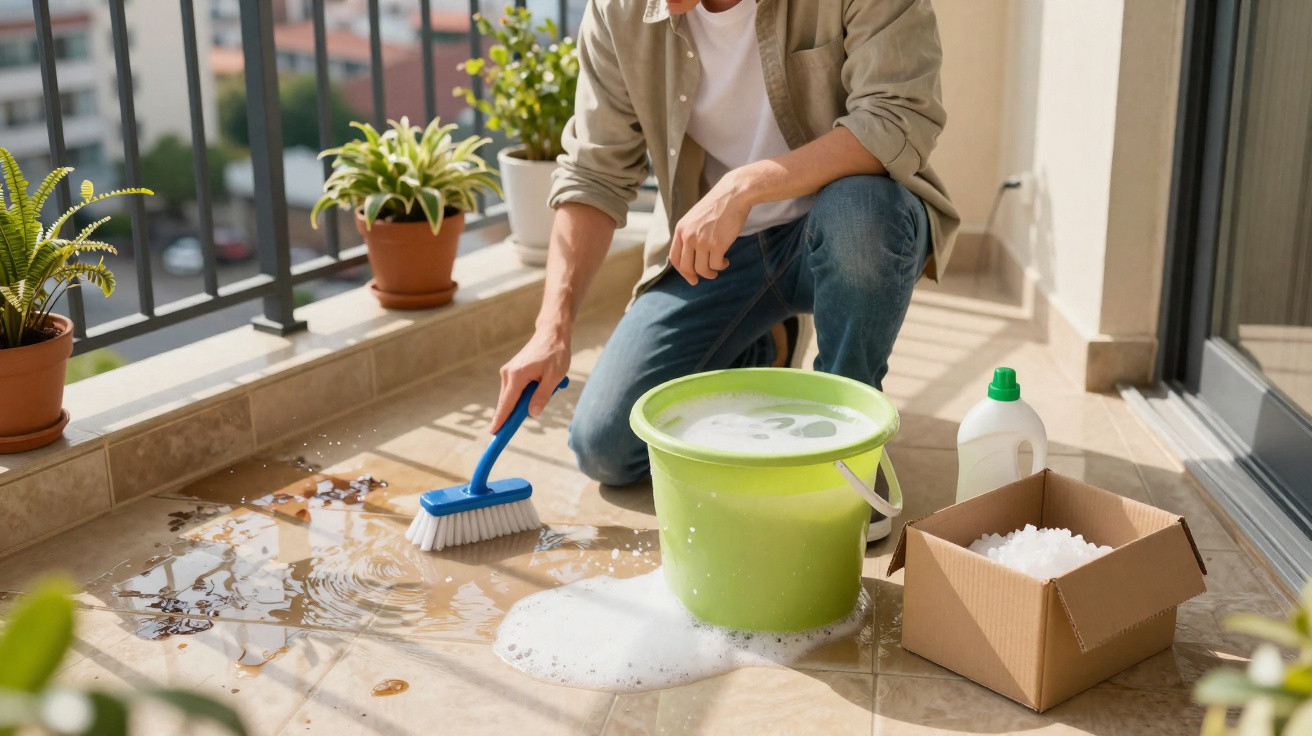
- Sprinkle a light, even layer of soda crystals over the damp surface. Don’t pile it on - a thin spread is enough.
- Drizzle washing-up liquid in zigzags across the slabs, much like soaping up a sink.
- Scrub hard with the broom or brush. Work strip by strip so every area gets treated.
If you prefer working from a bucket, dissolve two to three tablespoons of soda crystals in hot water, add a squirt of washing-up liquid, and spread the solution over the terrace with your scrubbing brush.
"The trick isn’t brute force - it’s time: the mixture needs a chance to soften algae and dirt."
Leave it to work - don’t rinse straight away
In the example shown, the mixture is left on the surface for up to 48 hours. Ideally it stays dry during that period, although a brief shower will only dilute the effect. If you’re concerned about nearby plants, soak the flower beds and lawn with clean water beforehand so the soil is already saturated.
Once the waiting time is up, a thorough rinse with the hose is usually enough. On many terraces the slabs look noticeably brighter afterwards, with the green film gone or much reduced. Any stubborn patches can be treated again.
Cleaning safely: dosage, materials and common mistakes
How much soda is sensible?
Because soda is alkaline, you don’t need thick layers. For normally dirty slabs, a light, even sprinkle - or a slightly milky-looking solution in a bucket - is sufficient. Using too much isn’t just wasteful; on sensitive stone it can leave streaks.
Which materials need extra care?
- Concrete slabs: Usually fine, particularly if they’ve been down for a few years.
- Brick and clay pavers: Generally suitable as well; rinse carefully so nothing sits in the pores.
- Light natural stone (e.g. limestone, sandstone): Test first in an inconspicuous spot and use a softer brush.
- Polished slabs or delicate finishes: Scrub gently to avoid damaging any glossy surface layer.
As a general rule, children and pets should stay off the area while it’s wet with the mixture. After a proper rinse, the terrace can be used normally again.
What undoes the method
If, after this gentler clean, you immediately reach for bleach, acidic descalers or metal brushes, you risk causing fresh damage. Bleach can fade stone and weaken the joints. Very stiff brushes or wire brushes can scratch the surface. Those roughened patches then attract dirt and algae even faster - a vicious circle.
A pressure washer does have its place, for example when thick mud has built up on driveways. But on older terraces with loose, uneven slabs it can blow out the jointing and leave stones rocking. For a typical spring clean, the combination of soda crystals, washing-up liquid, water and a bit of elbow grease is often more than enough.
How to keep the terrace cleaner for longer
After a thorough deep clean, the goal is to maintain that fresh look for as long as possible. That doesn’t mean day-long scrubbing sessions - it’s about small habits:
- Give it a quick sweep every one to two weeks to remove leaves and soil.
- Prevent puddles by using saucers or spacers under plant pots.
- Deal with barbecue grease or drink spills straight away using warm water and a little washing-up liquid.
- In autumn, do a light pass with a diluted soda-and-washing-up-liquid mix before winter arrives.
If green growth keeps returning in shady, damp areas, consider thinning plants or moving pots to let in more light. Every extra bit of sun helps slow algae down.
What the terms mean - and where the limits are
Soda, bicarbonate of soda and caustic soda are often muddled up. For terrace cleaning, you want soda crystals (washing soda). Bicarbonate of soda is gentler and tends to be used for kitchen and household jobs, while caustic soda is found in harsh drain cleaners and is far too aggressive for outdoor stone surfaces.
This method has clear advantages: the products are cheap, it needs very little equipment, and it’s a moderate option for garden and soil. However, it won’t replace professional repair work. Heavily weathered slabs, crumbling joints, or deeply set rust and oil stains can only be improved to a limited extent. In those cases, it’s worth getting informed advice before investing lots of time in repeated cleaning attempts.
For a typical family terrace with light moss and a general film, soda crystals plus washing-up liquid is usually plenty. Once you’ve seen that grey haze lift, you’re more likely to grab a scrubbing brush than a pressure washer next spring - saving not only your slabs, but also your nerves, your neighbours and your garden soil.




Comments
No comments yet. Be the first to comment!
Leave a Comment