
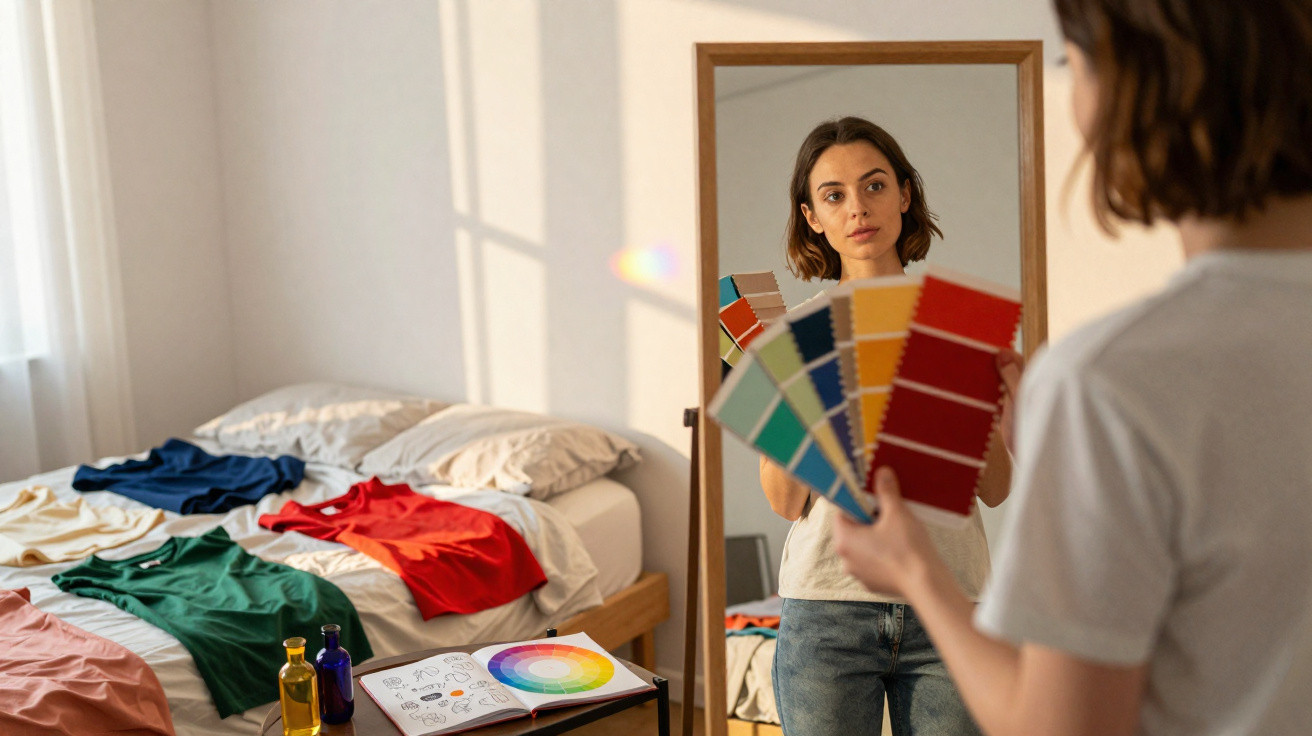
Often, what looks like a spur-of-the-moment choice reveals far more about your personality than you realise.
Colours are with us every day - in our wardrobe, our living room, even on a mobile phone case. Most people pick them purely “by feel”, and that gut reaction is exactly what colour psychologists and colour therapists pay attention to. Their view is simple: the colours you’re drawn to can reflect personality traits, emotional needs and even how stressed you are.
Why colours have such a powerful effect on the mind
Colour psychology isn’t an esoteric fad; it’s a field that marketing, design, architecture and therapy have been using for years. Specialists such as Karen Haller, along with British therapist Angela Wright, have long observed how particular shades can shape mood and influence behaviour.
"Colours speak an emotional language long before we say a single word."
In this approach, the brain responds to every hue in recognisable patterns. Angela Wright sets out seven core principles that underpin her theory:
- Each colour triggers its own psychological state.
- The effect of colour appears remarkably similar among people worldwide.
- Every shade belongs to one of four colour groups, each with a distinct “mood”.
- Colours from the same group tend to work especially well together.
- Broadly speaking, each person can be mapped to one of four personality types.
- Each type is instinctively drawn to certain colour groups.
- How we react to a palette depends strongly on that personality type.
That makes colour more than decoration. Used well, it can act like an amplifier - supporting inner strengths, but also highlighting insecurities if the shades don’t suit you.
Four personality types - which one sounds most like you?
Many colour experts work with four broad personality profiles. They’re not a substitute for a psychological assessment, but they often match people’s instincts surprisingly well. Read the descriptions and note the letter that feels closest to you.
Type A: The spontaneous mood-lifter
You come across as open and upbeat, often with a playful edge. People tend to relax quickly around you. You thrive on variety, new projects and unexpected ideas. Repetitive tasks bore you; you’re better at juggling several things at once than doing painstaking detail work.
You can be funny, charming and occasionally a bit blunt. Other people’s criticism affects you more than you like to admit. In your clothes or your home you’ll often have lively, warm shades that give off energy.
Type B: The calm observer
You don’t push yourself to the front; instead, you help others feel at ease. Many people see you as reserved or shy - and some misread your quietness as aloofness. When things get stressful, you tend to stay composed and think things through.
You’re drawn to understated elegance, quality details and pleasing textures. Rather than big parties, you’re more tempted by a concert, a night at the theatre or a quiet walk. Around you, muted, classic and soft tones often dominate.
Type C: The emotionally attuned people-reader
You’re warm, attentive and genuinely curious about other people’s stories. Small talk drains you. You’d rather sit with a few people and talk for hours about what really matters.
There’s creativity in you, and sometimes a streak of stubbornness or rebellion. If someone pushes you too hard, you can be very clear - authority and strength suit you more than you may think. Your colours often include intense, expressive shades.
Type D: The spotlight finds you - whether you want it to or not
You have presence. When you enter a room, people notice. Your style often reads as glamorous, modern or deliberately minimalist. You decide quickly, work in a structured way, stay efficient and don’t like half measures.
You enjoy thinking ahead, testing new ideas and choosing high-quality, statement pieces. Some people experience you as cool, distant or strict - while you’d describe yourself as factual and focused. Strong contrasts and crisp, cool colours are common in your choices.
How to test your personal colour palette
It gets interesting when you try it out in real life. Colour psychologists often suggest a simple, surprisingly effective self-test you can do in front of a mirror.
Step 1: A mirror test
- Sit by a mirror in daylight with no make-up and without strongly coloured accessories.
- Take a clothing item, scarf or sheet of paper in a colour you like.
- Hold it directly under your chin and watch what happens to your face.
Does your complexion look fresher? Do your eyes and expression brighten? Or do you look more tired, washed out, perhaps a bit “hard”?
"The right colour can make your face look more awake - almost like a mini filter in real life."
Then, for comparison, deliberately try a colour you rarely wear or instinctively dislike. That contrast usually makes the effect obvious.
Step 2: Name your favourite colour precisely
Grab a pen and paper. Without overthinking it: what’s the first colour that comes to mind when you think “my favourite colour”? If several appear, write them all down and cross them out one by one until only one remains.
Then make it as specific as you can, for example:
- instead of “blue”, choose “sky blue”, “midnight blue” or “turquoise blue”
- instead of “green”, go for “mint green”, “forest green” or “neon-tinged green”
Next, pick an everyday object in that exact tone - a scarf, a mug, a notebook. When you look at it deliberately, you’ll notice the emotional effect more clearly.
Step 3: What that colour really means to you
Split your notes into three sections:
- Personal memory: What experience do you connect to this shade - a childhood moment, a trip, a particular person?
- Cultural meaning: What does the colour represent in your culture or family - mourning, celebration, luxury, nature, purity?
- Psychological effect: How do you feel when you’re surrounded by it - calmer, braver, more playful, more focused?
This small writing exercise alone can sharpen your awareness of your emotional needs - and, in turn, which colours are currently supporting you.
What your favourite colour says about your current emotional state
Certain shades come up again and again when people talk about “comfort colours”. Here’s an overview of the emotional direction they’re often associated with:
| Colour | Typical effect on the mind |
|---|---|
| Red | Motivation, energy, assertiveness, courage |
| Bold pink | Willpower, stamina, self-confidence |
| Soft pink | Compassion, comfort, self-care |
| Yellow | Optimism, joy, playful lightness |
| Orange | Sociability, humour, carefree happiness |
| Brown | Groundedness, stability, feeling rooted |
| Dark blue | Focus, clarity, concentration |
| Turquoise | Alert mind, exchange, openness to others |
| Light blue | Creativity, inner calm, a sense of space |
| Dark green | Recovery, balance, emotional security |
| Light green | Refreshment, rest, new beginnings |
| Purple | Introspection, search for meaning, spiritual depth |
| White | Order, clarity, fresh start, simplicity |
It becomes especially revealing when you notice a shift: a colour you once loved barely interests you now, while another suddenly takes centre stage. That can hint at changes in your life stage, your priorities or your overall energy levels.
How to use colours intentionally for your wellbeing
You don’t need to replace your entire wardrobe. Often, small accents are enough to support how you want to feel right now:
- A red or bold accessory on days when you need courage.
- A light-blue top - or artwork with lots of blue - at your desk when you want to concentrate better.
- Soft green in the bedroom to help you mentally “power down”.
- A white notebook or simple décor when you want clearer thoughts.
If you’re sensitive, very strong colours can also be overwhelming. Someone who is already stressed may feel even more on edge in a loud red–orange mix. In that case, toned-down shades from the same colour family can help - for instance warm terracotta rather than neon orange.
Colours, personality and everyday life - a practical perspective
At work, many people unconsciously choose colours that fit their role: dark blue or anthracite for seriousness, beige and greys for restraint, or a single accent colour to combine competence with individuality. In relationships, patterns can be just as interesting: a highly structured Type D often feels drawn to a warm, lively Type A - and, in the end, they may settle on a home palette that mixes clean lines with cheerful tones.
If you have children, you’ll notice preferences especially quickly. Younger children often reach instinctively for strong, happy shades, while teenagers may change favourite colours in phases. These shifts can point to identity-building, setting boundaries or new interests, without being treated as something pathological.
Ultimately, the point isn’t to let colour schemes dictate your life. Colours offer prompts and questions: what genuinely makes me feel comfortable? Which shades strengthen feelings that are good for me right now - calm, courage, closeness, clarity? If you answer those honestly and test them in daily life, you can get to know yourself a little better - using nothing more than a look inside your own wardrobe.
Comments
No comments yet. Be the first to comment!
Leave a Comment