
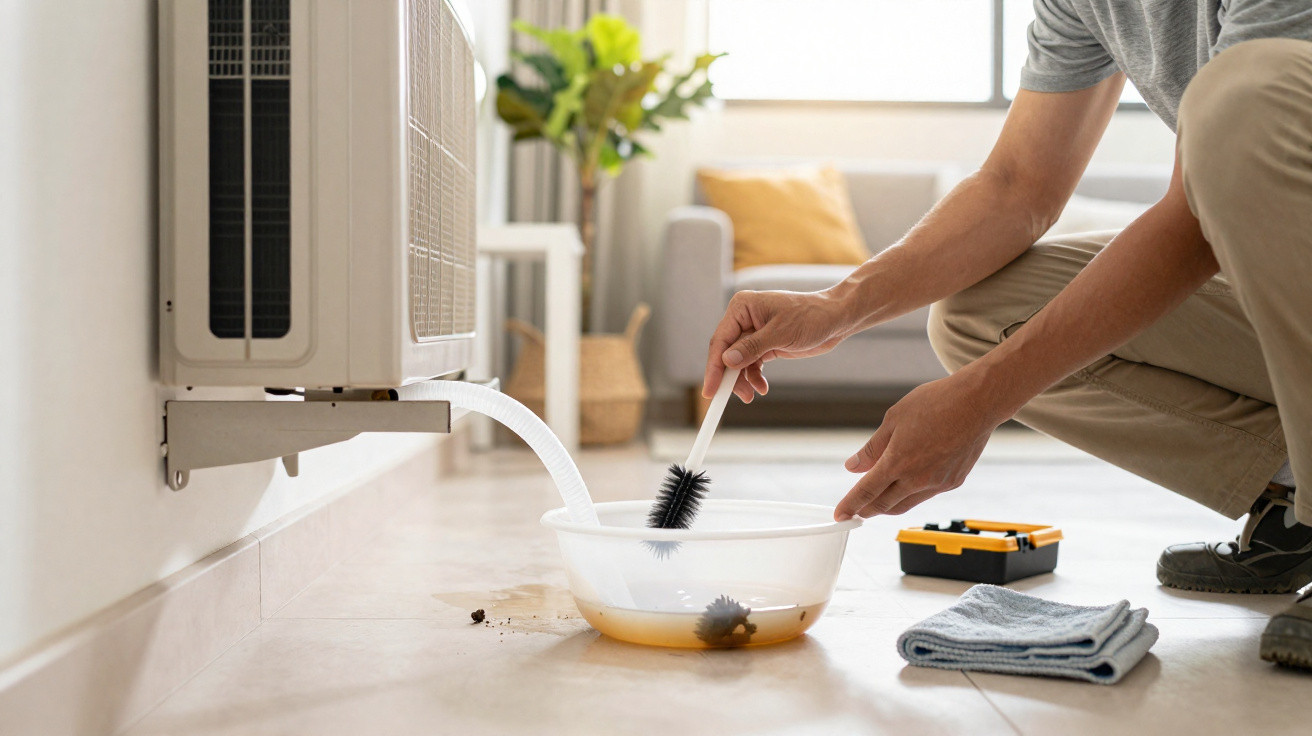
When an air conditioner drain hose becomes clogged, it often leads to water leaks, damp patches on the wall, or even dripping indoors. In many situations, the cause is a build-up of dirt, dust, or algae, and it can be sorted with a few straightforward checks before you call in technical support.
How can you tell if the air conditioner hose is clogged?
One of the earliest warning signs is water dripping from the indoor unit or running down the wall. You may also notice the drain tray filling up quickly because the condensed water cannot flow away as it should.
Another clue is weak drainage at the end of the hose outdoors, which can suggest a blockage restricting the water’s path. The sooner you spot the issue, the less likely you are to end up with damp ingress or damage to the unit.
How to unclog the air conditioner drain hose safely
Before doing anything else, switch the unit off at the plug or turn off the circuit breaker that supplies it. This step helps to reduce the risk of accidents while you clean.
Once you have found the drain hose, check it visually first to see whether there is any debris gathered at the inlet or outlet before attempting to clear the obstruction.
- Turn off the power to the unit completely.
- Find the drain hose.
- Clear away any visible leaves, dust, or dirt around the opening.
- Use a hand pump or a vacuum cleaner to pull through and unblock the pipework.
- Pour in a small amount of water to confirm the drainage has returned to normal.
What care helps prevent new blockages?
Preventative maintenance is the most effective way to stop the hose clogging again. Regular cleaning reduces the build-up of dust, slime, and other residues that can obstruct the water flow.
It is also important to keep the air conditioner filters clean, because some of the trapped dirt can make its way into the drainage system and gradually contribute to blockages.
- Clean the filters in line with the manufacturer’s recommendations.
- Check the hose outlet regularly.
- Do not allow leaves and debris to collect near the external drain.
- Carry out checks before the periods when you use the unit most.
- Keep an eye on whether the water flow stays steady while the unit is running.
When is it time to seek technical support?
If water still builds up or the leak continues even after cleaning, the blockage may be further inside the line, or there may be another fault in the drainage system that needs professional assessment.
A quick check of the drain hose can bring the air conditioner back to normal operation and help prevent damp problems indoors. If basic care does not solve it, using a qualified technician is the safest way to protect the equipment.

Comments
No comments yet. Be the first to comment!
Leave a Comment