
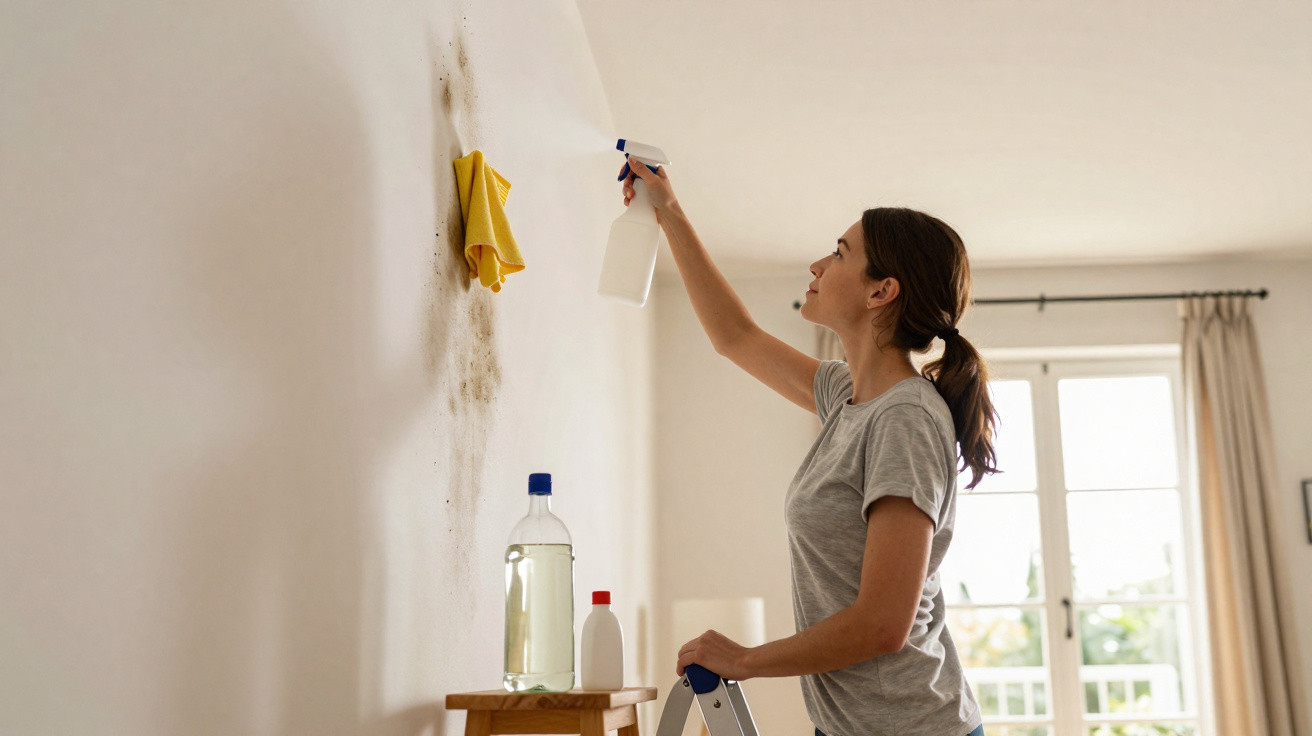
Mould on walls and ceilings usually shows up in damp spaces, areas with poor ventilation, or where there is water ingress. Many people try to tackle it with household bleach or washing-up liquid, but that approach does not always work well-especially on porous surfaces, where the mould can return within a few days. For mild cases, a straightforward alternative is to use white vinegar, alongside proper ventilation, protective gear, and fixing the underlying dampness.
Why does mould appear on walls and ceilings?
Mould needs moisture to grow. That is why it commonly appears in bathrooms, kitchens, poorly ventilated bedrooms, walls near leaks, and ceilings affected by condensation. Sometimes the mark looks like simple dirt, but a stale, musty smell and dark specks are signs that there is excess moisture in the room.
Before you start cleaning, it helps to identify what is causing it. If there is a leak, water ingress, or a wall that stays damp, any cleaning product will only be a short-term fix. The mould may disappear from view, but it will keep coming back for as long as the moisture remains.
Why doesn’t bleach always solve it?
Bleach can lighten the stain quickly, which can make it seem as though the issue has been dealt with. The downside is that on porous surfaces-such as painted walls, plaster, and ceilings-it can end up improving the appearance more than addressing what is driving the problem.
Another key point is safety. Bleach should never be mixed with vinegar, ammonia, or other cleaning products, as this can release toxic gases. In enclosed rooms, the strong fumes can also irritate the eyes, nose, and throat.
How to use white vinegar to clean mild mould
For small, surface-level patches, pour undiluted white vinegar into a spray bottle and apply it directly to the mouldy area. Leave it to work for about an hour, keeping windows open for airflow. Then wipe with a clean, damp cloth to lift away residue and dry the surface thoroughly.
Wear gloves, a mask, and eye protection if you are working close to your face, such as on a ceiling. Avoid dry scrubbing, as this can send spores into the air. It is better to dampen the area first, clean gently, and then throw away the cloth or wash it very thoroughly.
When is it better to call in a professional?
If the affected area is large, if the mould returns quickly, or if there is still a strong odour even after cleaning, the issue may be deeper than the surface. In these situations, wiping over it will not fix the problem. There may be water ingress, damaged materials, or persistent moisture inside the wall.
It is also best not to clean it yourself if you have severe allergies, asthma, other respiratory conditions, or if the mould covers a wide section of the ceiling. In those cases, removal needs extra care to avoid spreading particles around the room.
How to stop mould from coming back
Cleaning only truly works when it is paired with prevention. After removing the mould, keep the space well ventilated, dry wet areas promptly, repair leaks, and avoid pushing furniture flush against cold or damp walls.
The key to getting rid of mould on walls and ceilings is not just which product you use, but controlling moisture. White vinegar can help with mild marks, but a longer-lasting result comes from a drier, better-aired home that is free from leaks and water ingress. Once the source is fixed, mould is far less likely to return so easily.





Comments
No comments yet. Be the first to comment!
Leave a Comment