

What looks harmless can still damage your health and the fabric of your home.
A lot of people know the routine: you wake up, pull back the curtain, and the inside of the window is completely misted over. In autumn and winter, that can feel like a daily occurrence. But when moisture meets cold surfaces and the air in the room is stale, you create the ideal conditions for mould, allergies and long-term damage to walls and window frames. With a few straightforward steps-done consistently-you can significantly reduce the problem.
Why water collects on your windows
To tackle it properly, it helps to understand what’s going on. Condensation isn’t bad luck-it’s basic physics.
Warm indoor air can hold far more water vapour than cold air. That moisture comes from ordinary everyday activities: breathing, cooking, showering, drying clothes, and even lots of houseplants add to it. When this warm, humid air hits a cold surface-most commonly the windowpane-it cools quickly. As air cools, it can’t retain as much moisture. The surplus then turns into visible droplets on the glass.
Anyone who repeatedly ignores persistently wet windows risks mould growth, musty rooms and health issues such as irritated airways and allergies.
Homes with older single glazing, or poorly insulated double glazing, are especially prone-along with corners behind furniture and rooms that cool down sharply overnight.
Ventilate and heat properly: the most important foundation
Without fresh air, every other tactic becomes an uphill struggle. Ventilation and heating go hand in hand-each works properly only when the other is done well too.
Rapid airing beats leaving windows on the latch
Leaving a window tilted open for hours rarely helps and, above all, it chills the window reveal. That can actually encourage mould in that exact spot. Better options are:
- Air the room several times a day for 5–10 minutes with windows opened wide
- Ventilate first thing in the morning if the panes are misted up
- After cooking and showering, send the humid air outside immediately
- If possible, create a through-draught by opening windows on opposite sides at the same time
This replaces humid indoor air with drier outdoor air, without letting the walls cool down completely.
Steady warmth instead of a cold shock
Many people turn the heating right down at night to save energy. In practice, that often increases condensation. If a room cools markedly, the air reaches the dew point more quickly, and moisture ends up on the glass.
A slightly lower-but stable-temperature tends to work better. As a rough guide:
| Room | Recommended temperature |
|---|---|
| Living room | 20–21 °C |
| Bedroom | 16–18 °C |
| Bathroom | 21–23 °C (especially morning/evening) |
| Kitchen | 18–20 °C |
The less your temperature swings up and down, the easier it is to keep humidity levels stable as well.
Bedroom: the hidden humidity hotspot
Ironically, the room meant for rest is often the one most affected by damp windows. The reason is simple: two people can release roughly 1–2 litres of water into the air overnight through breathing and perspiration.
How to keep the bedroom drier
- Air the room thoroughly once before going to bed
- Open windows wide for 5–10 minutes immediately after getting up
- Don’t switch the heating off completely overnight-just turn it down slightly
- Avoid pushing beds right against an external wall; leave a small gap
- Don’t use a clothes horse in the bedroom-it drives humidity up dramatically
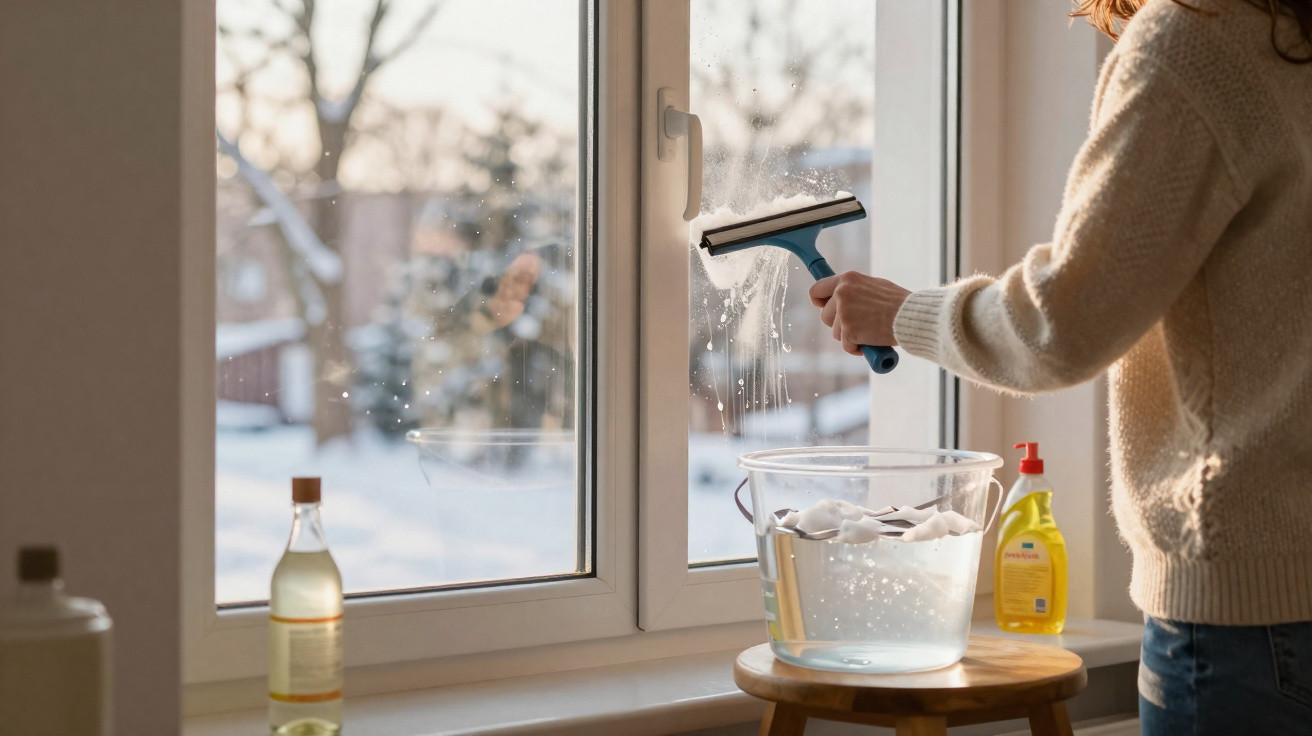
If you find the window is dripping wet every morning, wipe off the excess water with a cloth. That stops moisture working its way into the frame and seals.
Kitchen: keeping cooking steam under control
Saucepans, kettles and dishwashers generate significant amounts of water vapour every day. Without countermeasures, that steam will settle on windows and cold walls.
Habits that reduce moisture
- Put lids on pans while cooking-this cuts steam and saves energy
- Switch on the extractor hood and let it run on for a few minutes after cooking
- Open the window wide during and after cooking; a draught is genuinely helpful here
- Keep the kitchen door shut so moisture doesn’t spread through the home
- Let the dishwasher steam out only with the door closed wherever possible
If you don’t have an extractor hood, you’ll need to be particularly disciplined about ventilation in the kitchen. Boiling pasta, frying and baking can all produce a lot of moisture.
Bathroom: after a hot shower comes cool air
Showering and bathing can send humidity soaring within minutes. The result is the same every time: clear droplets on mirrors, tiles and windows.
How to stop the bathroom turning into a dripping cave
- Keep the door closed while showering so steam stays in the bathroom
- Turn on the fan, or open the window wide straight after showering
- Use a squeegee to remove water from tiles and the shower screen
- Hang bath mats and towels so they can dry quickly
In internal bathrooms without a window, a working extractor fan is essential. Filters should be cleaned regularly-otherwise performance drops and the benefit is lost.
Technical help: when ventilation alone isn’t enough
In many older buildings or poorly insulated flats, there comes a point where airing out the room isn’t sufficient on its own. That’s where technical solutions can support your routine.
Using electric dehumidifiers effectively
A dehumidifier removes moisture from the air and collects it in a tank. Depending on the model, a unit can extract several litres per day. It’s particularly useful in:
- Bedrooms with windows that stay wet day after day
- Cellars and basement flats
- Laundry drying rooms
- Rooms where mould is already present (as a support alongside remedial work)
Important: a dehumidifier doesn’t replace ventilation. It’s one tool, not a miracle cure. A comfortable humidity range is roughly 40–60%. A basic hygrometer will show what your home is actually sitting at.
Protecting windows better: films, seals and day-to-day habits
Once you’re addressing the underlying causes, you can also take steps directly at the window. There are several ways to make panes and frames less susceptible.
Films and coatings
Specialist window films can raise the interior surface temperature of the glass slightly. When the pane stays warmer, it reaches the dew point less often. You can also buy products designed to reduce droplet formation on glass. They don’t replace ventilation, but they can noticeably lessen the effect.
Seals and furniture placement
Old, brittle seals allow more cold air to seep in. If you own the property-or can discuss it with your landlord-it’s worth checking whether replacing seals would help. Furniture layout matters too: keep some space between furniture and external walls or windows. A sofa placed directly in front of a cold window blocks air circulation, allowing moisture to build up unnoticed behind it.
The more freely air can move past cold surfaces, the less often mould will form there.
If mould is already present: act, don’t ignore it
Dark marks in window reveals, black dots on silicone joints, or a musty smell are clear warning signs. If you spot mould, it should be removed promptly and the cause investigated-typically a combination of moisture, thermal bridges and too little air exchange.
In rented homes, it’s sensible to document the issue with photos and inform the landlord early. The cause isn’t always down to how the home is used; the building fabric can be a factor as well.
What terms like dew point and humidity mean in daily life
The term “dew point” may sound technical, but it’s very practical: it’s the temperature at which air becomes so saturated that water starts to condense out. If a windowpane is colder than that point, moisture deposits on it-visible as misting or droplets.
A practical example: in a poorly ventilated bedroom with two occupants, a slightly colder night can be enough to leave the window dripping by morning. If you lower the humidity with consistent rapid airing and keep the room at a moderate temperature, the dew point drops again-and the glass stays noticeably drier.
Keeping an eye on the combination of humidity, temperature and ventilation habits doesn’t just protect windows and walls. A drier indoor climate also reduces the risk of house dust mites, breathing problems and unpleasant odours. And there’s a simple added benefit: dry, well-aired rooms just feel more comfortable-without misted-up panes in the morning.





Comments
No comments yet. Be the first to comment!
Leave a Comment