
A lot of households put total faith in the dishwasher. Plates in, programme on, job done - or so it seems. Research suggests a different reality: virtually every machine can harbour bacteria, yeasts and even black yeast-like moulds, often tucked away inside stubborn biofilms. By building a few simple habits into your routine, you can significantly cut this germ load and make your kitchen noticeably more hygienic.
When the dishwasher turns into a germ hotspot
A widely referenced study from 2018 examined 24 ordinary household dishwashers in detail. The findings were clear: every rubber door seal carried dense biofilms - slimy layers made up of bacteria and fungi. In particular, yeasts from the Candida genus were detected in all of the machines.
Alongside them, researchers also identified familiar “problem bacteria” such as Pseudomonas, Escherichia (well known via E. coli) and Acinetobacter. These microbes are considered opportunistic pathogens: usually not an issue for healthy people, but potentially far more risky for anyone with a weakened immune system.
“The dishwasher is meant to clean - but in reality it often works with a hidden microbiome in the background that survives heat, detergent and salt surprisingly well.”
Inside the appliance, conditions resemble an extreme habitat: hot water, harsh detergents, salt, shifting humidity and periods of complete dryness. Those stresses favour specialised organisms that adapt to the environment. The places they most commonly colonise include:
- Door seals and other rubber parts
- The base of the tub
- The filter unit and mesh
- Spray arms with their fine nozzles
Why Eco programmes can become a problem
Many people now run mostly economy programmes at around 30 to 45 °C. That saves energy and money, but it leaves little thermal “headroom” against hardy fungi and bacteria. Biofilms can persist, continue to build up, and over time become better adapted to the machine.
Across several studies, researchers have reported black yeasts (such as Exophiala species) particularly often on the seals. These exceptionally resilient fungi tolerate large swings in temperature, moisture and pH. In some dishwashers, they were found in very high concentrations.
For most healthy people, this is generally not a major concern. However, for individuals with pre-existing conditions, chronic lung problems or severely suppressed immunity, such a reservoir of microbes can matter - especially when lightly soiled dishes repeatedly pass over the same surfaces.
What happens when you open the door
Anyone who opens the dishwasher immediately after it finishes will recognise the rush of hot, moist air. Within that steam plume, tiny droplets and particles carrying microbes can be released into the room.
A more recent paper from 2024 indicates that spores and bacteria can spread around the kitchen via these aerosols. That does not mean every opened dishwasher automatically becomes a health hazard. It does underline, however, that microbes do not always stay where they first established themselves.
“The warmer and more humid the interior is when you open it, the more easily micro-droplets carrying germs can enter the kitchen air.”
A similar principle is well known from washing-up sponges and dish brushes: when they stay constantly wet, far more bacteria settle than on tools that are allowed to dry properly between uses.
Three cleaning tricks that genuinely make your machine cleaner
1. Treat the rubber seals on purpose
The door seals are a favourite habitat for many yeasts and black fungi. Moisture lingers there and food residue easily catches - ideal conditions for growth.
How to do it:
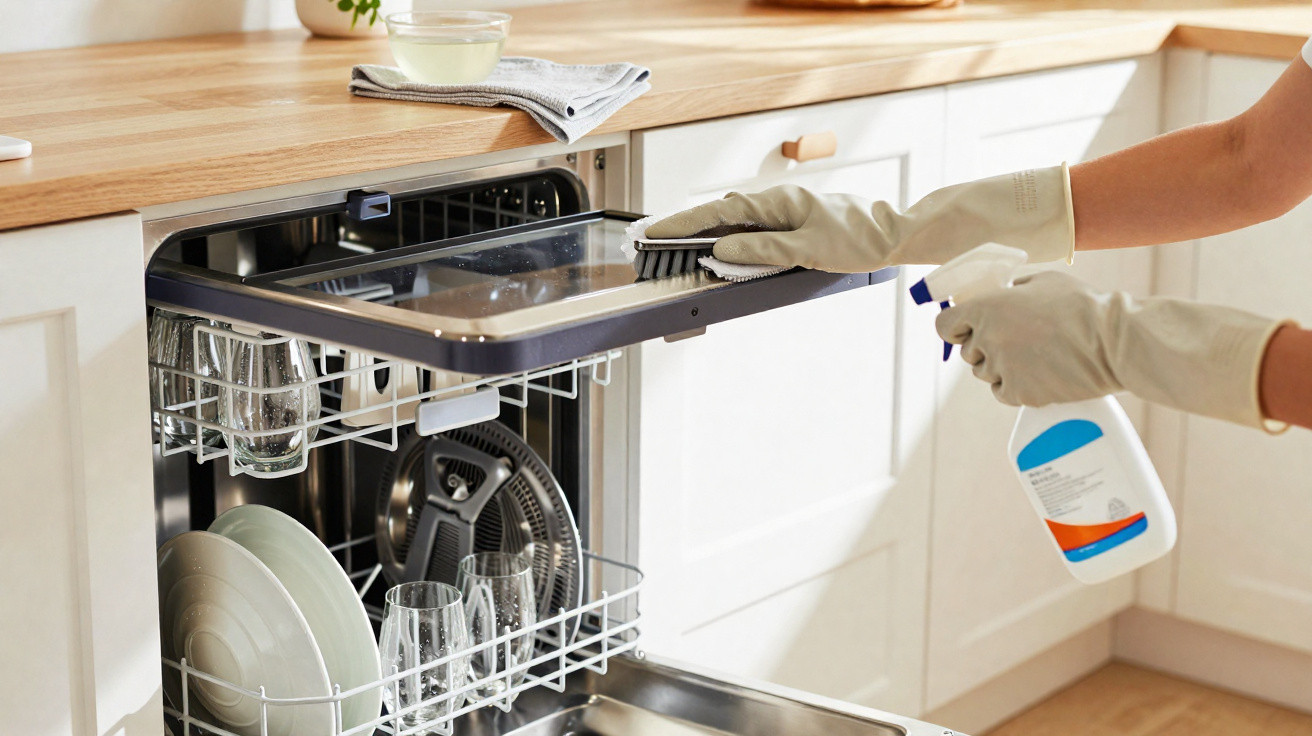
- Preparation: switch the machine off, open the door wide, and wipe away obvious grime with a cloth.
- Mix a cleaner: combine roughly equal parts warm water and white household vinegar. If you like, add a small squirt of liquid soft soap or black soap cleaner.
- Scrub with a brush: dip an old toothbrush into the mixture and scrub every fold and edge of the seal thoroughly - including the underside, which you can only see if you gently lift the rubber lip.
- Wipe and dry: go over it with a damp cloth, then dry everything well using a dry microfibre cloth.
Acetic acid helps break through the alkaline film that many fungi thrive in. Just as importantly, the physical action of brushing disrupts biofilms that can survive even strong cleaning agents.
2. Clean the filter and the base of the tub every week
The filter traps grease, food scraps, eggshells, pasta - anything that should not end up in the drain. In warm conditions, that mixture quickly becomes an all-you-can-eat buffet for microbes. If you only check it every few months, you invite rancid smells and higher germ counts.
A straightforward weekly routine is enough:
- Remove the filter unit completely.
- Put the food waste into the bin, not down the sink.
- Rinse the filter thoroughly under very hot water; use a brush if needed.
- Wipe the bottom of the machine with a cloth and remove any puddles.
- Optional: sprinkle a thin layer of bicarbonate of soda onto the wet filter and the base surface, leave briefly, then refit.
Bicarbonate of soda helps absorb odours and can make conditions less favourable for mould-forming fungi. The key point is ensuring nothing is left to rot in a warm, damp interior.
3. Look after the spray arms and run a regular hot empty cycle
Spray arms distribute water throughout the dishwasher. If their small nozzles become blocked by limescale, greasy residue or grains from the salt reservoir, water will not reach every area properly. Some zones then remain consistently less clean - which benefits biofilms.
Recommended approach once per month:
- Remove the spray arms according to the manufacturer’s instructions.
- Rinse them under running water and carefully clear the nozzles with a cocktail stick or a fine needle.
- At the same time, add six tablespoons of powdered citric acid to the empty interior (for example in the cutlery basket or on the base).
- Refit the spray arms and run a programme of at least 60 °C with no dishes inside.
This hot empty run reduces limescale build-up and flushes loosened biofilm material from internal channels. If you normally rely on Eco programmes, plan this hotter cycle roughly every four weeks.
Simple everyday protection: drying, timing, hand hygiene
Alongside the three main measures, a few day-to-day habits act like an extra layer of defence:
- Leave the door ajar after washing: once the programme ends, do not shut the door fully; leave it slightly open so moisture can escape. Faster drying makes it harder for microbes to multiply.
- Do not leave it full and closed for days: if you only run the machine every few days, open it in between so it does not turn into a damp “fermentation chamber”.
- Wash your hands after cleaning the filter: removing food waste inevitably brings you into contact with high germ levels. A quick hand wash afterwards reduces the chance of transferring anything to your eyes, mouth or fresh cuts.
- Quickly rinse heavily soiled items: remove large residues such as thick sauce clumps, spinach or squashed pasta first, so less organic matter ends up in the filter and corners.
How dangerous are these germs really?
The idea of a “bacterial biotope” inside a dishwasher sounds unsettling. In everyday life, though, the risk for healthy people is usually limited. Many of the detected organisms are common in our surroundings and routine contact - on chopping boards, in sinks and on hands.
The topic becomes more important for people with severely reduced immune defences, such as after an organ transplant, during intensive chemotherapy, or with serious lung disease. In these situations, professionals often recommend stricter household hygiene overall, which can include hotter wash programmes, more frequent empty cycles and particularly careful filter cleaning.
What terms like biofilm and black yeasts actually mean
Many of the microorganisms mentioned are relatively fragile on their own. In a biofilm, however, they form a protective community: a slimy matrix of sugars and proteins surrounds the cells, traps nutrients and partly shields them from chemicals and short bursts of high temperature.
“A biofilm is best compared to a multi-layered carpet - if you only wipe the surface, you miss a lot.”
Black yeasts stand out because of their dark pigment. This protective “coat” helps cells withstand stress from heat, UV light and chemicals. That is precisely why researchers frequently find them in extreme environments: on damp silicone joints in bathrooms, in saunas, and on the rubber seals of washing machines and dishwashers.
In practical terms, that means not every discolouration on a seal is immediately dangerous - but it does indicate that a stable micro-ecosystem has taken hold. Regular brushing, a little acidity and good drying take away the best growth conditions.
How often each type of maintenance makes sense
| Measure | Recommended frequency |
|---|---|
| Clean seals with a brush and vinegar mixture | every 2–4 weeks |
| Clean the filter and the base of the tub | once per week |
| Empty run at ≥ 60 °C with citric acid | once per month |
| Leave the door ajar after the programme ends | after every wash |
If you stick to these intervals, you do not need expensive specialist cleaners. Household basics such as vinegar, citric acid, a little soft soap, a small amount of bicarbonate of soda, a brush and consistent routines are usually enough. The benefits are not only measurable in studies but also obvious day to day: fewer musty smells, cleaner seals and clearer glasses.




Comments
No comments yet. Be the first to comment!
Leave a Comment