
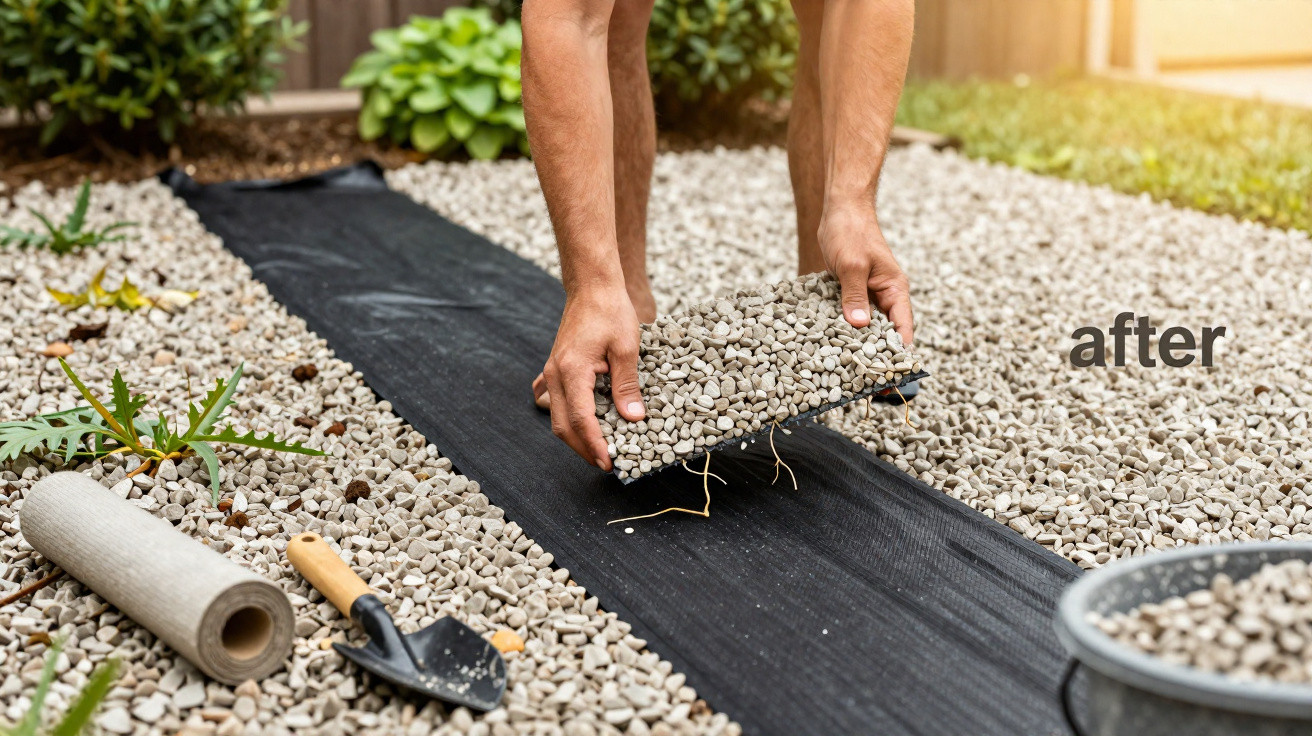
The approach doesn’t depend on aggressive chemicals or spending hours crouched on the ground, yet it’s what underpins the majority of professionally planned driveways and contemporary courtyards. Put it in properly and day‑to‑day upkeep becomes far easier, while those dandelions pushing through smart grey shingle become a rare sight.
Why gravel seems to grow weeds overnight
Gravel may look tough and inhospitable, but to many plants it behaves more like prime accommodation. The spaces between stones trap dust, blown‑in soil, and bits of leaf litter. With a touch of rain and some sunshine, that debris turns into a thin-yet unexpectedly productive-growing layer.
Seeds arrive all the time. They’re carried by the wind, dropped by birds, brought in by pets, and even walked in on the bottoms of shoes. After a few mild days, fresh green shoots start appearing between the stones. Remove them, and within a fortnight you can be dealing with the next wave.
Gravel itself is not the problem – the real issue is the welcoming, moist soil just beneath and between the stones.
If the ground beneath your gravel is nutrient‑rich, loosely packed, and regularly damp, roots can drive through without much resistance. That’s why simply adding “more gravel” almost never fixes the issue for long.
The professional fix: a geotextile layer under your gravel
If you ask a landscaper what keeps gravel drives looking crisp and tidy, one solution is mentioned repeatedly: a geotextile membrane. It’s a synthetic sheet-typically woven or non‑woven-installed as a layer between the soil and the gravel.
Its two big advantages are straightforward: it allows water to pass through, but it blocks plants. Rain still drains as it should, while most roots and shoots are prevented from reaching daylight.
The aim is simple: separate the living soil from the decorative layer so plants never reach the surface in the first place.
Step‑by‑step method gardeners swear by
- Clear the area: Take out the weeds that are already there, removing as much root as possible. Persistent perennials such as couch grass are best dug out thoroughly.
- Level and compact: Use a rake to flatten the surface, then tread it down or use a roller to firm it up. A well‑compacted base makes it much harder for weeds to force their way upwards.
- Lay the geotextile: Roll out the membrane across the entire area. Overlap each strip by around 10 cm so nothing can push through the joins.
- Anchor the edges: Secure it with metal landscape pins or weigh it down with stones, particularly on slopes or anywhere exposed to wind.
- Add the gravel: Apply at least 5 cm of gravel on top-more for driveways or areas with heavy footfall-then rake it out to an even surface.
It can be a fairly physical job, especially if you’re removing existing gravel first, but once the membrane is down the ongoing work reduces dramatically. You keep the familiar crunch underfoot and the drainage benefits, without the steady creep of greenery.
Natural tactics if you skip the membrane
Not everyone can-or wants to-lift their gravel to install a fabric layer. If you leave the base as it is, weed control becomes something you keep on top of routinely rather than a single fix. A handful of simple, low‑tech options can still limit regrowth.
Targeted spot treatments
- Boiling water: Tip water straight from the kettle directly over weeds in the gravel. The heat ruptures plant cells and can finish off small weeds right down to the roots.
- White vinegar: Spraying household vinegar (typically 5% acetic acid) dries out foliage, particularly in full sun. It’s most effective on young, soft growth.
- Salt: A small pinch of table or rock salt at the base of a weed can draw out moisture and weaken it. Use too much, however, and you risk harming nearby soil and bordering beds.
Natural does not mean harmless: hot water, acids and salt all affect nearby plants and soil life if overused.
These methods are best suited to small areas, tight paths, or short driveways where you can quickly go over trouble spots with a kettle or spray bottle. Because fresh seeds keep arriving, you’ll need to repeat treatments several times during the season.
Prevention habits that keep gravel looking sharp
Even with a membrane, the occasional plant can still germinate in debris sitting among the stones. Without a membrane, prevention is the main strategy.
- Routine raking: Running a rake over the gravel weekly or fortnightly disrupts tiny seedlings before they establish, and it also breaks up compacted patches of organic matter.
- Clearing leaves and debris: Leaves, petals, and bits of bark gradually rot down into compost between stones. Removing this material denies weeds the nutrients they rely on.
- Using ground‑cover plants nearby: In adjacent borders, dense low growers such as thyme, sedum or creeping Jenny can crowd out weeds and reduce the number of seeds that reach the gravel.
Solid edging-bricks, metal strips or timber-helps too, by preventing soil from nearby beds washing into the gravel after rainfall.
How geotextile compares with other weed barriers
Before this type of fabric was easy to buy, people often used old carpet, plastic sheeting, or layers of cardboard. They can work temporarily, but they tend to deteriorate poorly under gravel paths and drives.
| Barrier type | Water drainage | Weed resistance | Typical lifespan in gravel |
|---|---|---|---|
| Geotextile membrane | Good | High | 10+ years, depending on quality |
| Plastic sheeting | Poor, water pools | High at first | Cracks and splits after a few seasons |
| Cardboard / newspaper | Good | Medium, breaks down | Months to a couple of years |
Plastic can create puddling and push water sideways into areas where you don’t want it. Cardboard can be handy under temporary paths or mulched beds, but in high‑traffic spots it breaks down far too quickly.
Costs, time and a realistic before‑and‑after
For a typical 20 m² front path, buying a mid‑range geotextile roll and fresh gravel can work out at roughly the cost of a few takeaway meals per square metre. In practice, the larger “cost” is effort: shifting old stone, getting the base right, and spreading everything back in place.
Think of it less as a weekend of chores, more as buying yourself several summers without constant weeding sessions.
Before making the change, you might find yourself pulling weeds by hand every fortnight from spring through autumn. After a proper refit with a membrane, the task usually becomes a quick rake now and then, plus the occasional isolated weed removed by hand.
What gardeners mean by ‘weed’ and why that matters
In gardening terms, a “weed” is simply any plant growing where it isn’t wanted. Self‑seeded alyssum or poppies in gravel can look delightful to one person and untidy to another. With better control, you get to decide.
Some gardeners keep a few low wildflowers around the edges for insects, while leaving the main route clear for a neat, open line of sight. A geotextile base still suits this approach; you simply top‑dress with a little soil or grit where you want specific, shallow‑rooted plants to grow.
Balancing low maintenance with biodiversity
A weed‑free gravel area offers obvious benefits: less back strain, reduced reliance on herbicides, smarter entrances, and safer footing. At the same time, a fully sterile garden supports very little life for pollinators, beetles, and soil organisms.
A practical middle ground is to keep strictly managed, fabric‑backed gravel for driveways, front paths and seating spaces, while being more relaxed elsewhere. Side passages or rarely used corners can allow self‑sown daisies, clover and other modest wild plants without spoiling the overall look.
Used thoughtfully, the landscapers’ membrane trick doesn’t just mean “I never weed my gravel again”. It means you choose where you want life to burst through, and where you’re happy for the stones to stay perfectly, blissfully bare.





Comments
No comments yet. Be the first to comment!
Leave a Comment