
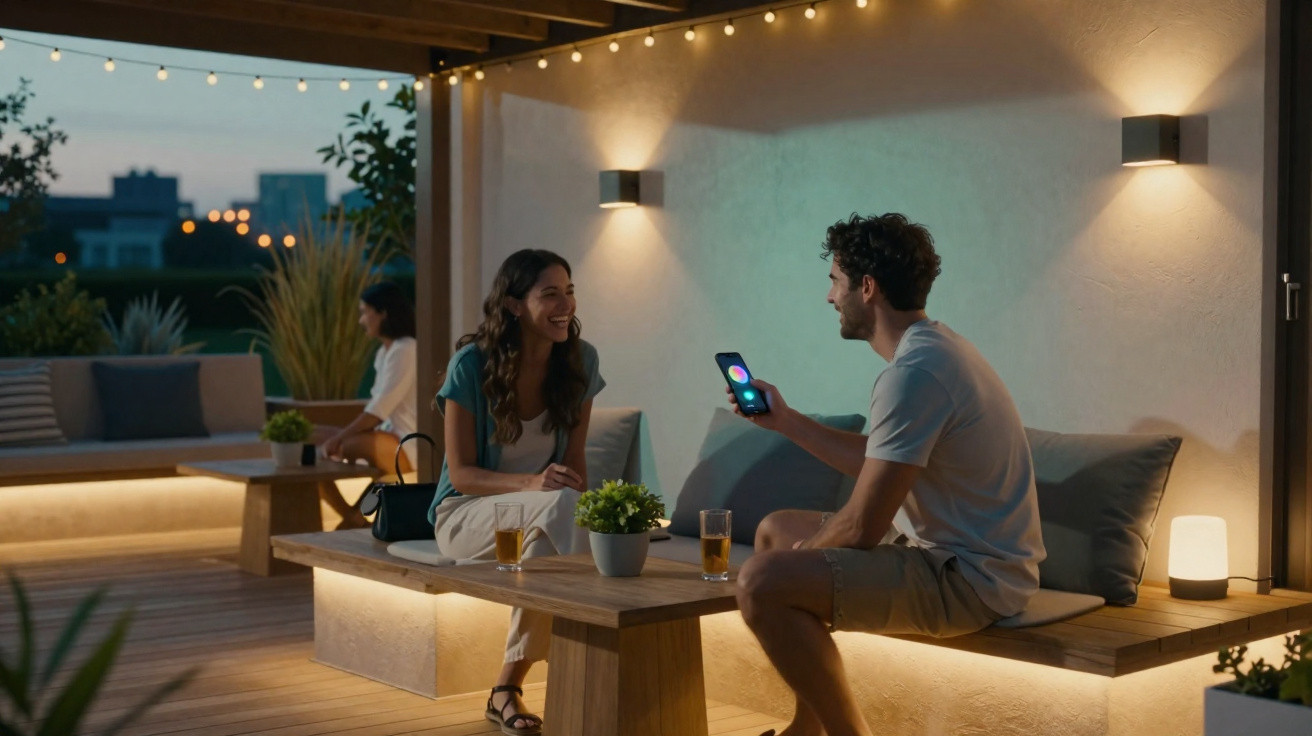
Patios are getting a subtle refresh for 2025 - and the biggest change is happening overhead, not in the seating.
Outdoor lighting is no longer treated as an afterthought. Designers are building patio light the way you’d build a set: layered, controllable, and able to switch mood on demand. The old pattern of “one miserable bulb by the back door” is giving way to programmable scenes that make even a small terrace feel like a second lounge.
Why patios are becoming the new night‑time living rooms
Outdoor areas have become everyday space in recent years, not just somewhere to sit on rare sunny afternoons. People now work, dine, entertain and unwind outside well after sunset - and that puts lighting front and centre, particularly on compact patios where every square metre has to work hard.
To match that shift, manufacturers are pushing low‑voltage set‑ups - often 12‑volt - designed to click together without major electrical work. Spotlights, border lighting and pergola fittings can run on safer cabling with plug‑and‑play connectors, so you can rearrange planters, seating or the dining table without having to rewire the whole layout.
Lighting designers are also exporting an indoor rulebook to the garden: “layered lighting”. The idea is to divide the patio into three simple layers - an overall gentle glow, practical light for tasks, and a few accent points that add depth and theatre.
Layered lighting turns the patio from a flat, overlit space into a flexible scene, where each light has a specific role.
Grace Denniston, Mark Tremblay and other outdoor specialists frequently mix fixed architectural fittings with small cordless, rechargeable lamps. One night, a portable lantern might sit beside the sofa; the next, it shifts to the dining table - keeping the look consistent while staying adaptable for last‑minute plans.
The 2025 shift: smart, LED and fully staged patios
For 2025, the dominant direction is clear: patios lit by fully programmable “lighting scenario” set‑ups, driven by LEDs and smart controls. Instead of a single, unchanging setting, outdoor spaces gain multiple scenes to suit the moment - reading alone, casual drinks, a family dinner, or a bigger gathering.
Smart LED ranges from Philips Hue, LIFX, Yeelight and Nanoleaf let you adjust colour temperature, saturation and brightness via phone or voice assistant. Warm, dimmed whites work for late‑night chats. More neutral whites improve visibility at the grill. And colour washes can throw magenta or teal across a wall for a more playful feel.
The patio becomes programmable: one tap on a smartphone can flip the space from calm retreat to social spotlight.
These connected systems often tie into broader smart‑home platforms. Motion sensors from Ring or Philips Hue can light a route as soon as someone steps outside. Timers can track sunset and sunrise, so terrace lights gradually come on without anyone needing to touch a switch.
Efficiency is a major part of the appeal. LED modules use a fraction of the energy of halogens and can last beyond 25,000 hours. Many product lines now combine wired fittings with solar options from brands such as SolarLight or Gardena, helping keep ongoing costs down in areas you use less - such as the far end of a garden path.
- Adjustable ambience, with dimming and colour control for different moods and events.
- High flexibility, thanks to cordless lamps, plug‑in posts and extendable systems.
- Simple control, via apps, remotes and voice commands through major assistants.
- Lower energy impact, with efficient LEDs and solar units for secondary areas.
How Philips Hue and LIFX are shaping the patio “lighting scenario”
In Western markets, two names are leading this push: Philips Hue and LIFX. Both are built around the premise that outdoor lighting should work like smart lighting indoors - only more robust and weather‑ready.
Philips Hue: ecosystem and automation first
Philips Hue’s advantage is breadth. With a Hue Bridge, you can run wall lights, bollards, lightstrips and even portable table lamps around the terrace - all managed in the same app you use for the living room.
Take Hue’s Econic bollards: they can edge a path or terrace border with diffused light. Pair them with outdoor motion sensors and the scene wakes as someone approaches, then drops back after a set delay. Hue’s outdoor lightstrips can be hidden under steps or bench seating to create indirect light that reduces glare while making edges easier to see.
A single Hue scene can blend wall lights, path bollards and subtle step lighting into one coordinated outdoor composition.
Because Hue works with the main voice platforms, a short command can move you from a “Quiet evening” scene to a “Garden party” look, changing brightness, warmth and colour across several fittings at once.
LIFX: punchy colours and Wi‑Fi convenience
LIFX comes at the patio from a Wi‑Fi‑first perspective. Many of its bulbs and outdoor spots connect straight to your home network, without needing a bridge - attractive if you want fewer hubs, boxes and extra wiring.
LIFX also tends to prioritise vivid colour and strong lumen output, which makes it effective for feature walls, planted backdrops and vertical structures. A handful of RGBW spots can pick out a tree, emphasise brickwork or bring a water feature to life, while the remainder of the terrace stays in calmer whites.
Both Hue and LIFX now include effects such as gentle colour cycling, candle‑style flicker and automated dimming curves through the night - helping keep the atmosphere intact while reducing power use once guests have gone.
Building your 2025 patio lighting plan
Professionals usually begin somewhere other than the fittings: they start with how you genuinely use the patio. That approach translates well for homeowners aiming for a 2025‑style terrace.
| Patio zone | Lighting goal | Typical solution |
|---|---|---|
| Dining area | Comfortable visibility without harsh glare | Wall sconces, overhead string lights, dimmable smart bulbs |
| Lounge corner | Relaxed, warm ambience | Cordless table lamps, floor lanterns, warm white lightstrips |
| Pathways and steps | Safety and orientation | Low bollards, recessed step spots, motion‑activated fixtures |
| Feature wall / plants | Visual focus and depth | Adjustable RGB spots, wall‑washing projectors |
When you’ve mapped the zones, you can allocate one or two luminaires to each purpose. Ambient light often comes from string lights or smart wall fittings. Task light can be created with directed spots under benches or along steps. Accent light - the layer that makes everything feel deliberate - typically comes from RGB projectors or colour‑tunable lightstrips.
Low‑voltage 12‑volt systems fit many DIY installations. With pre‑terminated cables and clip‑on connectors, it’s easy to expand as your patio changes. Many homeowners begin with a few essentials close to the door, then add posts in the garden or step lights once they’ve refined how they use the space.
Choosing fixtures that match your style, not just the tech
Apps and specifications matter, but the fittings still need to suit the terrace’s aesthetic. A minimalist city balcony may look best with slim graphite bollards and clean cube‑style wall lights. A softer, more biophilic patio tends to suit lantern forms, woven shades and timber‑toned details.
Brands are also pushing smarter outdoor fittings that are more decorative. Eglo and similar manufacturers offer smart wall lamps that resemble traditional exterior lanterns while behaving like connected devices. Rechargeable table lamps increasingly borrow indoor styling too, with rattan or bamboo finishes that make the technology feel less clinical.
RGB projectors - including many budget floodlights that work with voice assistants - can wash a vertical garden in muted green or blush hues. Used carefully, coloured light adds depth and interest without making the patio feel like a nightclub.
Automation, safety and small but real risks
Smart scenes do more than create ambience. Sunset‑based timers can keep paths lit when you arrive home late. “Presence” programmes can cycle lights while you’re away, which helps deter opportunistic break‑ins.
Motion sensors at entrances can cut down shadowy corners, and they also reduce wasted energy by turning lights on only when needed. Paired with efficient drivers and LEDs, evening use is far less likely to show up as a nasty surprise on the electricity bill.
There are drawbacks to consider. Constant app alerts and too many settings can become tiring. A badly positioned motion sensor may set the lights off every time a cat passes. And using cheap, uncertified outdoor fittings can create genuine safety problems, particularly in wet climates. Checking IP ratings and cable quality avoids most of these issues.
Costs, payback and a simple planning exercise
A complete smart patio system isn’t cheap. By the time you add a hub, multiple fixtures and sensors, the upfront cost can compete with a modest outdoor furniture set. However, ongoing running costs are typically low, and LED lifespans spread that spend over many years.
A quick planning exercise can help. Write down how many evenings per week you actually use the patio between March and October. Multiply that by the number of hours you want comfortable lighting. That rough total gives you a “value per hour of enjoyment” figure - often better than what you get from a guest room that’s rarely used.
For some households, a hybrid route works best. They install smart, colour‑tunable lighting around the main seating area, then use basic warm‑white solar stakes for the far end of the garden. That keeps the experience rich where people gather, while keeping the budget sensible.
With 2025 on the horizon, patios are being treated less like back‑of‑house corridors and more like curated, adaptable stages. Smart LEDs - led by ecosystems such as Philips Hue and LIFX - are giving even modest outdoor rectangles a fresh job: part living room, part garden, and part quiet theatre after dark.






Comments
No comments yet. Be the first to comment!
Leave a Comment