
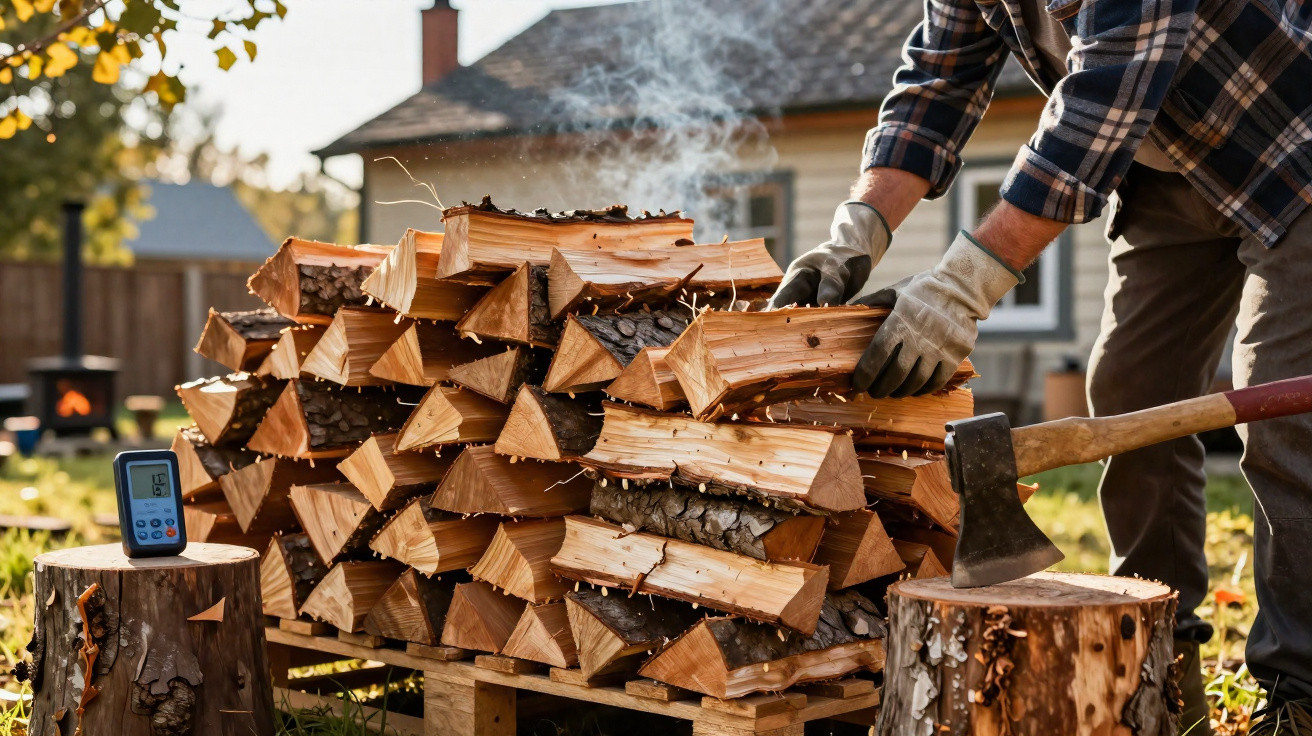
Anyone who burns wood usually thinks of cosy stove evenings, sparks and the crackle of flames. What many people do not realise is that you can significantly increase the heat you get from your own logs with a simple technique applied consistently - without buying a new stove and without expensive alterations, purely by handling the fuel correctly.
Why well-seasoned wood gives off far more heat
Damp wood may seem harmless, but in practice it wastes energy. A substantial portion of the energy contained in the log is used up first to evaporate the water inside it. Only what remains after that actually warms your room.
“The drier the wood, the higher the temperature in the firebox - and the stronger the heat released into the living space.”
Wet logs produce heavy smoke, are slow to catch and create very little lasting ember bed. That leads to:
- lower heat output with the same amount of wood
- thick smoke and an unpleasant smell
- rapid sooting of the stove glass and the appliance itself
- increased build-up inside the chimney
These deposits are often made up of creosote, a tar-like substance that is highly flammable. If you routinely burn wood that is too wet, you raise the risk of a chimney fire - something firefighters know all too well.
How to tell if firewood is genuinely dry
Many casual burners rely on instinct: “It’s been stacked for a year, so it’ll be fine.” In reality, that assumption is surprisingly often wrong. Look for these clear signs instead:
- Appearance: Seasoned logs tend to look greyish or pale, and you can usually see cracks on the end grain.
- Weight: A properly dried piece feels noticeably lighter than a freshly split log of the same size.
- Sound: Knock two dry logs together and you’ll hear a bright, clear ring. Damp wood sounds dull.
- Smell: A strong resinous smell or a musty odour is a warning. Mature, dry wood has only a faint scent.
If you want certainty, buy a simple wood moisture meter. For efficient heating, the moisture content should be below 20%. Take the reading from the side in the interior of the wood - not just on the surface.
The technique that makes the difference: split, stack, dry
The real “secret” that can make your stove feel as if it heats twice as well starts long before you light the first fire - it begins with how you split and store your wood.
Split early, and split small enough
The key is to split logs as soon as possible after felling. Whole rounds only dry at the bark; the centre can stay wet for a long time. Every split increases the surface area, which gives moisture more space to escape.
- recommended log length: about 30–50 centimetres, matched to the stove’s firebox width
- cross-section: slimmer, easy-to-handle pieces rather than thick lumps
- no “bark pocket”: feel free to knock off larger sections of bark, as it traps moisture
“If you split wood fresh and size it into stove-friendly pieces, you often halve the drying time - laying the foundation for noticeably higher heat output.”
Stack properly: air is the best dryer
A pile of logs simply tipped into a corner dries poorly. Specialists recommend a stack that allows plenty of airflow:
- keep wood off the ground by using pallets, battens or old beams
- leave small gaps between rows so wind can pass through
- “cross” the ends for stability by laying logs alternately at right angles - this adds strength and creates air channels
A tarpaulin or lean-to roof protects against rain, but it should cover only the top. Keep the sides open; otherwise moisture gets trapped and the logs can start to mould from the inside.
Choose the right location: let sun and wind do the work
If you have options, place your wood store in a sunny spot that also gets plenty of breeze. A south- or west-facing position is ideal. Sunlight gently warms the wood, while moving air carries moisture away. By contrast, a sheltered, shaded north-facing wall can slow the drying process dramatically.
Patience pays: realistic drying times
Even with excellent storage, wood still needs time. As a rough rule of thumb:
| Wood species | Type | Recommended storage time |
|---|---|---|
| Spruce, fir, pine | soft conifer | at least 1–1.5 years |
| Beech, oak, ash | hard broadleaf | at least 2 years |
Many experienced burners use a rolling system: they cut and split wood now that they intend to burn no earlier than two winters from now. What goes into the stove today is only wood that has been stored for several years - and is therefore reliably dry.
The wood species affects heat, embers and burn speed
Not all timber performs the same. Softer conifers such as spruce or pine dry quickly and ignite easily, but they tend to give a shorter, faster flame. They are excellent for getting the fire going, but less suitable for long, steady evening warmth.
Hardwoods such as beech or oak take longer to season properly. In return, they deliver noticeably more energy per log and produce embers that last. If your goal is “double” the perceived heat output, the main burn should clearly rely on these dense broadleaf woods.
“The combination is what counts: quick-drying softwood for lighting, dense hardwood for long-lasting embers - that’s how you get the most out of every stove evening.”
How to keep all that hard-won dry wood dry
Many people do everything correctly - until autumn arrives. Then the firewood is hurriedly shoved under a completely sealed tarpaulin or into a damp garage. The remaining moisture rises again, and the logs absorb water like a sponge.
A simple wood shed with a roof and open sides keeps off rain and snow without blocking airflow. If you only have a tarpaulin, lay it loosely and cover just the top third of the stack. This sheds rain while still allowing circulation.
What better combustion delivers in practice
When you consistently burn well-seasoned, correctly stored wood, the benefits show up in ways you can notice day to day:
- The stove reaches high temperatures more quickly.
- You need less kindling and paper to get going.
- The glass blackens far more slowly.
- Embers last for hours, even once the flames have reduced.
- Wood consumption drops while the room temperature feels much the same.
Many stove owners say that after switching firmly to properly dried hardwood, they have to reload much less often. Subjectively, it can feel as though the stove suddenly heats “twice as well” - and the physics behind that is simply that more of the energy stored in the wood is actually being converted into useful heat.
Practical extras for even more efficiency
Beyond drying, there are a few additional levers that can further improve the heat you get from burning wood:
- Correct log size: Oversized pieces tend to smoulder rather than burn. Handy logs with a good air gap between them produce more flame and therefore more radiant heat.
- Pay attention to air supply: The primary and secondary air controls should match the wood type and how full the firebox is. Too little air creates soot; too much air sends heat up the chimney instead of into the room.
- Clean the stove: A clean firebox and an unobstructed flue improve combustion. Remove ash regularly, but not completely - a thin layer of ash helps protect the grate.
If you are new to this, a chimney sweep or heating engineer can give basic guidance on the best way to operate your particular appliance. Many professionals will also look at your firewood if asked and tell you whether the seasoning appears adequate.
Finally, it is worth understanding the term “moisture content”, which often appears on firewood invoices or in guides: it refers to the share of the log’s mass that is water. A log with 50% water content uses a significant portion of its energy just to evaporate moisture before any meaningful heat reaches the living space. If you manage to bring that figure down to below about 20%, you will notice the change on the very first winter evening - the flame is steadier, the crackle becomes more pronounced, and the heat output increases noticeably.





Comments
No comments yet. Be the first to comment!
Leave a Comment