
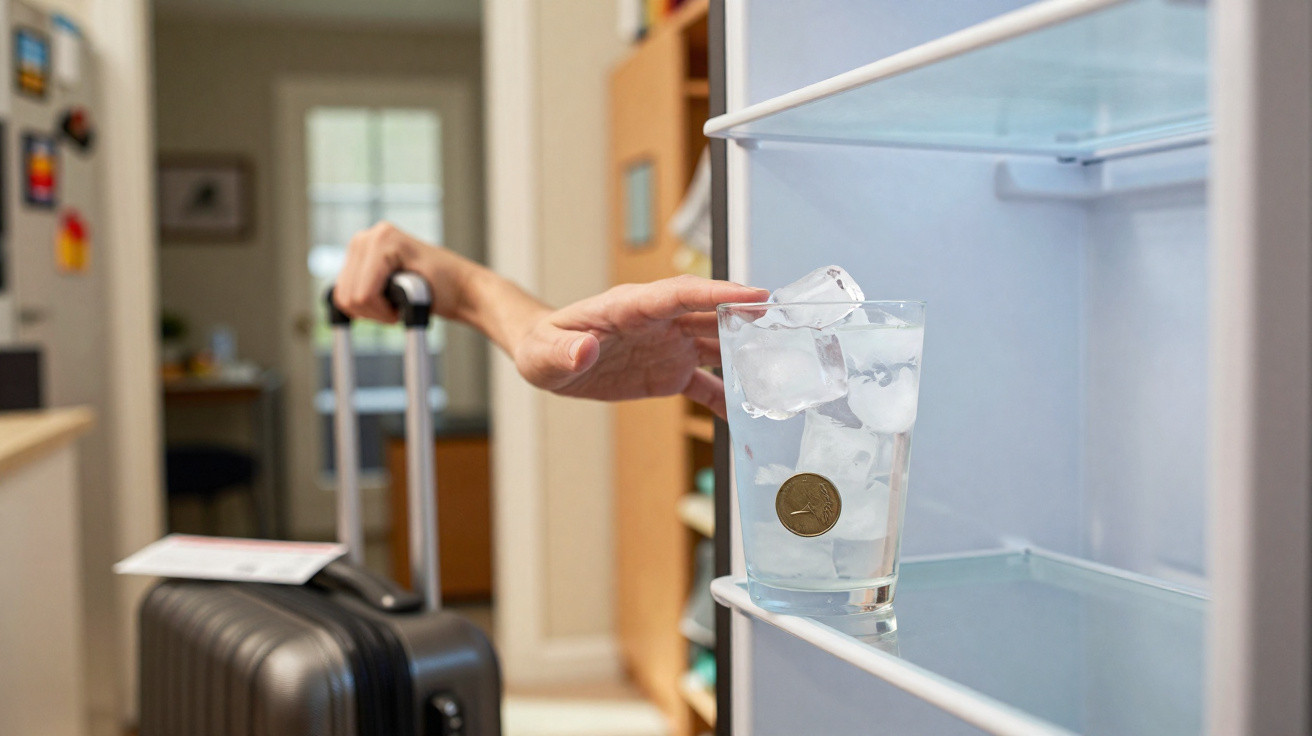
Leaving food in the freezer while you travel is perfectly normal, but a prolonged power cut can cause items to thaw and then refreeze without you realising. To help spot that kind of problem, many people use a simple hack: a plastic cup of frozen water with a coin on top. It won’t tell you how long the electricity was off, but it can act as a clue that the freezer warmed up at some point while you were away.
How does the coin trick work?
The aim is to create a simple “marker” inside the freezer. You start by filling a plastic cup with water and freezing it until it is solid all the way through. Once the water has fully turned to ice, place a coin on the surface, then put the cup back into the freezer.
When you return from your trip, you only need to check where the coin is sitting. If it is still on top of the ice, that suggests the freezer most likely stayed at a stable temperature. If the coin has sunk into the middle of the cup or is sitting at the bottom, that implies the ice partially or completely melted and then froze again - pointing to a long interruption in the freezer’s cooling.
How to do the coin test before travelling
This takes just a few minutes to set up and can help reveal issues that may not be obvious just by looking at frozen food.
- Find a sturdy plastic cup or container.
- Fill it with water and freeze it completely.
- Put a coin on top of the ice.
- Return the container to the freezer.
- Keep it somewhere it will not be moved around.
- Check the coin’s position when you get back.
Does the test guarantee the food is safe?
No. Specialists note that this method is only a visual indicator. It can show that the ice melted, but it does not tell you how long the temperature stayed too high, nor what temperature the food actually reached.
When you get home, it is also worth looking for warning signs such as misshapen packaging, an excessive build-up of ice crystals, foods stuck together in solid blocks, changes in texture, and unusual smells. If you are unsure about the safety of perishable foods that may have fully thawed, the safest advice is to throw them away.
- Do the test before you travel.
- Keep the freezer door properly shut.
- Avoid opening the freezer unless necessary.
- Check the coin’s position when you return.
- Inspect the condition of the food.
- If in doubt, bin perishable items.
Is it worth using this trick?
Because it costs virtually nothing and takes less than a minute to set up, the coin test can provide a handy reference for anyone who will be away from home for several days. However, it should be treated only as a sign that thawing may have occurred - not as proof that everything is still safe to eat.
To protect food safety, use the trick alongside a careful check of the food’s condition when you return.





Comments
No comments yet. Be the first to comment!
Leave a Comment