
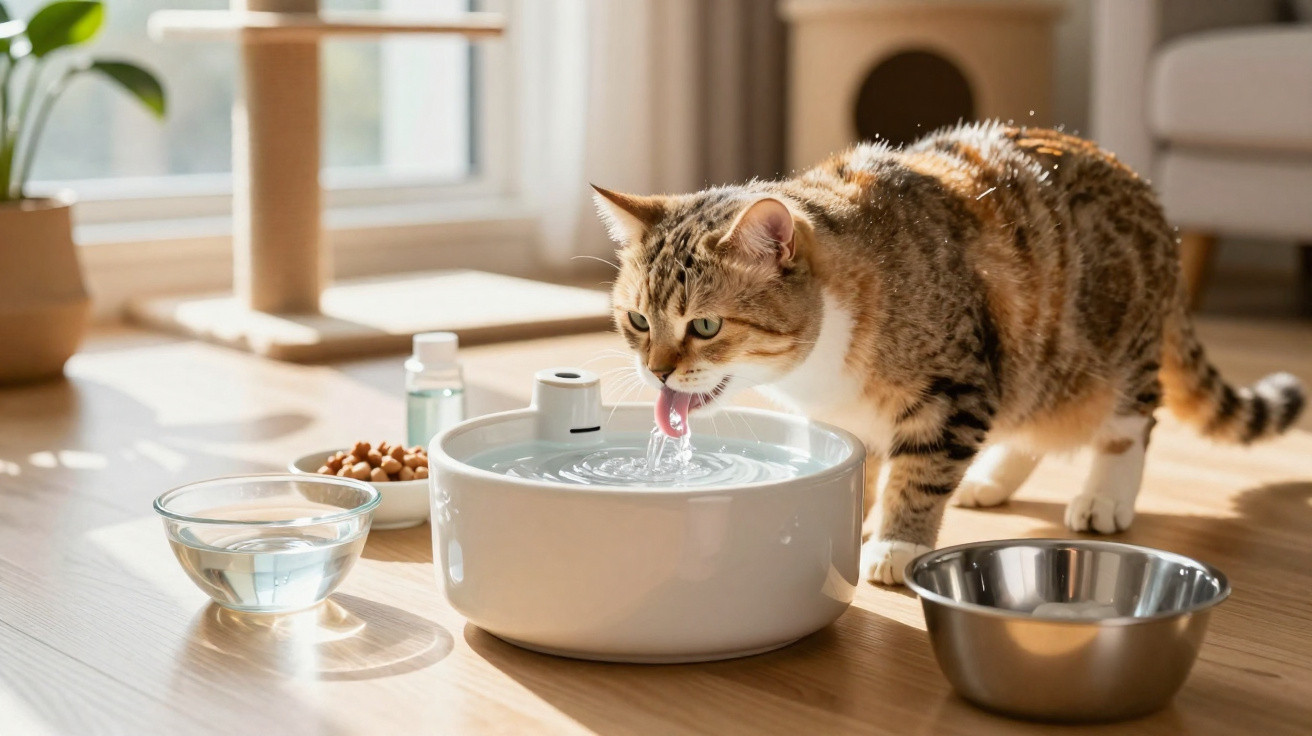
The bowl stays full for hours, yet your cat seems to pay it no attention. Although many felines drink quietly and out of sight, taking in too little fluid can contribute to dehydration and more concentrated urine. The good news is that a few straightforward adjustments at home can make water more appealing-without pricey supplements or trying to force your pet to drink.
Why do cats often drink so little water?
Domestic cats descended from animals that obtained much of their fluid from their prey, which helps explain why many cats are less inclined to seek out a water bowl. Today, however, lots of pets eat mainly dry kibble, which contains far less moisture than wet food and therefore calls for more drinking throughout the day.
Even so, a cat that rarely visits the bowl is not automatically unwell. How much water is needed depends on factors such as weight, diet, temperature and overall health. According to Cornell University, cats that eat pouches or tins may drink less because these products can contain about 80% water.
What five tricks can increase water intake?
There is no single type of water bowl that suits every cat. A better approach is to provide options and pay attention to where, how and when your cat chooses to drink. Small trials over a few days can show whether they prefer running water, wider bowls or quieter spots.
- Place several bowls of fresh water in different rooms around the home.
- Try a fountain or a tap with a gentle flow, always supervised.
- Mix small amounts of water into wet food gradually.
- Choose wide, shallow bowls that do not press on the whiskers.
- Change the water daily and wash the bowls to prevent odours and residue.
Introduce only one change at a time so your cat is not confused or put off. Some cats favour glass, ceramic or stainless-steel bowls, while others are drawn to the movement of a fountain. The aim is not to make them drink, but to make hydration an easy, always-available choice throughout the day.
Where should the bowls go?
Putting water right next to the food can be convenient, but it does not suit every cat. International Cat Care suggests trying locations away from both the feeding area and the litter tray. Busy corridors, noisy appliances and places where another animal could block access can also reduce a cat’s willingness to drink.
Set bowls in calm, easy-to-reach areas-especially if you have older cats, kittens or pets with limited mobility. In multi-cat homes, offer multiple water stations to minimise conflict. A bowl tucked away in another room can become the favourite simply because it feels safer.
Watch the video shared by the YouTube channel Alexandre Rossi Dr Pet with tips on encouraging your kitten to drink more water.
How can you add water to food safely?
Wet food already contributes a meaningful amount of fluid and can be diluted with a little extra water. Start with a small spoonful, mix thoroughly, and increase slowly only if your cat accepts it. Sudden changes in texture or smell can cause a picky eater to abandon the meal altogether.
Do not leave the mixture out for many hours, particularly on warm days, and throw away leftovers that are no longer fresh. Avoid seasoned broths, milk and human foods, as they may contain salt, fat, onion, garlic or other unsuitable ingredients. Any bigger dietary changes should be discussed with a vet.
When does low water intake need attention?
Look at the overall pattern of behaviour rather than the water level in the bowl alone. Loss of appetite, vomiting, weakness, dry gums, reduced urination, or repeated visits to the litter tray without being able to pass urine should be assessed. An inability to urinate-especially in male cats-may indicate a blockage and must be treated as a veterinary emergency.
Start today by setting out an extra bowl, refreshing the water and adding more moisture to meals. These steps take only a few minutes, but they can uncover important preferences and support your cat’s health. If drinking changes suddenly-either more or less-do not wait for things to worsen before seeking professional guidance.



Comments
No comments yet. Be the first to comment!
Leave a Comment