
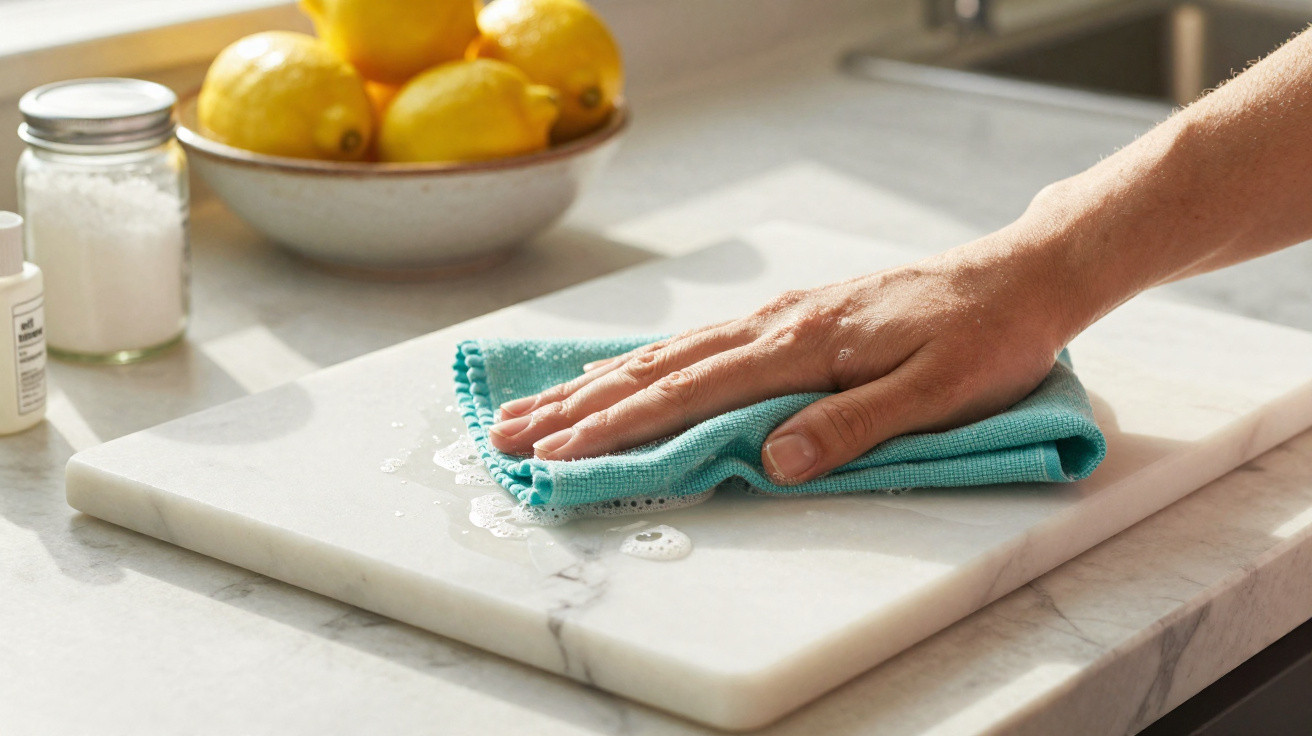
A marble board may look tough, but lemon, vinegar and coarse salt target its mineral structure and the finish. To clean it without leaving dull marks, the best everyday option is a colourless, neutral washing-up liquid, applied with a soft microfibre cloth.
Why do lemon and coarse salt damage marble?
Marble is made largely of carbonate minerals such as calcite, which react when they meet acidic substances. Lemon and vinegar trigger a surface corrosion known as an acid etch, stripping away the shine and leaving dull patches that normal washing will not restore.
Coarse salt is also a poor choice because its crystals create friction against the polished surface and can cause faint scratching. Over time, these marks trap grime, change the feel under your hand, and make the surface harder to keep even in appearance.
The main risks of this combination are:
- Lemon: reacts with the stone’s carbonate minerals.
- Salt: can scratch and wear down the polished surface.
- Dullness: acid etching leaves permanent matt patches.
- Pores: scratches make it easier for liquids and dirt to penetrate.
- Repair: deeper damage may require professional repolishing.
What happens when an acidic product touches the stone?
Marble is a metamorphic rock formed from limestone, made mainly of calcite or dolomite. Because its natural composition is carbonate-based, acidic products can react with the stone, causing chemical wear and a permanent loss of polish.
The pale, whitish mark left by acid is not dirt sitting on top of the stone-it is a change to the finish itself. That is why bicarbonate of soda, more lemon, or vigorous scrubbing will not fix it and can enlarge the damaged area, making professional repolishing necessary.
How to clean a marble board properly
Add a few drops of colourless, neutral washing-up liquid to warm water, dampen a microfibre cloth, and wipe the board gently. This lifts grease and everyday residue without attacking the stone, while the cloth helps minimise the risk of scratches.
Gentle cleaning helps protect the polish.
A small amount goes a long way
Use only a few drops of neutral washing-up liquid diluted in warm water.
Avoid leaving the board submerged or covered with water for extended periods.
After cleaning, wipe again with a second cloth lightly dampened with plain water to remove any remaining detergent. Finish straight away with a dry microfibre cloth, as letting liquid evaporate on the surface encourages marks, absorption and a loss of visual uniformity.
Clean in this order:
- remove crumbs and loose debris with a dry cloth;
- dilute a few drops of neutral washing-up liquid in warm water;
- wipe with a microfibre cloth using gentle movements;
- remove the detergent with another lightly damp cloth;
- dry the entire surface immediately.
Which precautions prevent permanent stains and scratches?
Juices, coffee, wine, sauces and fatty foods should be wiped up as soon as they spill onto marble. Because the stone is porous, prolonged contact increases the likelihood of staining, especially when the sealant is worn or cleaning is delayed.
It is also important to avoid rough sponges, wire wool, abrasive powders and multi-purpose cleaners that are not specifically intended for natural stone. Even products marketed as “heavy-duty” for kitchens can damage the finish, alter the colour, or leave marble with permanent scratches.
To protect the board, avoid:
- lemon, vinegar and other acidic cleaners;
- coarse salt, abrasive powders and wire wool;
- water sitting on the surface for too long;
- strongly pigmented or greasy foods left without immediate cleaning;
- products without a clear indication that they are suitable for natural stone.
How does sealant help preserve marble?
If you are looking for tricks to remove build-up from stained utensils, remember that each material needs a different approach. With marble, the safe option combines neutral washing-up liquid, minimal water and immediate drying, without acidic or abrasive “recipes”.
A waterproofing sealant reduces liquid absorption, but it does not make the stone resistant to lemon or vinegar. Reapplication should follow the manufacturer’s guidance or a professional’s advice, maintaining protection, appearance and durability without creating a false sense of security.



Comments
No comments yet. Be the first to comment!
Leave a Comment