
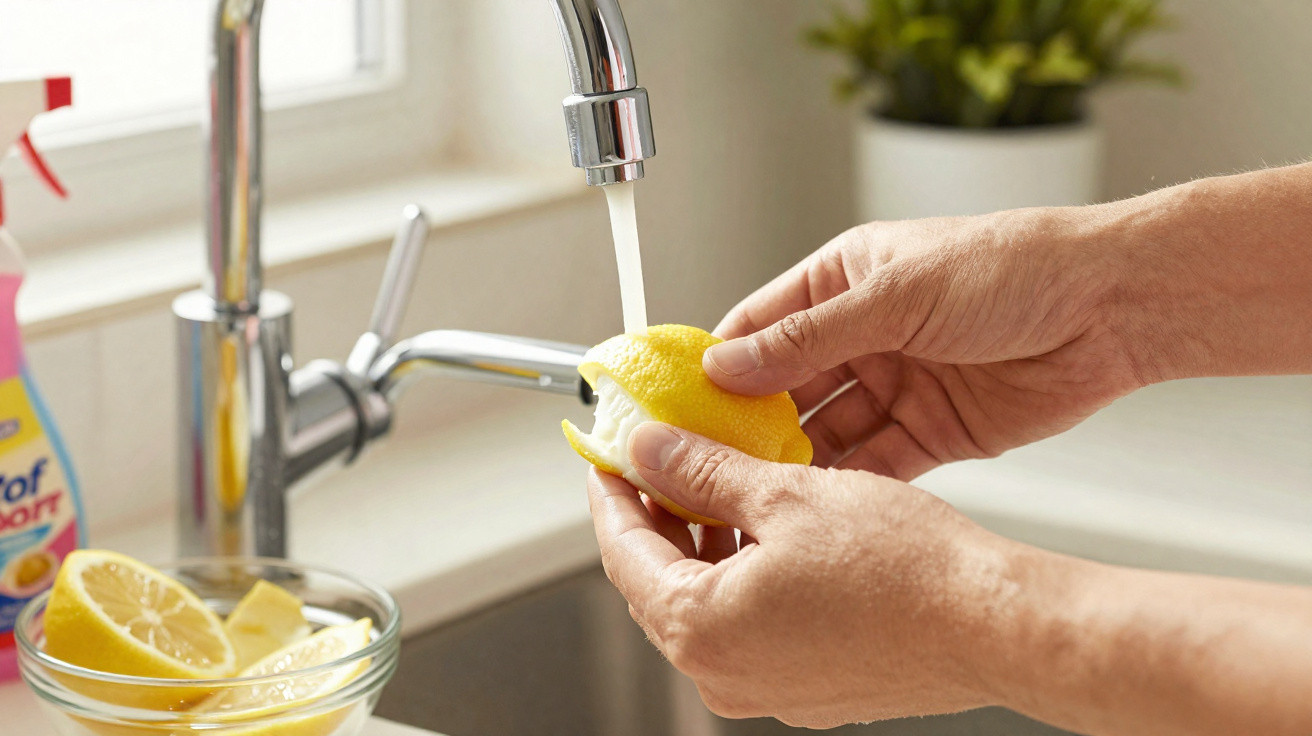
Among the home hacks increasingly popular for everyday cleaning, one that stands out is using lemon peel on the tap. Rather than reaching straight for harsh chemicals, many people rely on the natural acidity in the fruit to deal with limescale that builds up over time-making use of something that would normally be thrown away after cooking.
How does lemon peel work on limescale and other grime?
On taps, the most frequent annoyance is a mix of limescale residue, water marks and greasy film from daily use. Lemon peel-rich in essential oils and citric acid-helps break down that layer, making it easier to remove without much effort.
In areas with “hard” water, which contains lots of calcium and magnesium, whitish crusts often appear around the base and spout of the tap. Citric acid reacts with these minerals, helping to loosen the build-up, while also assisting with soap residue, small patches of surface rust and marks left by standing water.
Watch a video on the YouTube channel Organise Without Fuss about how the natural acid in lemon peel melts chlorine stains and limescale, restoring the original shine to metal surfaces and taps:
https://www.youtube.com/watch?v=J3mCbyE8nco
How to use lemon peel on the tap step by step
To get the most out of this trick, applying lemon peel on the tap works best when you follow a few simple steps. Use the peel left over after squeezing the lemon, as long as it is still damp and has a little pulp on the inside.
The sequence below helps you get better results, lowers the risk of staining and avoids scratching chrome or other delicate metal finishes:
- Cut and prepare the peel: after using the lemon in recipes, set aside half the peel, leaving a little inner pulp so more citric acid stays in contact with the metal.
- Initial wipe-down: run a damp cloth over the tap to remove loose dust and soap residue, so larger particles do not scratch the chrome.
- Rub with the peel: with the inner side against the metal, rub in circular motions over limescale marks for around 2 to 5 minutes.
- Let it work: allow the juice to sit for 5 to 10 minutes; if the build-up is thick, cover the area with the peel itself or with kitchen roll moistened with lemon juice.
- Rinse and finish: rinse thoroughly with running water and dry with a soft cloth to prevent new marks and to bring up the shine.
Why might lemon be better than some chemical products?
Many limescale removers use strong acids that require good ventilation and care to avoid splashes. Lemon peel, while still acidic, is usually gentler when rinsed properly and is often enough for routine maintenance on standard metal finishes.
Another advantage is that lemon helps you make better use of the ingredient and reduces reliance on highly concentrated formulas. Even so, it is sensible to test a small, hidden area first-especially on natural stone or special metal finishes, which can be marked by any acidic agent.
What other uses does lemon peel have in the kitchen and bathroom?
The same approach you use on the tap can work elsewhere in the home, particularly in areas affected by grease, moisture or strong odours. Instead of going in the bin, the peel becomes a quick way to keep on top of cleaning between deeper cleans.
In the kitchen, it can help cut smells on chopping boards when paired with a little salt, add extra shine to stainless-steel sinks and-when warmed in water in the microwave-release a citrusy steam that loosens splatters. In the bathroom, it can soften water marks on glass shower screens and reduce odours near drains, as well as help clean shower metalwork, provided you rinse carefully and test first.



Comments
No comments yet. Be the first to comment!
Leave a Comment