
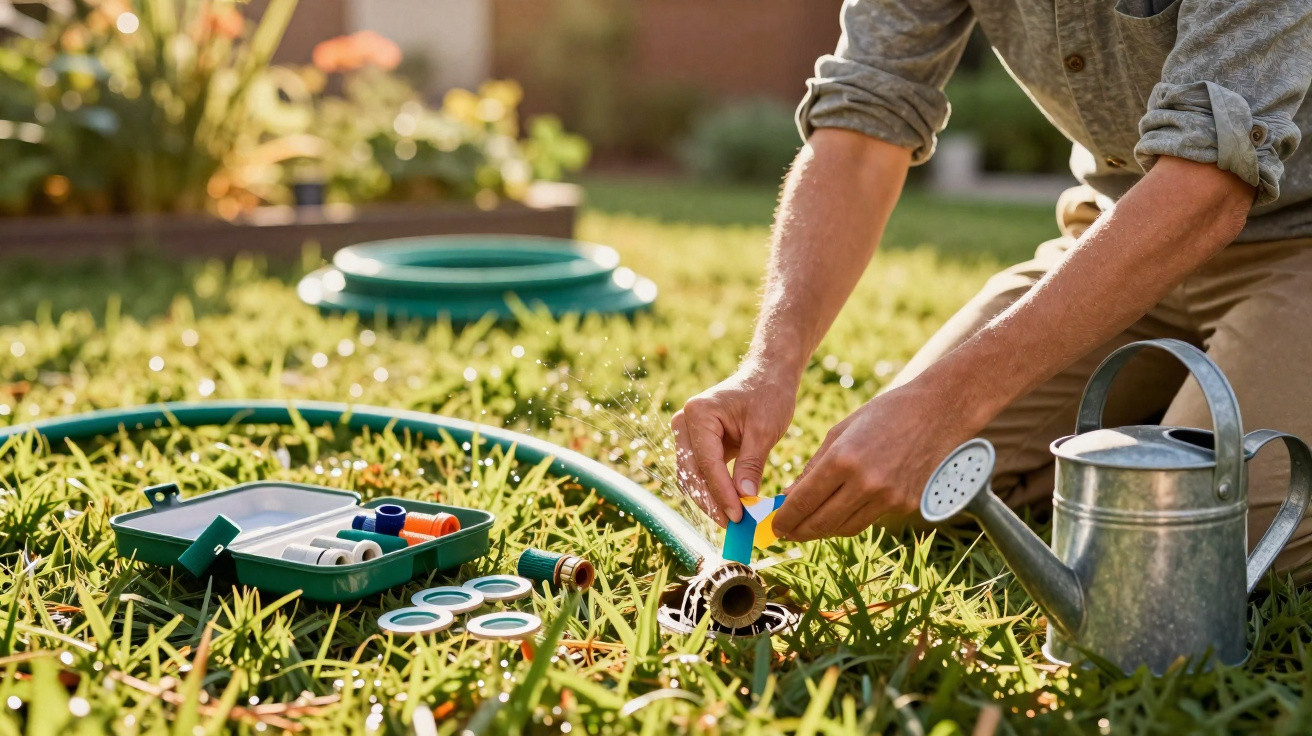
A faint sheen along the hose, a darker stain in the earth, a gentle hiss swallowed by birdsong. Then the water bill lands on the mat - or you get home and spot a muddy hollow where the tomatoes were meant to be. A minor leak, quietly running for days, perhaps even weeks.
Garden hoses don’t usually fail with any drama. They wear out gradually: a split here, a pinhole there, a connector that suddenly sprays your trainers rather than the roses. Most of us chuck the hose away and buy another, without pausing to think about the clean water that’s been wasted - or the plastic headed straight for landfill. Yet these “tiny” leaks can squander hundreds of litres over a single summer.
If you’ve ever felt a twinge of guilt watching drinking-quality water soak into your paving, you’re in good company. And once you’ve noticed that glittering jet catching the sun, it’s impossible to ignore. The upside is that with ten minutes, a knife and a bit of determination, you can often put things right.
Why tiny hose leaks matter more than you think
One bright Saturday I watched a neighbour watering his lawn. From afar it looked picture-perfect: tidy rose beds, a steady arc of water, children running about barefoot. Then I spotted the side of the hose, quietly firing a thin, continuous mist into the air - like a miniature fountain no one asked for.
Months earlier he’d wound an old strip of duct tape around the spot. By now it had turned sticky and dull, peeling away in tired ribbons. Each time he opened the tap, the leak sprang back into action, flinging water pointlessly across the concrete. He shrugged and laughed. “It’s only a bit of water,” he said, drying his glasses on a damp T‑shirt.
But “only a bit” soon becomes a lot. Water-board research across Europe indicates that a single pinhole in a hose can waste tens of litres per hour if it’s left running. Spread that over a gardening season and you’re looking at bathfuls of water disappearing into gravel and gaps. Scale that up to a street, then a town, then a city, and those innocent sprays start to look like part of a larger - and far less amusing - pattern.
At home, a leaky hose robs the nozzle of pressure, makes you keep the tap open longer, and quietly nudges up what you pay. More broadly, it’s one of those unnoticed habits that jars with the way many of us say we want to live. There’s something oddly contradictory about tending a pollinator-friendly border while a steady trickle runs straight into the gutter a metre away.
The encouraging part is that most hose leaks are repairable. Garden centres sell joiners, repair kits, replacement washers and connectors for less than the price of a takeaway coffee. With a neat cut and a simple coupler, you can often get several more years out of a hose. The key is recognising when a patch will do, when it’s better to cut and re-join, and when it’s time to retire the poor thing instead of dragging it through another leaky season.
Practical techniques to fix small leaks and loose fittings
The leak you meet most often isn’t halfway down the hose - it’s at the ends. Click-on connectors and metal spray guns look robust, but one worn rubber washer inside the fitting can turn the whole setup into a miniature sprinkler aimed at your footwear. Replacing that washer usually takes less than a minute, and it can stop an impressive amount of waste.
When the leak is along the hose body, begin by pinpointing the exact location. Turn the water on at a moderate pressure and walk the hose length slowly. Small pinholes frequently hide underneath, only giving themselves away as a flash of spray in sunlight or a damp patch on the lawn. When you find it, mark the place with a peg or a bit of string before switching the tap off.
For tiny holes that aren’t near the ends, self-fusing silicone tape is often a strong option. Pull it tight and wrap it carefully around the damaged area, overlapping as you go. Because it bonds to itself, it forms a flexible seal that copes with bending and coiling. If you want a tidier, longer-lasting repair, cut out the damaged section completely with a sharp knife and fit a hose repair joiner, tightening the clamps so the hose grips firmly on both sides.
There’s a point, though, where repairing starts to feel like wrestling with the inevitable. Hoses left out in strong sun for years tend to become brittle. The plastic begins to split along the length, and sealing one leak simply pushes the pressure towards the next weak area. If you bend the hose and can see several pale, chalky lines, the material is already breaking down.
In practical terms, that means more leaks are on the way. Each one might be fixable on its own, but your time - and your patience - count as well. Let’s be honest: nobody realistically wants to be doing this every day. A hose that kinks constantly and keeps springing pinhole leaks is less likely to be handled gently, because every watering session turns into a small maintenance job.
Water pressure is another issue. Even a “small” leak on the side can noticeably reduce force at the nozzle, particularly with longer hoses or where household pressure is already on the low side. You end up opening the tap further to get the same reach, which quietly undoes the water-saving effort. Sometimes one clean cut and a joiner halfway down achieves more than five separate patches scattered along the length.
On a human level, mending a hose can be surprisingly satisfying. It’s a small, visible improvement in a world where so many problems feel distant and digital. One minute the water is fanning out into nothing; a few minutes later it’s running in a neat, directed stream. That hands-on sense of control matters. It nudges you away from being a passive buyer of cheap garden kit and towards someone who knows how things work - and how to keep them working.
There’s a follow-on benefit too. Once you’ve cut out and replaced a damaged section, you start to spot where the hose scrapes against sharp brick edges, or how leaving it knotted by the shed creates permanent kinks. You guide it rather than yank it. You store it off the ground over winter. Small changes, but they can extend the life of a basic tool by years.
Habits and hacks to make your hose last much longer
One approach beats most others for simplicity: cut, join, and bring it back to life. When you find a split or a crushed, cracked section, don’t just wrap tape around it and hope. Use a sharp blade to remove a clean, straight section on either side of the damage. Then push both cut ends firmly onto a plastic or brass hose mender and tighten the connectors evenly.
You end up with two strong, clean joins rather than a single weak, bandaged area that nags you for months. Plenty of gardeners quietly turn one long, battle-worn hose into two shorter - and very useful - lengths using this method. If your outdoor tap is near the front of the house, the spare section is handy for washing the car, while the best, most flexible length stays with the beds and borders.
If the leak is at the tap end, the quickest win is often swapping the worn rubber O‑ring inside the connector. Dirt, grit and limescale can chew up that seal faster than you’d think. A new one costs pennies and immediately stops that ring of spray that drenches the wall whenever you water pots. While you’re at it, unscrew the spray gun or nozzle and check its washer as well. A quick rinse under the tap can dislodge the single grain of sand that’s been preventing it from sealing.
The fastest way to wreck a hose is to leave it baking on paving, kinked around a sharp corner, and half-full of water. UV light breaks down the plastic, and trapped water expands and contracts as temperatures change; over time, that combination quietly stresses and tears the material from the inside. If you’ve ever picked up a hose in spring and felt it crackle in your hands, you’ve experienced that slow damage directly.
Realistically, we all know what it’s like to come home tired and drop the hose wherever it lands. On a wet, blustery evening, draining it properly and coiling it neatly can feel laughably ambitious. That’s where small, easy habits beat grand plans. Hanging it on a basic hose hook rather than leaving it on the ground - even once or twice a week - already reduces the chance it gets crushed under bikes or garden furniture.
Many leaks start at the same stress points: where the hose exits the reel, where it drags over a sharp step, where a car tyre has flattened it repeatedly. If you walk the route the hose usually takes and soften those angles - a scrap of old carpet over a brick edge, a smooth plastic guard on a corner - you can add whole seasons to its life without feeling as though you’re “doing maintenance”.
“Every hose tells you how it wants to be treated,” smiled one allotment keeper I met in North London. “Leave it in the sun, leave it full of water, and it sulks. Drain it, shade it and it’ll serve you for years.”
The small routines count. Draining the hose before winter prevents water freezing inside, expanding, and splitting the walls from within. Keeping it out of direct sun - even simply under a bench or in a shed - slows the brittle ageing that leads to hairline cracks.
- After turning off the tap, let the hose run briefly to release pressure and remaining water.
- Coil it loosely with wide loops; gentle curves are far kinder than sharp bends.
- Keep connectors off the ground so grit doesn’t grind into the seals.
There’s also an emotional side to it. These small acts of care often reflect how we feel about the rest of the space. In a garden where the hose is always leaking and snarled, beds are more likely to dry out, plants to struggle, and watering to become a chore. A hose that behaves reliably draws you outside in the evening not just to “do the watering”, but to wander, notice, and breathe. In a hot, dry spell, that difference matters - for your plants and for your head.
Sharing fixes, saving water, changing how we see “cheap” tools
There’s a quiet satisfaction in repairing something most people throw away. Garden hoses live in that awkward category of “cheap enough to replace, irritating enough to ignore”. After you’ve fixed a couple of leaks and felt your water pressure return, it becomes harder to treat them as disposable plastic.
On allotments and in shared gardens, repair know-how travels quickly. One person cuts out a cracked section and fits a joiner, another borrows the knife, and before long the whole row of plots is dotted with green and yellow connectors like little battle scars. Those patched lengths tell a different story from the heap of split, sun-bleached plastic at the tip.
For many people, the first step isn’t technical. It’s simply deciding a leak isn’t something to shrug at. Once you see that sparkling spray as both wasted water and a solvable problem, keeping a hose repair kit in the shed feels as normal as spare light bulbs under the sink.
This isn’t about getting everything perfect. Nobody is asking you to measure flow rates or record every minute the tap is running. It’s about shifting gently from “oh well, it’s leaking again” to “right, let’s fix that”. The parts are easy to find, the repairs are straightforward, and your garden couldn’t care less whether the hose is brand new or a bit of a patchwork - as long as the water reaches where it’s needed.
On a warm evening, when the light drops low and you’re outside with a hose that finally does what it’s meant to, you feel the difference in your body. No sudden cold spray on your jacket, no irritated tugging to free a stubborn kink, no guilty glance at a connector misting the path. Just the soft, controlled sound of water hitting soil - and the sense that this small corner of life is, quietly, within your care.
| Key point | Detail | Benefit for the reader |
|---|---|---|
| Spot micro-leaks | Walk along the hose under pressure, looking for fine jets and damp patches | Lets you target the repair precisely without wasting time |
| Cut and reconnect | Remove the damaged section and fit a suitable repair joiner | Provides a durable fix that can give the hose several more years of use |
| Protect and store | Avoid full sun, tight kinks and standing water inside the hose | Lowers the risk of new leaks and saves water over the long term |
FAQ:
- How can I tell whether a leak is worth repairing or whether I should replace the hose? Look at how many weak points you can spot. If there are only one or two leaks and the hose is still supple, repairing is usually worthwhile. If it’s brittle, cracked in several places and creaks when bent, replacing it - and reusing any sound sections as short extenders - is normally the better option.
- What sort of tape actually works on a garden hose? Self-fusing silicone tape is typically the most reliable for small pinholes and fine cracks. Standard duct tape often lifts and starts leaking once it’s warm and wet. Stretch the silicone tape tightly, overlap the layers, and allow a little time for it to bond to itself.
- Can I fix a leak right next to the connector? Yes, although it’s often simpler to cut off a few extra centimetres and fit a new connector. Leaks near the end usually indicate that section has taken a lot of strain and may fail again, so creating a fresh end is a cleaner, longer-lasting fix.
- Will a repair affect my water pressure? A proper repair - cutting out the damage and fitting a correctly sized joiner - usually improves pressure because it stops water escaping along the way. A poor repair with loose tape or an ill-fitting connector can restrict flow, so it’s worth doing it once, carefully, rather than stacking temporary fixes.
- How do I stop leaks appearing in the first place? Keep the hose shaded when it’s not in use, avoid driving over it or treading heavily on it, and drain it before winter. Use smooth guides where it rubs on sharp corners, and coil it in wide loops rather than tight knots. Those small habits reduce stress on the hose wall and joints, which means far fewer leaks over time.




Comments
No comments yet. Be the first to comment!
Leave a Comment