
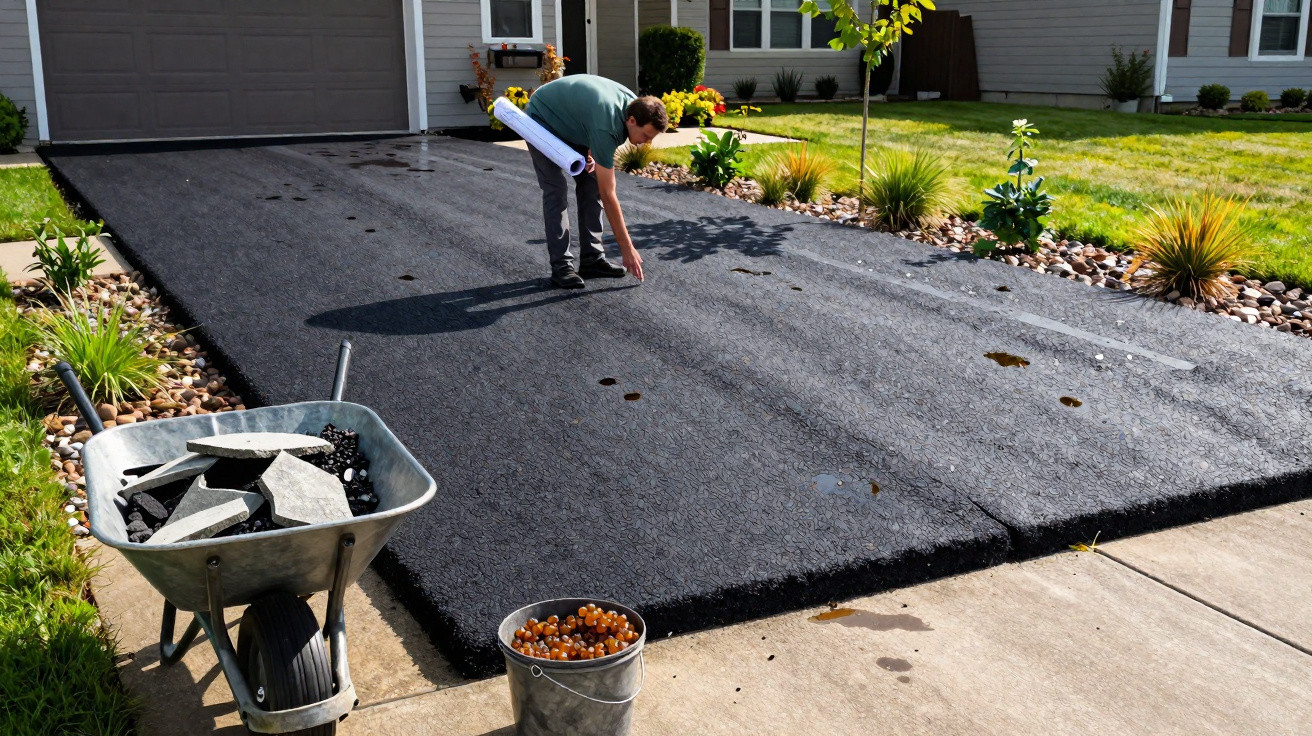
Cracks, puddles and that dull grey look: the big slab of concrete in front of the house often feels outdated. At the same time, councils are tightening rules to curb fully sealed surfaces. A recycled, water-friendly surfacing option borrowed from road building is quietly but clearly positioning itself as the successor - with compelling upsides for both household budgets and the climate.
Why traditional concrete driveways are losing their appeal
For decades, concrete was seen as the obvious driveway answer: tough, low-maintenance and “built to last”. In practice, it can disappoint. In summer it behaves like a heat-absorbing plate; in winter it becomes a rigid sheet that can crack with frost and ground movement. Minor damage rarely blends in - patches tend to stand out - and before long you’re asking: do we really want to redo everything in concrete again?
There is also the climate angle. Concrete’s strength comes from cement - and cement is the major emissions driver in the system. Producing it requires kilns running at extremely high temperatures, typically powered by fossil fuels. Globally, the cement industry accounts for a significant share of construction-sector greenhouse gas emissions.
“Anyone who upgrades their home’s energy performance but leaves a large, solid concrete slab at the front door is living with a noticeable contradiction.”
Concrete is increasingly under financial pressure too. A decorative concrete driveway done to a good standard can easily come in at around €70–120 per m². If remedial work is needed later, the bill often climbs further, because repairs are technically fiddly and seldom look convincing.
Recycled asphalt surfacing: old road material, a new opportunity
In road construction, using recycled material has long been routine. With what’s often called a bituminous asphalt mix, aggregates such as gravel and sand are combined with a bitumen-based binder to form a hard-wearing surface. That same idea can be applied effectively to domestic driveways.
The basic approach is straightforward: worn road surfaces are milled off, then crushed either on site or at a plant and reused as recycled feedstock. This material is widely known as RAP (Reclaimed Asphalt Pavement). It can form the foundation for a new driveway without having to produce every stone and every drop of binder from scratch.
“Recycled asphalt surfacing saves raw materials, lowers the energy required for production and cuts transport distances - without the user having to accept major compromises on stability.”
Example calculations from North America suggest a driveway based on recycled asphalt costs roughly $7.5 per square foot, which is quoted as about €6.9 when converted. A similar area in concrete can reach up to $20. The service life of RAP-based surfaces is typically given as around 15–30 years. While concrete often lasts a bit longer in many cases, it is substantially more expensive and harder to refurbish.
What modern, “green” surfaces can do beyond recycling
The shift is not only towards recycled content, but also towards permeable and plant-bound systems. More and more councils are introducing requirements that limit fully sealed areas. The aim is for surfaces to absorb rainwater rather than sending it straight into the drains.
Draining surfaces for fewer puddles and more groundwater recharge
Draining asphalt or blended surfaces use a more open structure. Rainwater can filter through the surface and soak into the ground beneath. That means fewer puddles, less pressure on drainage networks, and more water retained in the soil - precisely what many local authorities are now explicitly demanding.
These systems often cost about 15–25% more than basic standard surfacing, but they deliver clear functional and environmental benefits. If you’re tired of small “lakes” forming in the driveway, the difference is noticeable.
Plant-based binders instead of purely fossil-derived products
Another building block is the use of plant-based binders. Rather than relying solely on petroleum-derived materials, some binders are produced partly from renewable resources. Combined with 30–35% recycled aggregate, the result is a surface that requires far fewer virgin raw materials.
In everyday terms, that means the driveway looks like a conventional asphalt surface, comfortably supports cars and bicycles, yet has a lower climate impact during manufacture than more traditional options.
How homeowners should plan a driveway with recycled surfacing
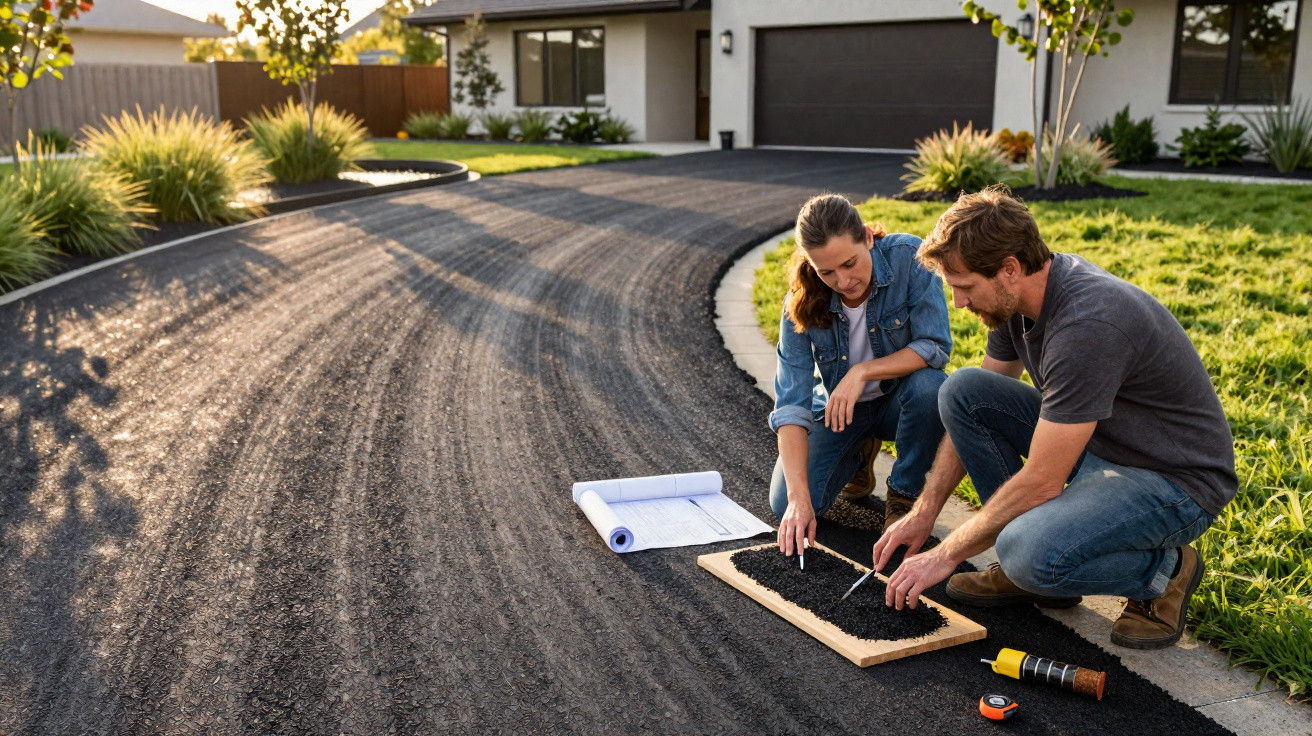
If you want to replace a concrete driveway, it’s not wise to pick the cheapest quote without scrutiny. Performance depends heavily on expertise and, above all, on how well the sub-base is prepared. It’s worth choosing contractors who regularly install recycled asphalt and draining systems.
When speaking to a specialist, a few targeted questions can help you separate solid proposals from weak ones:
- What proportion of recycled material will be used?
- Will the surface be fully sealed, or is a draining/permeable build-up planned?
- How thick will the base course and surface course be?
- How will the ground be stabilised (frost protection, compaction)?
- What service life and maintenance level does the contractor expect?
Clarifying these points before signing a contract significantly reduces the likelihood of settlement cracking, standing water and costly remedial work later.
Price, climate, comfort: a direct comparison
For many homeowners, the key question is: does it pay off? A rough comparison helps frame the choice.
| Feature | Concrete surface | Recycled asphalt surfacing |
|---|---|---|
| Price per m² (guide values) | approx. €70–120 | approx. €30–70, depending on build-up |
| Service life | approx. 25–40 years | approx. 15–30 years |
| Repairs | complex, visually tricky | manageable in sections |
| Water absorption | usually fully sealed | soakaway-capable with a draining design |
| Manufacturing climate footprint | high CO₂ emissions due to cement | lower, especially with recycled content and plant binders |
The comparison makes the trade-offs clear: concrete mainly scores on theoretical longevity, but falls behind on flexibility, repairability and emissions. Recycled surfacing offers a much more balanced overall proposition when cost, sustainability and water management are considered together.
Where recycled surfaces make particular sense - and where they don’t
A driveway built with recycled asphalt or a permeable surface will not suit every plot equally well. If, for instance, access is extremely steep, loads are highly concentrated, or there is frequent lorry traffic, you’ll need careful structural assessment. For most residential streets with normal car use, however, the surface performs without issue.
In shaded, damp spots, open-graded surfaces can accumulate dirt more quickly. Occasional cleaning with a stiff brush or a light pressure wash can help. Maintenance should be regular but not aggressive, so the structure isn’t damaged.
What else homeowners should pay attention to
Many councils set their own rules for driveways, parking spaces and infiltration. A quick look at the local planning and building guidance - or a call to the council’s building control or planning team - can prevent problems before any machinery arrives. Draining systems are often viewed positively in these policies.
It’s also worth considering greenery alongside the surfacing. Border strips with perennials or gravel beds, small-format grass joints, or a soakaway area at the end of the driveway can take up rainwater and soften the overall appearance. The once harsh, heat-holding concrete block outside the front door becomes a surface that feels noticeably more pleasant - both visually and in climate terms.


Comments
No comments yet. Be the first to comment!
Leave a Comment