
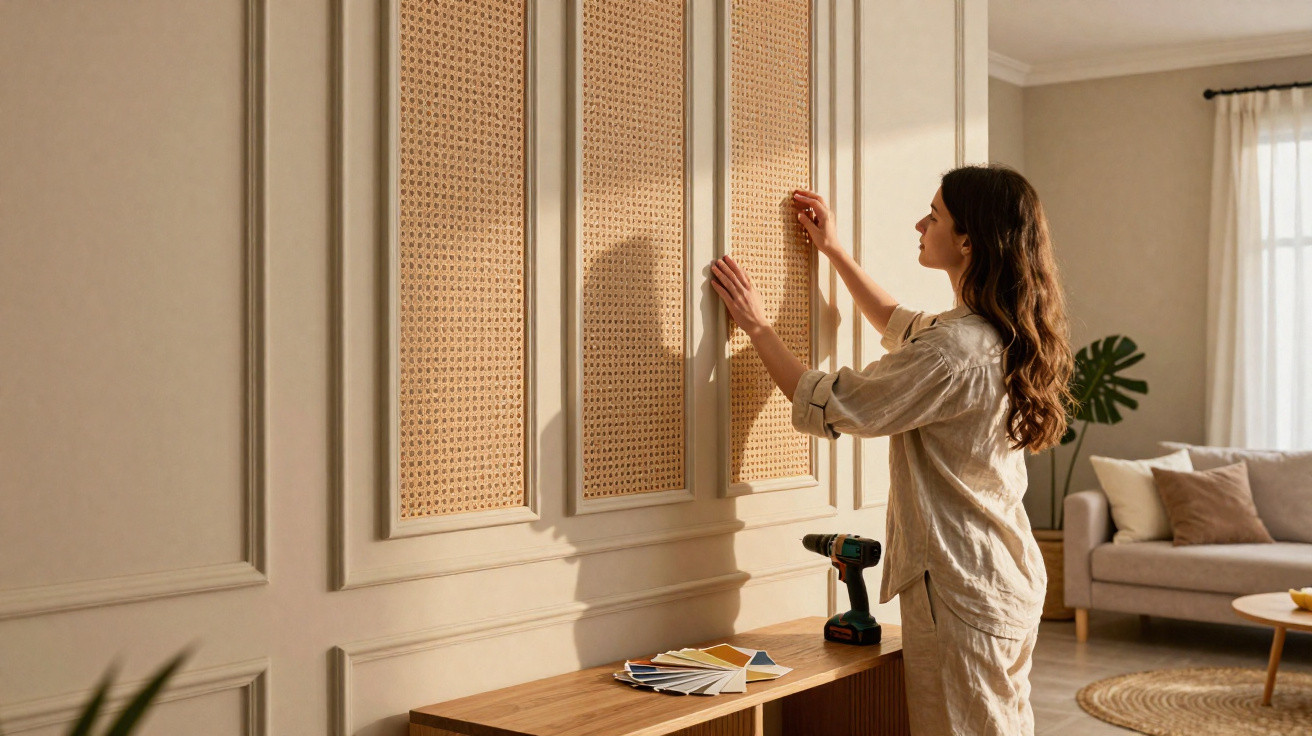
Homeowners across Europe and the United States who hurried to line their walls with vertical timber battens are increasingly having second thoughts. The crisp, Pinterest-ready effect became so widespread that it has started to feel like an overplayed formula - and in compact rooms it can read as gloomy and overly engineered. Interior designers say the direction for 2026 keeps the sense of warmth and texture, but replaces visual bulk with lighter surfaces, gentle relief and a quieter, slower mood grounded in traditional craftsmanship.
The fall of wall slats, the rise of woven cane and quiet mouldings
Over the last five years, vertical wood slats have appeared almost everywhere: behind beds, on television feature walls and as backdrops to home office nooks. They offered a quick hit of architectural interest. In practice, plenty of rooms ended up looking dimmer, collecting more dust and proving more fiddly to maintain than people expected.
2026 marks a shift from hard lines and heavy boards to lighter, airier surfaces that still feel warm and tactile.
In this next phase, the surprise frontrunner is not a futuristic finish but a familiar material reintroduced with a fresh edge: natural woven cane, most often rattan. Its open lattice allows both light and air to pass through, changing the atmosphere of a space - particularly in the darker winter months.
Rather than creating closed-in, cabin-style walls, cane panels act like a filter for daylight. They temper strong glare, throw soft shadows and add depth without making a room feel smaller. Whether used on wardrobe doors, sideboards, headboards or wall sections, it delivers a crafted, almost handmade character that slats rarely managed to achieve.
Designers, however, seldom rely on cane alone. To avoid the whole scheme drifting into a 1970s conservatory vibe, they are combining it with a second, pared-back detail: slender painted wall mouldings installed tone-on-tone.
These narrow lengths - timber, MDF or polyurethane - can frame parts of a wall, define a dado line, or form simple rectangles and boxes that nod to older European flats, but in a deliberately restrained way. When painted exactly the same shade as the wall, they stay visually understated while adding rhythm and a sense of structure.
The new combination is clear: organic texture from cane, plus soft architectural lines from mouldings, with almost no visual clutter.
Why this natural-and-relief duo transforms a room without overloading it
The biggest complaint about slatted walls is how heavy they can look. Dark, closely spaced vertical boards may overwhelm a small room - especially in winter, when thick curtains, wool throws and weightier rugs come back into rotation.
Cane behaves in the opposite way. Because it is perforated, it gives the surface breathing space. You catch glimpses of what sits behind it, so it dresses the wall without turning it into a solid block. On a cupboard, for example, cane-fronted doors can make a bulky unit feel noticeably lighter and less dominant.
At the same time, mouldings introduce order and refinement without the formality of full traditional panelling. They provide just enough relief for daylight to pick out edges and for shadows to shift as the day moves on.
Painted tone-on-tone, mouldings are almost invisible from afar, yet they quietly deepen the space and make plain walls look more considered.
This aligns neatly with what decorators describe as “slow decor”: fewer attention-seeking colours and more materials and finishes that invite touch. The interplay between slightly textured cane and a smooth painted wall makes a room feel layered even when the palette stays muted - think chalky white, clay-toned beige or sage green.
From Instagram trend to new classic: why cane feels current again
Cane has a long track record in furniture, from café chairs to vintage headboards. Its revival is being propelled by a mix of motivations: fatigue with artificial, plastic-looking finishes; a renewed appetite for evidence of handwork; and a reluctance to commit to major building projects for trends that date quickly.
In 2026, cane is not typically used as full-height room dividers. Instead, it is being applied in smaller, more deliberate updates:
- Doors of sideboards, TV units or wardrobes
- Inset panels in headboards or bed bases
- Sliding doors concealing shelving or utility areas
- Removable wall panels behind a sofa or desk
Keeping the scale modest makes it straightforward to live with - and simple to swap out later. It can also improve day-to-day comfort: cane-fronted cupboards allow better airflow, which can help with clothing, bed linen, and even routers and electronics that can overheat inside sealed cabinets.
Affordable “magazine wall” looks without major building work
Many people assume that refined, detailed wall treatments require specialist labour and expensive materials. In reality, this pairing is close to the opposite - it is among the most attainable trends of early 2026.
| Element | Typical use | Indicative cost | Skills needed |
|---|---|---|---|
| Woven cane | Doors, headboards, small wall panels | About €15–40 per panel or metre | Cutting, stapling or gluing |
| Thin mouldings | Wall frames, dado rails, door surrounds | Around €5–15 per linear metre | Measuring, mitre cuts, adhesive |
Cane is commonly sold as rolls or flat sheets. To attach it to a timber backing, a basic staple gun or a strong contact adhesive is usually sufficient. If you are new to DIY, starting with plain cupboard doors or a budget pine headboard is a sensible first step before attempting larger wall panels.
Mouldings are similarly approachable. Lightweight polystyrene or polyurethane profiles are easy to cut using a simple mitre box and saw. Once glued to the wall, filled, caulked and painted, they can change the feel of a blank surface in a single afternoon.
The promise is tempting: noticeable change, minimal building work, and a budget that often slips under the cost of solid-wood slats.
How to combine cane and mouldings in real rooms
In a bedroom
One widely used idea is a half-height headboard wall. A painted band rises to roughly 1 metre, outlined with slim mouldings. Above the bed, a broad cane panel can either be hung like artwork or mounted within a shallow frame, adding warmth at eye level without taking over the whole wall.
In a living room
Rather than wrapping an entire TV wall in timber, decorators now tend to recommend a low sideboard with cane doors. Above it, the wall can be divided with uncomplicated moulding frames painted in the same colour as the background. The television then feels integrated into the geometry instead of becoming the sole focal point.
In a hallway or entrance
Tight spaces are where heavy cladding causes the most trouble. Here, a slim moulded dado rail - painted to match the wall - can define the lower third. A single cane detail on a bench, shoe cabinet or a row of hooks adds texture at a human scale, without making the corridor feel narrower.
What “tone-on-tone” really means for paint and mouldings
“Tone-on-tone” can be misleading. It is not about selecting two arbitrary shades from the same paint range. It means using the exact same colour for the wall and the mouldings, or choosing tones so close that they read as a single field.
That way, the only contrast comes from shadow and light rather than colour differences. The overall effect is calmer, particularly in rooms that already have plenty of visual activity from books, toys or open shelving.
If you are unsure about colour, neutral paints such as off-white, stone, greige or muted greens tend to sit comfortably with the honeyed note of natural cane. A matt or eggshell finish usually suits mouldings best, as it disguises small imperfections in cutting, filling or sanding.
Risks, trade-offs and how to avoid a kitsch look
As with any revived trend, cane can tip into nostalgia if overused. Too much cane alongside wicker furniture and floral prints can quickly start to resemble a themed café.
Designers recommend a few simple checks:
- Keep cane to one or two key features per room.
- Offset it with clean, contemporary lines in the rest of the furniture.
- Choose uncomplicated metal finishes: black, brushed brass or stainless steel.
- Use plain wall colours rather than busy wallpaper nearby.
Maintenance is another consideration. Cane is a natural material and may sag if exposed to high humidity or sharp temperature swings. In kitchens and bathrooms, it needs careful positioning away from direct splashes, plus good ventilation.
If you have cats that like to scratch, placing cane higher up or limiting it to doors that usually stay shut can reduce damage. In rented properties, removable panels attached with small screws - or even heavy-duty picture hanging strips - can provide a reversible update.
Looking beyond 2026: what this shift tells us about home trends
Moving away from slats and towards cane with discreet mouldings points to a wider change in how people want to decorate. There is less enthusiasm for statement walls made purely for social media, and more interest in comfort, tactility and easy-to-live-with choices.
Homes are increasingly expected to do multiple jobs: an office in the day, a cinema room at night, a playroom at the weekend. Surfaces that respond well to light, feel pleasant to touch and do not demand constant attention are better suited to this flexible way of living.
If you are considering updates this year, try a simple test: picture the room with the main lights off, lit only by a lamp or by winter daylight. If the walls feel heavy or lifeless, a combination of light-touch mouldings and a few well-placed cane panels may be enough to shift the mood - without stripping everything back or chasing the next short-lived craze.


Comments
No comments yet. Be the first to comment!
Leave a Comment