
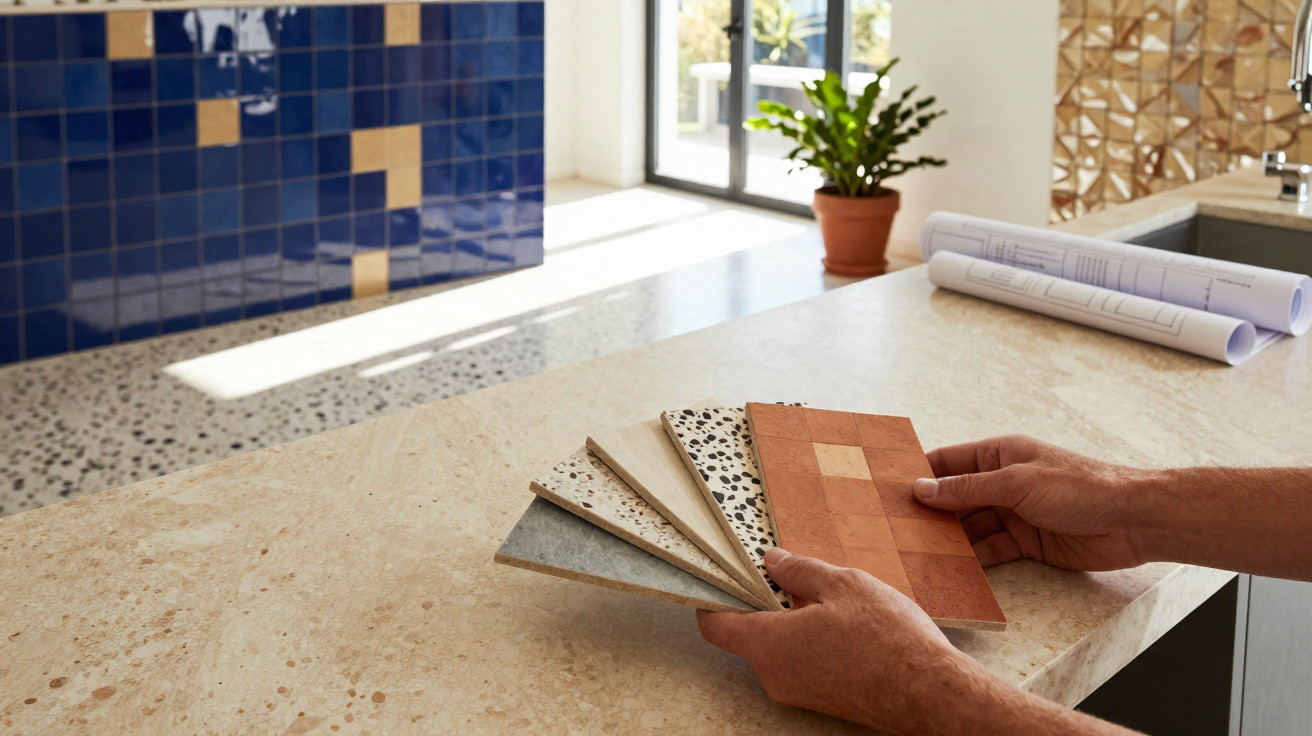
For a long time, wood-effect tiles were treated as the ideal middle ground: straightforward to look after, visually warm, and safely neutral. By 2026, however, that once-reliable option is starting to feel a bit weary, as homeowners, designers and developers lean towards finishes that read as more authentic, tactile and characterful.
The quiet fade of wood-effect tiles
Wood-effect porcelain is not disappearing overnight. It remains a sensible choice for rental properties, busy family zones and cost-sensitive refurbishments. Yet it no longer communicates a fresh, design-forward interior. Many younger purchasers and style-aware homeowners increasingly link it with late-2010s show homes and “value” listings on property portals.
In 2026, the trend shifts from imitation to intention: materials are chosen to look like themselves, not like something else.
Rather than printing oak or walnut onto planks, current schemes favour stone, clay, mineral blends and richly pigmented ceramics. The ambition isn’t simply to look convincing; it’s to create mood - floors you can feel underfoot, walls that catch the light, and surfaces that gain character as they wear.
Natural stone, reimagined for real life
Natural stone once implied constant upkeep and eye-watering prices. Improvements in quarrying, sealing, and the rise of convincing stone-look porcelain are changing that perception. Travertine, in particular, sits at the heart of many 2026 renovation briefs.
Travertine and limestone with a softer edge
Pale travertine with warm beige undertones is showing up in open-plan kitchens, hotel-inspired bathrooms and even garden patios. Opting for filled and honed finishes tempers the rustic feel, while retaining the stone’s gentle variation.
- Inside the home, large-format travertine tiles help form calm, Mediterranean-leaning living areas.
- Outside, brushed surfaces add traction around pools and terraces.
- On vertical surfaces, slim stone veneers are replacing painted plaster behind freestanding baths.
Designers in both Europe and the US now talk about “soft stone minimalism”: pale slabs, minimal grout, gentle shadows instead of sharp contrasts.
Engineered options - porcelain that recreates travertine or limestone - are gaining ground as well. They offer comparable warmth to the eye, but cope far better with red wine spills, muddy shoes and children’s toys. For many households, that practicality is enough to tip the balance away from faux timber planks.
Terracotta is back, and it is not just for farmhouses
Terracotta tiles used to feel reserved for rustic kitchens and holiday houses. In 2026, they are finding their way into city flats and modern townhouses - in both London and Los Angeles.
Handmade tomette-style tiles, often hexagons or small squares, appear in washed reds, blush oranges and caramel browns. They sit comfortably alongside minimalist cabinetry, stainless-steel worktops and slim black lighting, creating a sharper, more contemporary look than their country-house reputation suggests.
Where wood-effect tiles tried to copy timber, terracotta embraces its imperfections: rough edges, colour variation and small chips become part of the charm.
Sealing has moved on, too. Breathable sealers now help prevent staining without leaving a plastic-looking sheen. That means terracotta can keep its dry, powdery, tactile feel - something most wood-look tiles cannot convincingly reproduce.
Terrazzo grows up: from cafe floors to whole-house finish
Terrazzo has moved beyond its “trendy café” phase. Suppliers are now producing quieter blends with finer aggregate, softer palettes and, in some cases, recycled content. In homes, terrazzo is being specified for:
- Bathroom floors and shower trays with anti-slip finishes.
- Kitchen worktops and splashbacks that combine colour with day-to-day usability.
- Stairs and hallways, where continuous patterning helps disguise everyday scuffs.
Porcelain terrazzo-look tiles provide a similar effect at a lower price point and with less weight - an important consideration for upper floors in older properties. The speckled appearance also disguises dust and hair far more effectively than imitation timber planks with repeating printed grain.
In many 2026 new-builds, terrazzo replaces the “grey plank everywhere” formula that dominated post-2015 apartments.
Zellige and glossy artisan tiles as focal points
On walls, Moroccan-style zellige remains one of the most widely shared finishes on social media. These small, slightly uneven tiles with high-gloss glaze reflect light beautifully in kitchen alcoves, chimney breasts and bathroom feature walls.
Why zellige fits the post-wood-tile mood
Wood-effect tiles were designed around consistency: uniform tone and predictable grain. Zellige does the opposite by design - no two pieces are quite identical, and that variation is the appeal. Shifts in colour and tiny ripples across the surface add energy where flat metro tiles can feel anonymous.
Designers are using zellige:
- As full-height shower cladding, where changing daylight plays across the glaze.
- Behind kitchen worktops, replacing glass or plain subway tiles.
- Around compact fireplace surrounds, turning a simple structure into a statement.
Zellige shows how 2026 interiors favour hand-made character over printed wood graphics, even in modest homes.
XXL formats and seamless-looking rooms
Scale is another obvious change. Large-format tiles - 90 × 90 cm, 100 × 100 cm and even 120 × 120 cm - are increasingly common in mid-range projects, not just high-end spas. Fewer grout lines are a major part of the appeal, as many homeowners find heavy gridding visually distracting.
In soft stone-effects, concrete hues or muted neutrals, these oversized slabs can run through open-plan areas, bathrooms and even across balcony thresholds to create a more continuous feel. Where wood-look planks were often laid lengthways to make a room feel longer, the newer aim is broader, uninterrupted surfaces that allow furniture and natural light to take the lead.
| Finish type | Where it shines in 2026 | Main strengths |
|---|---|---|
| Wood-effect tile | Rental units, budget refits | Durable, familiar, easy to source |
| Natural stone / stone-look | Living spaces, terraces, high-end bathrooms | Timeless feel, soft colours, adds value |
| Terracotta | Kitchens, hallways, sun rooms | Warmth, texture, handmade look |
| Terrazzo / terrazzo-look | Bathrooms, kitchens, common areas | Pattern depth, hides wear, playful colour |
| Zellige / artisan tiles | Splashbacks, shower walls, feature areas | Gloss, movement, crafted character |
Colour moves away from safe grey
Colour choices also underline the waning dominance of wood-effect finishes. Cool greys and drained “oak” shades are losing pace, while warmer neutrals and bolder, more saturated accents are taking their place.
Muted reds, luminous yellows, deep blues
Brands are increasingly pushing tiles in softened reds with a pink cast, rich ochres, and dense midnight blues. These colours are being used either across entire surfaces in smaller rooms, or as tightly controlled highlights within larger spaces.
Instead of fake “driftwood” tones, 2026 embraces real colour: red floors in hallways, midnight-blue bathrooms, honey-toned stone in living spaces.
Pairings matter as much as single shades. Brown–taupe stone alongside dusty pink zellige, or terracotta underfoot with chalky cream walls, can feel warm without turning into a 1970s caricature. Designers often describe this as “colour blocking with minerals”, rather than painting everything neutral and relying on imitation planks to supply interest.
Texture and 3D relief for tactile walls
Relief finishes are taking centre stage. Ribbed ceramics, sculptural 3D panels and matte, grainy glazes create shifting shadow across walls - especially with directional lighting.
These tactile treatments are particularly effective in compact bathrooms and entrance halls, where they add richness without visual clutter. A single wall of fluted tiles behind a basin or bench can lift the perceived quality more than covering an entire room in faux timber.
Texture has become the new pattern: subtle ridges, hammered glazes and micro-relief surfaces replace printed knots and faux grain lines.
How homeowners can navigate the 2026 shift
As tastes change, a practical dilemma follows: should anyone remove perfectly serviceable wood-effect floors? For most homes, the sensible answer is no. A more considered approach is to introduce newer finishes in specific areas:
- Refresh a dated bathroom with terrazzo-look flooring and zellige walls.
- Install terracotta or warm stone in the entrance hall to transform the home’s first impression.
- Add a relief-tile feature wall in a kitchen or living space while leaving existing floors in place.
For new builds or full refurbishments, handling samples is worth the effort. Walking barefoot over options in a showroom, watching how surfaces respond to morning versus evening light, and testing offcuts with a small spill of water or coffee can reveal far more than any brochure.
There is also a sustainability thread running through the move away from imitation wood. Real timber floors raise questions around forestry, while mass-printed wood-look tiles can feel disposable once fashions shift. Stone, terrazzo and terracotta wear in a different way: they may chip and patinate, yet still look intentional. For many 2026 buyers, that long-term credibility now carries almost as much weight as what’s currently on-trend.

Comments
No comments yet. Be the first to comment!
Leave a Comment