
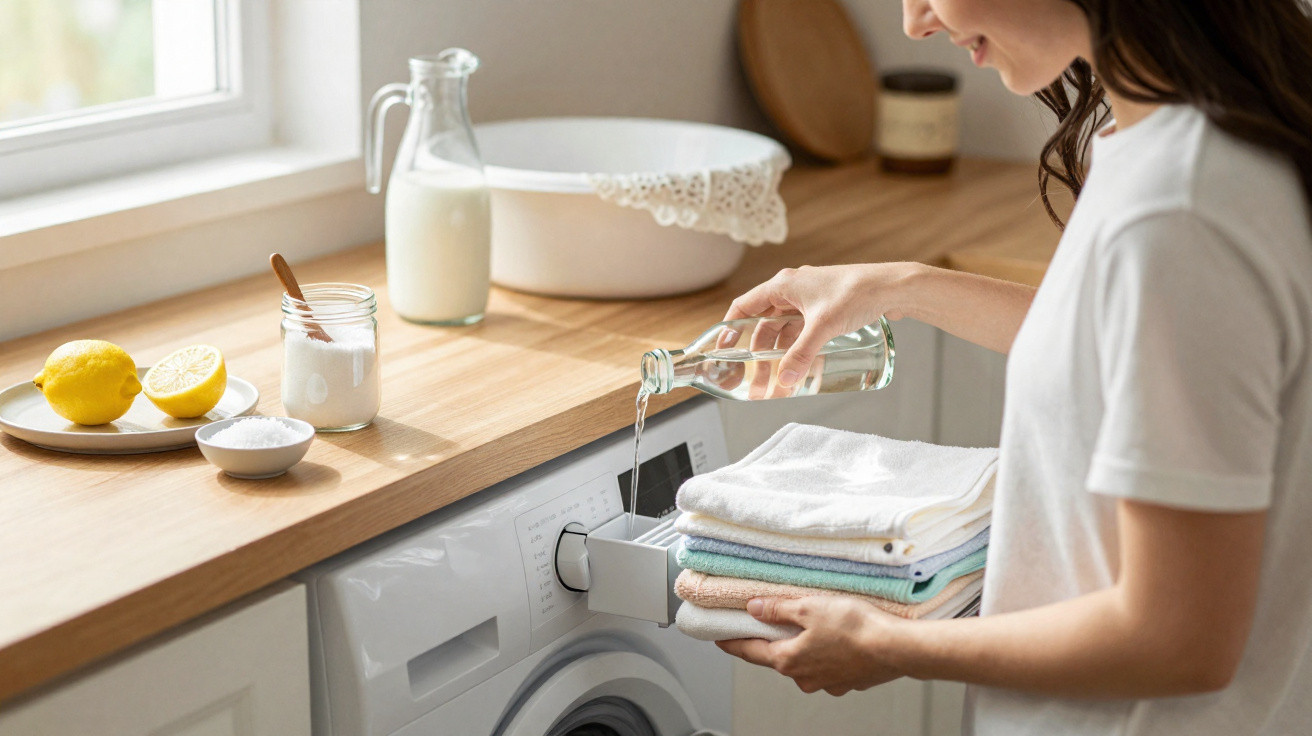
A few straightforward ingredients from the kitchen can help.
Most households automatically reach for powder or liquid washing detergent. The downside is that clothes can suffer: colours fade, fabrics lose their punch, and the environment takes the hit as well. If you want to look after your favourite T-shirt and be kinder to your washing machine, it’s worth turning to unlikely helpers that are already sitting in the cupboard. Some everyday foodstuffs clean remarkably well - provided you use them correctly.
Why less washing detergent is often better
Manufacturers tend to suggest generous doses. In reality, the smallest amount is usually enough, particularly for lightly soiled everyday items. Using too much detergent can leave residue in the fibres, create a dull grey film on whites, and irritate sensitive skin.
"The less chemistry on your clothes, the gentler it is on fibres, colours and the environment - household staples can make up a lot of the difference."
On top of that, plenty of garments don’t need to go into the machine after every wear. Airing them out is often enough - for example jeans, knit jumpers or blazers. When you do need to wash, there are classic kitchen standbys most people never think to use.
Vinegar: the all-rounder for odours and limescale
Household vinegar is one of the best-known alternatives in the laundry room. It helps break down limescale, neutralises smells and leaves laundry feeling softer.
How to use vinegar properly
- Pour about 50–100 ml of clear household vinegar into the fabric conditioner compartment.
- Suitable for normally soiled loads, especially towels and sportswear.
- Start the machine as usual; if the laundry is only lightly dirty, no extra washing detergent is needed.
Vinegar targets limescale build-up in the machine and cuts musty odours inside the drum. That’s particularly useful in hard-water areas. With very delicate textiles (wool, silk), proceed carefully and, if in doubt, test on a small, hidden section first.
Baking powder and bicarbonate of soda against a greyish cast
Baking powder and pure bicarbonate of soda are long-standing household staples. Both help absorb odours and support cleaning, especially with white laundry.
Add baking powder straight into the wash
Sprinkle one sachet of baking powder (or one tablespoon of bicarbonate of soda) directly into the drum over the clothes. Then choose a short or eco programme. This is particularly handy for:
- Yellowed white T-shirts
- Musty tea towels
- Slightly discoloured bed linen
"Baking powder brightens and neutralises odours - ideal when whites no longer look properly fresh."
For heavily soiled loads, the powder won’t replace a full detergent, but it can reduce how much you need. If you wear sportswear regularly, it can make the base clean feel noticeably fresher.
Lemon: a fresh scent and gentle bleaching
Lemon juice has a mild bleaching effect, works against bacteria and adds a clean, fresh fragrance. It suits light cottons and kitchen textiles particularly well.
The lemon trick for light-coloured laundry
Here’s how it works:
- Mix the juice of one lemon into about 500 ml of warm water.
- Soak light, hard-wearing items in it for 30 minutes.
- Then put them in the machine and wash on a short programme without washing detergent.
This can often reduce stains from tea, coffee or fruit. For coloured washing, the lemon method is only partly suitable: strong colours can fade slightly because lemon juice can bleach.
Salt: a secret weapon for fading colours
Salt is better known as a cooking staple or something used on icy pavements. In the laundry, it can help stabilise colour and loosen light soiling.
"New, strongly coloured pieces in particular benefit from a saltwater soak before they go into the machine for the first time."
How to use salt on clothes
- For new, colourful textiles: one tablespoon of salt per litre of cold water.
- Leave the clothing to soak for one hour, then rinse briefly with clean water.
- Wash afterwards on a gentle cycle; with light dirt, washing without detergent can be possible.
The salt solution helps bind excess dye so it doesn’t bleed as much later. For ongoing washing, you can add two to three tablespoons directly into the drum to help keep colours looking stronger for longer.
Milk for delicate fabrics
It sounds unusual, but in certain cases it can work surprisingly well. Milk may help calm fibres and brighten lightly discoloured delicate materials.
A milk soak for blouses and lace
Whole milk is best, or at least milk with some fat content. Do the following:
- Pour cold milk into a bowl or basin.
- Soak delicate, light-coloured items for one to two hours.
- Rinse with cold water, then run a short delicate cycle.
Lightly yellowed lace or thin summer blouses can look fresher afterwards. However, this won’t be enough for stubborn stains.
Which household staple for what? A quick overview
| Household staple | Use | Suitable laundry |
|---|---|---|
| Vinegar | Odours, limescale, softness | Towels, sportswear, everyday laundry |
| Baking powder / bicarbonate of soda | Brightening, odours | White T-shirts, bed linen, tea towels |
| Lemon | Gentle bleaching, freshness | Light cotton, kitchen laundry |
| Salt | Colour protection, light cleaning | New, colourful clothing |
| Milk | Delicate fabrics, light discolouration | Lace, fine blouses |
When these tricks really replace washing detergent
These methods work best without traditional detergent when clothes are only lightly soiled: T-shirts worn briefly, blouses without stains, or bed linen that mainly needs to smell fresh.
If there’s heavy dirt, oil or grass stains, children’s clothes from the playground, or workwear from trades and catering, the kitchen approach on its own won’t do the job. At most, you can combine options - for example, detergent plus baking powder to tackle greyed whites.
Common mistakes when washing without washing detergent
If you’re trying things out, it’s easy to stumble into typical errors. Three areas are especially risky:
- Using too much: more isn’t better - over time, too much vinegar or bicarbonate of soda can damage rubber parts and seals.
- Choosing the wrong textiles: wool, silk and technical sports fabrics can be sensitive. It’s better to test first or use only very mild methods.
- Programmes that are too hot: many kitchen staples don’t need 60°C. Lower temperatures are gentler on fabrics and the machine.
If you’re unsure, try the method on an older item you don’t mind too much. You’ll quickly see how the fabric and colour respond.
How often should you wash without washing detergent?
Giving up detergent completely, all the time, isn’t very realistic in an average household. A mixed approach makes more sense:
- Light everyday laundry: occasionally use only vinegar or baking powder
- Delicate items: preferably hand-wash and treat with mild household staples
- Heavily soiled loads: use normal detergent, but dose more sparingly
If you measure carefully and switch to kitchen helpers from time to time, you can noticeably cut your annual detergent use. That’s easier on your budget and reduces the burden on waterways and treatment works.
Risks, limits and sensible combinations
As tempting as many of these ideas are, kitchen staples aren’t a free pass. Very sensitive skin, for instance, may react to traces of vinegar. Dyes in low-cost textiles can behave unpredictably when lemon juice is involved. And milk can develop an unpleasant smell in warm conditions if it’s left in contact with laundry for too long.
A practical plan is to use combinations: for instance, around one third less washing detergent plus baking powder for whites. Or a low-dose wash with vinegar in the fabric conditioner compartment to pull odours out of sportswear. If you regularly run a short cycle with vinegar, you can help prevent mould and that stale drum smell - and, in the long run, rely less on harsh cleaners.
In the end, it’s worth looking closely at your routine: how dirty is the laundry really? Which pieces are only worn briefly, and which get properly grimy? If you dose more honestly and reach for vinegar, baking powder, lemon, salt or milk in a targeted way, you can get surprisingly good cleanliness from things that are already waiting in the kitchen cupboard.






Comments
No comments yet. Be the first to comment!
Leave a Comment