
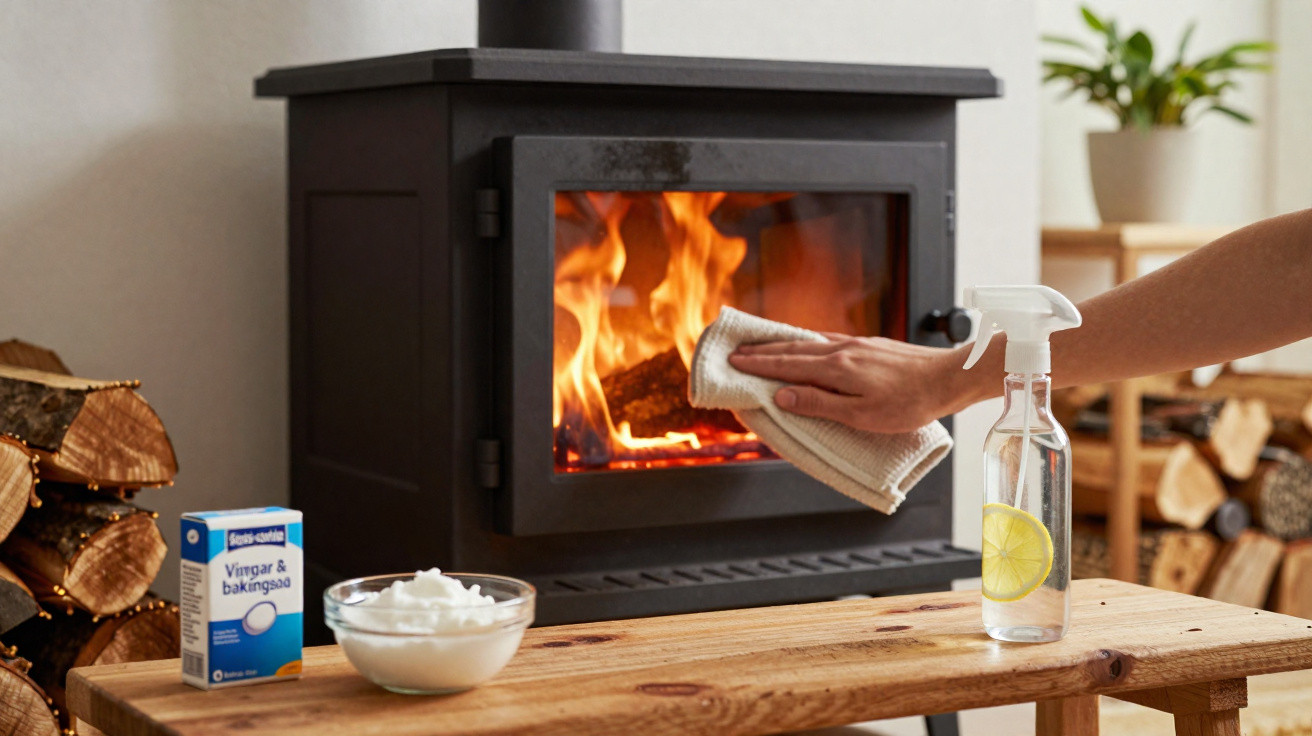
The only thing that really ruins the enjoyment is the sooty pane. With a straightforward trick, the glass shines again - without any specialist cleaner.
Plenty of stove owners will recognise this: you’ve barely finished cleaning your wood-burning stove or pellet stove when the glass is already turning dark grey again. The view of the flames disappears, and the living room instantly feels less cosy. Instead of pricey sprays from the DIY shop, a blend of two everyday kitchen ingredients does the job - fast, inexpensive and noticeably more environmentally friendly.
Why stove glass turns black so quickly
Before you start cleaning, it’s worth taking a moment to consider what’s causing the soot. Once you know why the glass keeps blackening, you can reduce the build-up much more effectively.
- Poor-quality or damp firewood
Wood with a high remaining moisture content smokes more and burns less cleanly. Result: more soot and more deposits on the stove glass. Ideally, use well-seasoned wood with under 20 per cent residual moisture. - Incomplete combustion
If the flame looks “tired” and mostly smoulders rather than burning properly, lots of particles are produced. These tend to settle on the coolest point in the firebox - often right on the glass. - Incorrect air supply settings
If you close down the air supply too far, there isn’t enough oxygen. The wood chars instead of burning cleanly, and the glass darkens in record time. - Running continuously on a low setting
Keeping the stove permanently “turned down” encourages soot. A strong, hot burn, by contrast, helps keep not only the flue but also the glass much cleaner.
“The damper the wood and the more the stove is throttled back, the faster the glass turns dark.”
The simple trick: clean stove glass with vinegar and bicarbonate of soda
Many people clean the pane with a little damp ash from inside the firebox. It can work, but it’s often fiddly and may leave streaks behind. A more pleasant option is a pair found in most kitchens: plain white household vinegar and bicarbonate of soda (or standard baking powder based on bicarbonate of soda).
Why this combination works so well
- Vinegar loosens grease and soot
Its high acid content acts like a natural degreaser, softening resinous and baked-on residue. - Bicarbonate of soda acts as a gentle abrasive
The fine grains help lift deposits without scratching the glass - unlike harsh pan scourers. - The reaction boosts the cleaning action
When vinegar meets bicarbonate of soda, the familiar fizzing begins. That subtle movement helps work underneath stubborn particles.
Step by step: how to clean stove glass properly
Step 1: Mix it up
Wait until the stove has cooled completely - the glass needs to be truly cold.
- Put roughly two parts vinegar into a small bowl.
- Stir in one part bicarbonate of soda.
- The mixture will start to foam slightly - that’s exactly what you want.
A slightly thick consistency is ideal, as it won’t immediately run down the glass.
Step 2: Apply and leave it to work
- Use a soft cloth or a non-scratch sponge to spread the mixture over the glass.
- Work in small circular motions until the whole surface is covered.
- On heavy soot patches or crusted areas, apply a thicker layer and leave it for one to three minutes.
“Giving the mixture a brief moment saves you from hard scrubbing later.”
Step 3: Wipe off, rinse, dry
- Lift away the loosened dirt with a slightly damp cloth.
- Rinse the cloth frequently so you don’t smear soot back across the pane.
- Finish by polishing with a clean, dry microfibre cloth until no streaks remain.
If the glass is extremely dirty, a second round can be worthwhile. In most households, though, the mixture is enough on the first pass.
Alternative home remedies if you haven’t got bicarbonate of soda
Vinegar and bicarbonate of soda aren’t your only options. A few other household staples can also get the glass looking good again.
- Soft soap (black soap)
Dissolve a small blob in warm water, apply, leave briefly, then wipe away with a damp cloth. Particularly useful for greasy deposits. - Rubbing alcohol (isopropyl alcohol)
Put a little on a cloth and wipe over the glass. It removes soot and discolouration quickly, but should only be used with good ventilation. - Hot water and newspaper
An old stove classic: lightly dampen newspaper, dip it into warm water, and rub the glass. Often perfectly sufficient for light soiling.
How to keep stove glass cleaner for longer
If you’d rather not be cleaning all the time, a few simple habits will stop soot from sticking so readily.
- Use dry hardwood
Beech and oak burn steadily and cleanly. Softwoods from conifers contain more resin and create more grime. - Bring the stove up to operating temperature regularly
Get it properly hot at the start and don’t reduce the air supply too quickly. A hot fire burns residues off within the firebox. - Don’t “choke” the stove all the time
Keeping the air vents only barely open saves very little wood but creates a lot of soot. - Build in quick cleaning routines
A fast wipe over the pane every few days prevents hard crusts from forming.
Why vinegar and bicarbonate of soda are a good alternative to chemicals
Specialist stove-glass cleaners often rely on harsh ingredients. They may shift dirt quickly, but they can irritate the airways, impact the environment and sometimes cost a fair bit too. Using home remedies brings several clear advantages.
- Fewer irritants in the air indoors
If you’re lighting the stove again soon after cleaning, you won’t want aggressive residues on the pane. Vinegar and bicarbonate of soda largely dissipate when wiped away properly. - A clear cost saving
Compared with specialist cleaners, both products cost only a few pence per use. - A more environmentally considerate choice
These ingredients break down more readily than many industrial products that use solvents.
What people often forget when cleaning wood-burning and pellet stove glass
One detail is easy to overlook: stove glass is a technical component, not an ordinary window. It’s usually made from heat-resistant specialist glass, and scratches or hairline cracks can become an issue over time. That’s why rough scourers, wire wool and razor blades don’t belong anywhere near the pane. Gentle pressure, soft cloths and mild-but-effective products are the better option.
If you have children at home, store cleaning products - even household ones - safely. Vinegar and bicarbonate of soda may seem harmless, but they still shouldn’t be within reach of small hands. Fresh air also helps when cleaning: an open window makes the light vinegar smell far easier to live with.
More comfort at home with a clear view of the fire
Ultimately, this isn’t only about cleanliness - it’s about atmosphere. A clear view of the flames changes how an entire room feels. Anyone who tries vinegar and bicarbonate of soda soon realises the effort is modest and the results are instantly visible. Pair that with dry wood and a sensibly set air supply, and the glass stays clearer for much longer - letting the fire do what it’s meant to do: provide warmth and ambience, without a grey film in the way.






Comments
No comments yet. Be the first to comment!
Leave a Comment