
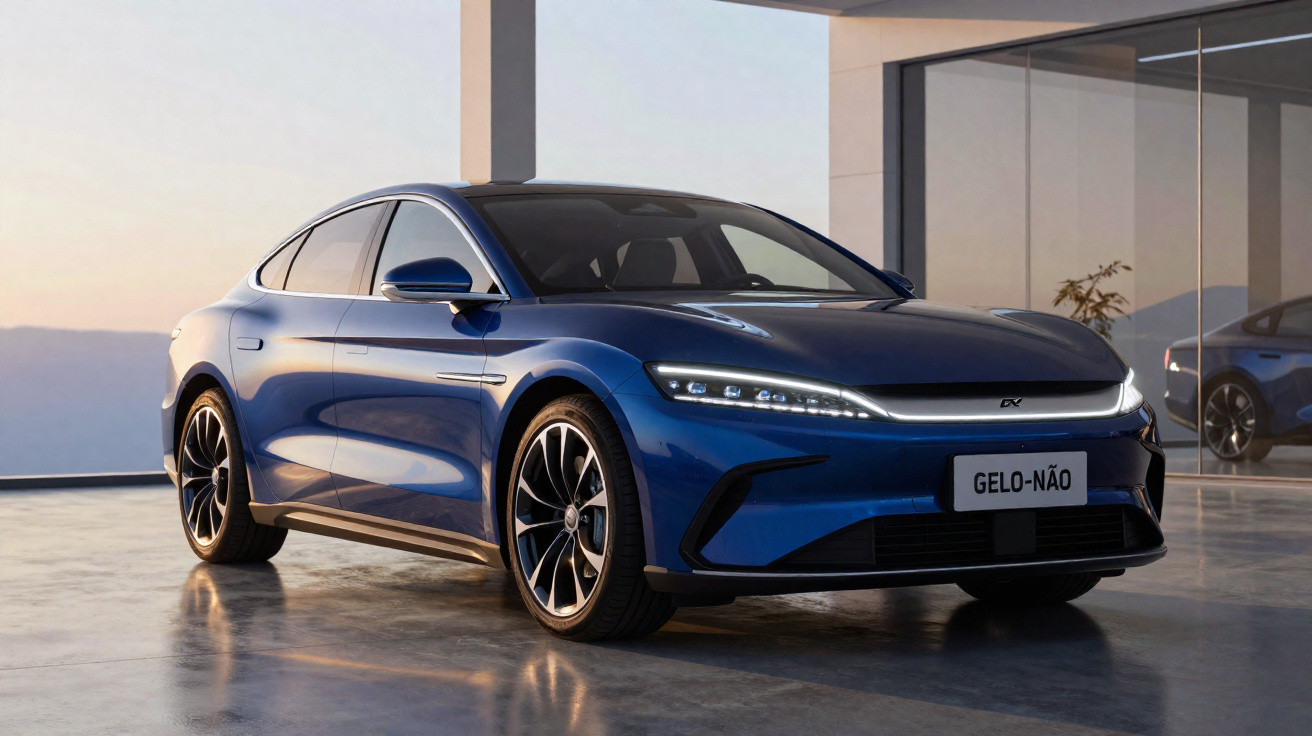
The street is silent, as though it has not quite woken up.
Beneath the amber pool of a streetlamp, a line of parked cars glints under a rigid, glass-like skin. You run your fingertips across your windscreen and hear that tell-tale squeak on the frozen film. The night felt mild: no snow, no rain, a perfectly clear sky… and yet your car looks as if it has been left inside a freezer for hours.
A neighbour’s car, tucked beneath a small tree, seems to have got off lightly. Just a faint dusting of frost, nothing dramatic. You start scraping anyway, your breath hanging in the air, trying to work out why your car becomes an ice block whenever the sky is clear and empty. The forecast did not even show a sub-zero temperature.
You rub, you scrape, you mutter. And somewhere between the wiper blades and the bonnet, a quiet question lands and stays with you - the sort that follows you around all day.
Why frost hits cars harder after clear nights
If you step onto a driveway at winter dawn, the night has left different signatures on different vehicles. Cars left under open sky often wear a thick, stubborn crust of ice; those parked under balconies, trees or a carport can look as though they have spent the night indoors. Same street, same air temperature - completely different mornings.
On a cloudless night, your car effectively radiates its warmth straight out towards space. With no cloud cover acting as a “blanket”, metal and glass shed energy quickly and the surface temperature drops below the temperature of the air. That is the moment moisture nearby begins to freeze onto the windscreen. To your eyes, nothing is happening - but the temperature at the car’s surface is already ahead of the reading you saw on your phone.
Most weather apps report air temperature measured at around 1.5 metres above the ground. Your roof, bonnet and mirrors do not live in that same layer. Close to the ground the air can be cooler and damper, and under a clear sky everything loses heat faster. The result is that your car’s surfaces can slip below 0°C even while the surrounding air is still officially “above freezing”. You wake up to a surprise your forecast never flagged.
On a typical British winter morning, you might notice it as you walk along the same stretch of road: one windscreen looks perfectly clear, while the next is blurred by a milky coat of frost so thick you can trace your name with a fingertip. Sometimes the only difference is a few metres - a hedge, a wall, a porch roof. Tiny bits of shelter can make a very real difference.
A small experiment by a group of amateur weather enthusiasts in the Midlands captured it neatly. They parked two identical cars on the same driveway: one fully exposed, the other placed under a simple open-sided carport. The night stayed still and cloudless, and the nearest weather station logged a minimum of +1°C. At 6 a.m., the exposed car’s roof measured -3°C at the surface, and every window carried a thick layer of frost. The car under the carport barely dipped below 0°C - no obvious ice, a quick start, and no scraping required.
That four-degree gap never appeared in any forecast, yet it completely changed the morning. Scale that across millions of cars and you get a pattern you rarely see mentioned: clear night means more radiative cooling, which means more frost, which means more time lost. For people juggling the school run and the bus timetable, those hidden degrees can decide whether you leave on time or stand there clutching a plastic scraper with numb fingers.
What is going on is straightforward physics rather than bad luck. During the day, your car takes in energy from the sun and from the air around it. Overnight, it releases that energy by radiating heat up into the sky. Cloud cover behaves like a reflective layer, sending some heat back down. With a clear sky, the car is effectively “looking” straight into space - which, in thermal terms, is extremely cold.
Because metal and glass radiate heat efficiently, they cool quickly and pull the surface temperature below the surrounding air. Once the surface hits 0°C, nearby water vapour condenses onto it and freezes. That is why frost can appear even when the official minimum temperature stayed above freezing. The ground, grass and cars do not follow the forecast; they respond to their own energy balance.
Humidity finishes the picture. On a damp, calm night, there is plenty of moisture available to condense. With little wind, that moist air sits around the car and keeps feeding the frost layer. Add a bit of breeze and the air mixes, often leaving a thinner coating. That is why two nights that feel equally cold can produce very different windscreens when you open the door in the morning.
Smart ways to stop your car turning into an ice cube
The most overlooked anti-frost trick is almost laughably simple: put a “sky shield” above the car. It does not have to be heavy or airtight - anything that interrupts the car’s direct heat loss to open sky can help. A basic windscreen cover, an old bedsheet, or a purpose-made insulated mat can make a noticeable difference.
Covering the glass creates a buffer. The outer layer chills first, while the windscreen beneath stays closer to the air temperature. In the morning, you remove the cover and the frost comes away with it, leaving clear glass behind. No scraping, no waiting for the blower to catch up, and no wasted fuel or battery power idling on the drive.
Your second big ally is shelter. Parking under a tree, a balcony, a carport, or even close to a wall gives extra protection because it reduces the car’s “view” of the open sky and slows radiative cooling. That is why one side of a street can be icy while the other side is merely damp. If you can choose where you leave the car overnight, prioritise what is overhead rather than how close you are to the front door. A small change in parking habit can save you ten frozen minutes the next morning.
It also helps to prep the car just before the coldest hours. Lift the wipers so they do not freeze onto the glass. Use a proper de-icer spray or a winter mix designed for the job - not a random DIY alcohol concoction that could harm seals or paintwork. If your usual spot is prone to frost, keeping a small spray bottle inside the house can feel like you are getting one over on the weather.
It is equally important to avoid the classic mistake: pouring hot water over a frozen windscreen. It is satisfying for a moment, but the thermal shock can crack the glass, especially if there are already tiny chips. Lukewarm (not hot) water in a robust scraper-bottle combo is safer, but even then you are reacting to a problem that could often have been prevented with a bit of fabric the night before. Let’s be honest: hardly anyone keeps up that sort of routine every day, especially when you get home late and all you want is the sofa.
“Frost on cars is one of those everyday mysteries,” explains a UK-based meteorology lecturer I spoke to. “People think it’s all about what the app says the temperature is. In reality, the surface of your car can be several degrees colder than that - especially under a clear, starry sky.”
- Use a windscreen cover on clear, still nights when the forecast shows temperatures close to freezing.
- Park under anything that breaks the direct line of sight to the sky: a tree, balcony, carport or even an overhanging roof.
- Keep a scraper and de-icer somewhere easy to grab, and lift your wipers in the evening so they do not freeze in place.
Changing the way we look at frosty mornings
Next time you step outside after a cloudless night and find your car sealed in ice, you will know it is not random winter nastiness. It is the quiet outcome of an open sky, radiative cooling, and a surface that slipped just below freezing while you slept. That understanding will not instantly warm your hands - but it does change what you do next.
Rather than going straight for the scraper, you may start thinking the evening before: where is my car “seeing” the sky, and how can I interrupt that line? A folded cover by the door, a slightly different place to park, a quick spray across the glass. Small actions, done reasonably often rather than flawlessly, can add up to calmer starts. On a busy weekday, that matters.
We have all been there: already running late, children strapped in, and the windscreen still a white wall. Knowing why frost is heavier on certain nights and on certain cars gives you a bit of control back. It turns a daily irritation into a practical puzzle you can share with colleagues, neighbours or family. A clear night sky will always be cold - but how strongly your car feels it is now, at least in part, up to you.
| Key point | Detail | Why it matters to you |
|---|---|---|
| Role of a clear sky | Without clouds, the car loses more heat out into space | Understand why frost can form even when the official temperature stays above 0°C |
| Shelter and cover | Trees, canopies, a tarp or a cover limit radiative cooling | Simple ideas to reduce or prevent frost on the car |
| Preparation and routine | Wipers lifted, de-icer ready, choosing a better parking spot | Save time in the morning and protect your windscreen (and your fingers) |
FAQ:
- Why does my car ice up when the temperature is above 0°C? Forecasts report air temperature measured higher off the ground. On clear nights your car’s surface can cool several degrees lower, dipping below freezing even when the official reading does not.
- Is parking under a tree really that useful against frost? Yes. Any overhead cover reduces the car’s direct “view” of the sky and slows radiative cooling. You might still get a little frost, but usually far less than in an exposed spot.
- Does cardboard or a sheet on the windscreen actually work? It is basic, but often surprisingly effective. It adds a layer between the cold air and the glass, and the frost forms on the cover instead of your windscreen. Avoid anything that becomes soaked and then freezes on firmly.
- Is it safe to pour warm water on a frozen windscreen? Lukewarm water might be acceptable, but hot water is risky and can crack the glass, particularly on older or chipped windscreens. Scrapers, covers and de-icers are safer over time.
- Are heated windscreens or remote starters worth it? If you deal with frequent frost, heated glass or pre-conditioning systems can save time and effort. Even so, pairing them with simple steps like covers and smarter parking usually works best.


Comments
No comments yet. Be the first to comment!
Leave a Comment