
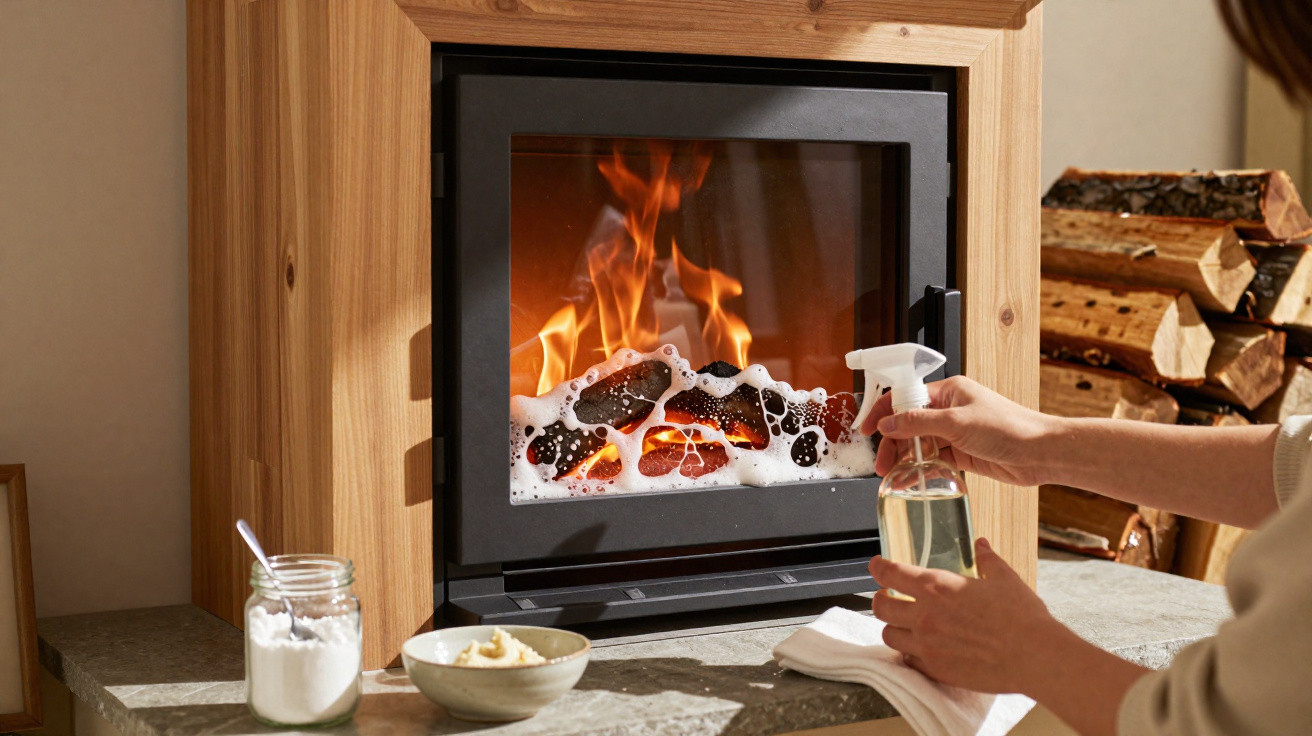
A simple household trick can make it clear again in seconds.
Many people with a wood-burning stove or pellet stove will recognise the pattern: at first, the glass looks brochure-perfect, then after only a few evenings it is coated in soot. The view of the flames disappears behind a grey-black haze. Rather than paying for specialist cleaners or scrubbing with ash, there is a surprisingly quick, natural approach that can make the pane transparent again with very little effort.
Why stove glass turns black so quickly
Before you start cleaning, it helps to understand what is causing the problem. Soot on the glass is rarely “just one of those things” - it usually indicates that something about the fuel, settings or day-to-day use is not quite right.
- Poor-quality or damp firewood
Logs with too much residual moisture smoke far more. Particles from that smoke plume settle on the glass and form a dark film. Ideally, use wood at under 20 percent moisture, stored properly and kept dry. - Incomplete combustion
If the fire burns too cool or does not get enough oxygen, soot production increases. You can often spot this when thick, dark smoke is coming from the chimney. - Air intake set incorrectly
When the primary air is closed down too much, the fire is effectively starved. The result is a dirtier burn and the glass blacks up faster. - Running permanently on a low “slumber” setting
Many people throttle the stove so it smoulders for longer. It may save fuel, but it also creates more deposits on the glass and inside the firebox.
"A heavily sooted-up pane is almost always a sign that the wood quality or the air supply is not ideal."
The hidden trick: cleaning stove glass with household items instead of ash
The traditional method using damp ash does work, but it is messy, takes time and can leave a smeary residue. A far more pleasant - and highly effective - alternative uses two staples found in most kitchens: vinegar and bicarbonate of soda (also known as baking soda/sodium bicarbonate).
Why vinegar and bicarbonate of soda work so well on soot
- Vinegar acts like a degreaser
It breaks down slightly greasy combustion residues and softens the soot layer. - Bicarbonate of soda provides a gentle “abrasive” effect
The fine crystals lift the coating from the glass without scratching it - unlike harsh scouring powders. - Together they fizz
The light foaming action helps dislodge stubborn particles from the glass surface.
The upshot: less effort, far less smearing, and noticeably clearer glass.
Step by step: how to get stove glass clear again
Step 1: Mix the solution
Important: the stove must be completely cold and the glass must no longer be warm.
- Get a container ready (a bowl or an old jar).
- Pour in 2 parts vinegar (standard white vinegar or a clear vinegar-based cleaner).
- Add 1 part bicarbonate of soda.
It will start to foam slightly - that is exactly what you want. Give it a moment until the foam settles a little.
Step 2: Apply the solution
- Dip a soft cloth or the non-scratch side of a sponge into the liquid.
- Work over the glass in circular motions, without pressing too hard.
- For heavier soot patches, let it soak: apply the mix, leave it for 1–2 minutes, then wipe again.
If you prefer, you can spray the vinegar on first and sprinkle the bicarbonate of soda directly onto the glass - this boosts the fizzing action right where it is needed.
Step 3: Wipe clear and dry
- Use a clean, slightly damp cloth to remove all residue thoroughly.
- Then buff with a dry, lint-free cloth until there are no streaks left.
"With the vinegar-bicarbonate method, cleaning often takes less than five minutes - no harsh chemicals and no grey ash-stained fingers."
Other natural alternatives for stove glass
No ingredients in the cupboard, or you simply do not want to mix anything? A few straightforward options can also work - though some may require a bit more elbow grease:
- Black soap
Dissolve a small blob in warm water, apply with a sponge, leave briefly, then rinse off. Particularly good for light to medium soiling. - Household alcohol
Put some on a cloth and rub the glass. Alcohol cuts through soot and grease very effectively, but because of the fumes it should only be used with a window open. - Hot water and newspaper
A tried-and-tested old-school approach: dip a scrunched-up piece of newspaper in hot water, rub the pane, swap for fresh paper and repeat. It works best when the glass is cleaned regularly.
Keeping the view clear: reducing soot build-up from the start
If you do not want to be cleaning the glass constantly, a few small habits can make a big difference.
Choose and store fuel correctly
- Use only well-seasoned wood - ideally stored dry for 2–3 years.
- Stack logs somewhere dry and ventilated, not wrapped in plastic and not directly on damp ground.
- With pellets, look for recognised quality marks - poor-quality pellets create more dust and deposits.
Set the air supply sensibly
- When lighting the fire, give plenty of air so the stove reaches temperature quickly.
- Only turn it down once the fire is burning steadily and a good bed of embers has formed.
- Never restrict the air so much that the fire only smoulders.
Do small cleans regularly instead of a big scrub
- Remove light film early - a few wipes are often enough.
- After evenings of heavy use, check the glass briefly and clean it straight away if needed.
"If you clean early, you clean less: thin soot layers wipe off almost effortlessly, while thick crusts take far more time."
Why household solutions are often better than harsh chemical cleaners
Shops sell dedicated stove-glass sprays with dramatic before-and-after photos. However, many contain aggressive ingredients that can irritate skin and airways. Fine spray mist can also settle on seals or metal parts, which is not ideal over time.
Vinegar and bicarbonate of soda are inexpensive, usually already at home, and have minimal impact on indoor air and wastewater. You know exactly what you are using and do not have to wade through warning labels before you begin. For households with children or pets, that simplicity is often a major reason to choose these basic options.
Practical tips and common pitfalls
- Never clean hot glass
The mixture can evaporate instantly and, in the worst case, the glass can crack. Always wait until the stove has fully cooled. - Avoid anything that can scratch
Wire wool, knives or hard scrapers will damage the surface. Microfibre cloths or soft sponges are usually more than sufficient. - Do not soak the seals
The rubber seals around the pane should not be kept wet for long periods. When wiping, try to focus on the glass rather than flooding the edges.
After using the method a few times, most people quickly get a feel for the best mixing ratio and how long to leave it. Some users add a single drop of washing-up liquid to tackle any greasy film more strongly - it can work, but use it sparingly so you do not end up with streaks.
Worth noting: these same household staples are not only useful for stove glass. Vinegar and bicarbonate of soda can also help with oven door glass, burnt pans or sooted-up barbecue grates, as long as you give them enough time to work. Once you have seen how easily a badly dirty stove pane can come clean this way, many people automatically reach for chemical specialist products far less often.





Comments
No comments yet. Be the first to comment!
Leave a Comment