

The dog inches towards the warmest patch, right by the pipes. Your breath doesn’t fog the air, yet the room feels oddly exposed, as if November is seeping through the plaster and settling in your bones.
You nudge the thermostat up again. It’s a small, slightly guilty move, because you already know the bills are savage. Outside, the wind rasps at the windows, sniffing out every gap you never noticed in July.
The heating is on. Your home just can’t hold on to it.
That’s the quiet puzzle behind most “cold” houses.
Why your home feels cold even when the heating is blazing
Many of us treat heating like a speaker knob: turn it up and everything gets warmer. In practice, it’s more like pouring water into a bucket with holes in it. You can keep adding energy, but the building lets it escape. Your radiators might be scorching, yet if warm air is streaming out through the roof, walls and floors, the lounge can still feel like waiting at a bus stop.
There’s a second layer too, and it’s less obvious. Warmth isn’t only the thermostat reading; it’s how your body experiences the space. A cold external wall, a draught licking at your ankles, a sofa back that feels chilly-your brain totals it up and decides: I’m freezing. So the dial goes up again, while the true causes stay out of sight.
Across the UK and much of northern Europe, energy advisers repeat the same refrain. People sit in jumpers at 21°C and insist their home is “always cold”. Boilers run hard in properties with weak insulation. Households spend hundreds each month while losing up to a third of their heat through the roof, more through the walls, and the remainder slipping out through windows, doors and floors. The pattern is dull. Living through it never is.
Picture a typical 1930s semi on a wet January afternoon. Curtains are open, the lights are on by 3pm, and the kids are doing homework at the kitchen table. The thermostat shows 20°C. Mum is cooking, adding a bit of warmth through steam and movement. But a draught skates along the skirting, sneaking under the door like a fridge has been left ajar. She keeps turning the heating up, unaware the loft above has only minimal insulation and the back-door frame has a gap wide enough to show daylight. The boiler isn’t the problem. The house is.
That gap between what you feel and what the building is actually doing turns up everywhere. We accuse the “old boiler” or the “rubbish radiators” because they’re what we can see. The hidden losses-the cold bridge in a corner, the letterbox gap, bare floorboards above an unheated void-sit quietly in the background, undoing your efforts. Most homes weren’t built for airtightness or serious insulation. They were built to stand up and keep the rain out. When heat was cheap, nobody worried if it drifted away.
So if you keep cranking the thermostat without knowing where the warmth is disappearing to, you’re basically wrestling with physics. Physics usually wins.
How to track heat loss like a detective, not a victim
Start by swapping guesswork for observation. You don’t need spreadsheets or complicated sums-just your senses. On a genuinely cold, blustery evening, walk through the house with the heating on and the lights turned down. Use the back of your hand around window frames, skirting boards, and electrical sockets on external walls. The leaks often reveal themselves instantly.
Try a lit incense stick or a thin tissue at the usual suspects: door edges, loft hatches, extractor-fan covers, and the pipe holes under the sink. Watch for the smoke to pull, or the paper to flutter. Even a tiny movement is warm air quietly slipping out. Then zoom out to the biggest areas: the loft, outside walls, and floors over unheated spaces. That’s where most heat is lost-not only through obvious gaps, but straight through materials that don’t resist the cold.
It’s common to assume the windows are the main culprit. Sometimes they are: single glazing, old aluminium frames and failed seals can all be costly. But energy-agency surveys often find roofs and walls losing more heat than glass. A loft with no proper insulation can let around 25%–30% of your warmth drift away. Poorly insulated solid walls can lose roughly another quarter. In other words, you could replace every window and still shiver if the loft is basically a thin, dusty layer of insulation left over from 1998.
If money is tight, the simplest fixes can be surprisingly effective. Thick curtains over a draughty window. A basic draught excluder by the front door. A strip of foam around the loft hatch. None of it is glamorous, but it can change how the room feels when the wind rises at 2am-and comfort often lives in those details.
There’s an emotional angle as well. During a cold spell, the thermostat becomes a point of friction. One person wants 19°C, another insists on 23°C and T-shirts. Kids leave doors open. Someone sighs and mutters about the gas bill. That’s why small, tangible fixes matter: when people can see and touch the improvements-the sealed crack, the new curtain, the fleece-lined door sausage-the home starts to feel looked after, not merely heated.
From “turn it up” to “lock it in”: practical moves that actually work
For long-term change, the biggest gains come from stopping heat escaping before paying to generate more. Work in layers. Start with the roof: go into the loft and check what you’ve got. If the joists are easy to see, you’re likely short. Many countries now advise around 25–30 cm of loft insulation. Topping it up isn’t exciting, but it can feel like putting a warm hat on the whole house.
Then assess the walls. Where you have cavity walls, professionals can often fill them with insulation beads or foam. Solid walls are more complicated, but even adding insulated plasterboard internally in the coldest rooms can change those spaces that “never warm up”. Floors above unheated cellars, garages or voids can often be insulated between the joists. Think of this as giving the building a proper winter coat instead of a thin jacket.
Smaller changes still count-especially if you’re renting or working to a limited budget. Choose heavy curtains that overlap the frame. Fit thermal blinds close to the glass. Seal clear gaps around frames, letterboxes and keyholes. Many housing charities also share the idea of “heat the person, not the space”: hot water bottles, electric throws and extra layers. These don’t replace fabric improvements, but they can keep you comfortable while you plan the bigger work.
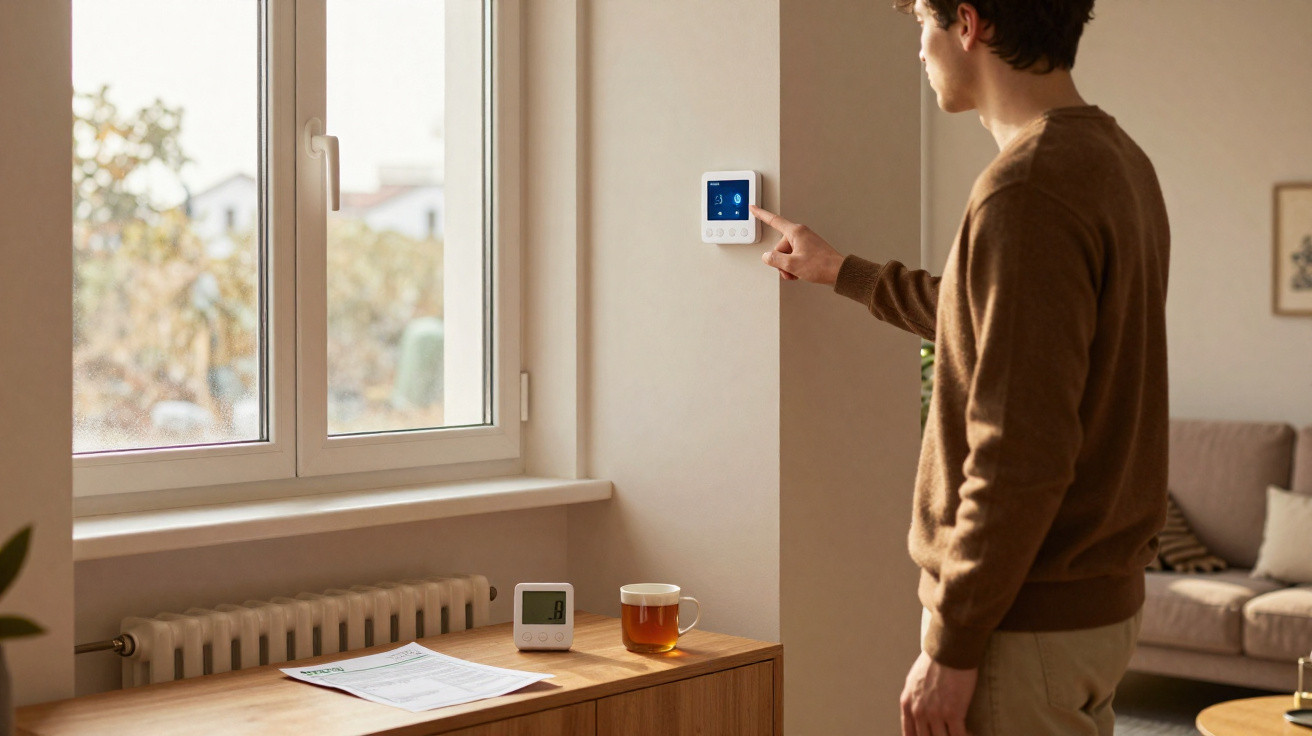
And yes, habits play a role. Shorter showers. Avoiding heating empty rooms all day. Using a programmable thermostat so you don’t fall into an “all or nothing” routine. Let’s be honest: almost nobody manages that perfectly every day. Life gets hectic, kids are unpredictable, and work is exhausting. The aim isn’t perfection-it’s moving the default from “turn it up” to “where is this heat going?”
“The moment people see their home through a thermal camera, everything clicks,” says one community energy adviser. “They stop blaming the boiler and start noticing the glowing strip above the door, the icy patch on the corner wall. It’s like putting on glasses for the first time.”
Thermal imaging-through a community scheme or a paid survey-can be a shock. It shows bright trails of heat spilling from places you’ve never questioned. Even so, you don’t need high-tech kit to get results. A simple checklist is enough to steer you:
- Inspect the loft: insulation depth and condition, plus any bare areas
- Feel around windows, doors and the loft hatch on a windy day
- Check for cold corners, black mould or condensation-clues that surfaces are too cold
- Pay attention to floors above garages or porches that are always icy
- Track your heating patterns for a week: timings, temperatures and “boost” sessions
That small routine shifts you from passive bill payer to calm investigator.
Living warmer, spending less, thinking differently
Heat loss can sound technical, but it’s deeply personal. It shows up when the bedroom feels like a tent and getting out of bed is a battle. When you hesitate to invite friends over because the living room never gets truly cosy. When older relatives sit indoors wrapped in layers and insist they’re “fine”, even when they clearly aren’t.
The odd thing is that once you learn to spot heat leaks, you can’t unsee them. The draught at the letterbox. The loft with barely any insulation. The wall that’s always a degree or two colder than the air. Noticing these things doesn’t only cut costs-it changes how you relate to your home. It stops being a stubborn cold box and starts to feel like something you can improve, one room at a time.
On a winter night, with wind up and rain rattling the panes, a well-insulated home can feel like a different place. The air stays still. Surfaces feel closer to your body temperature. You can sit near the window without wrapping up in a blanket. That comfort doesn’t come from magic smart thermostats or endless boiler swaps. It comes from learning where heat was escaping-and steadily, patiently, closing off the obvious routes.
We blast the heating because cold is immediate and sharp, while heat loss is slow and invisible. Making those hidden leaks visible is a small way to regain control at a time when energy prices and weather patterns can feel completely out of our hands. That, in itself, may be the comfort people are really trying to buy.
| Key point | Detail | Why it matters to you |
|---|---|---|
| Spot heat leaks | Use your hands, smoke, and room-by-room sensations | Understand why the house stays cold even with the heating on |
| Prioritise insulation | Roof, walls and floors before heating gadgets | Put money where comfort and savings are strongest |
| Small everyday actions | Thick curtains, draught excluders, heating schedules | Feel warmer without blowing the budget, even on a tight spend |
FAQ:
- How can I tell whether my loft insulation is sufficient? If you can clearly see the tops of the joists, it’s usually too thin. Current guidance is often around 25–30 cm. Older, flattened, dusty insulation tends to perform poorly and may need topping up.
- Are windows really the main source of heat loss? Not necessarily. Windows can be a weak point-particularly single glazing-but roofs and walls frequently account for more overall heat escaping. Tackling those first often improves comfort more for the money.
- What’s the cheapest way to feel warmer fast? Go after draughts: door seals, a letterbox brush, thick curtains, and a rug over bare boards. Pair that with heating the rooms you actually use rather than warming the whole house all day.
- Is a thermal imaging survey worth paying for? It can be, especially in older homes or properties with stubborn cold spots. The images show exactly where the weak points are so you can prioritise. Some councils and community groups lend cameras or offer free winter surveys.
- Should I replace my boiler before insulating? If the boiler is unsafe or extremely old, safety comes first. But for comfort, insulation and draught-proofing usually deliver a bigger difference than installing a new boiler in the same leaky house.




Comments
No comments yet. Be the first to comment!
Leave a Comment