
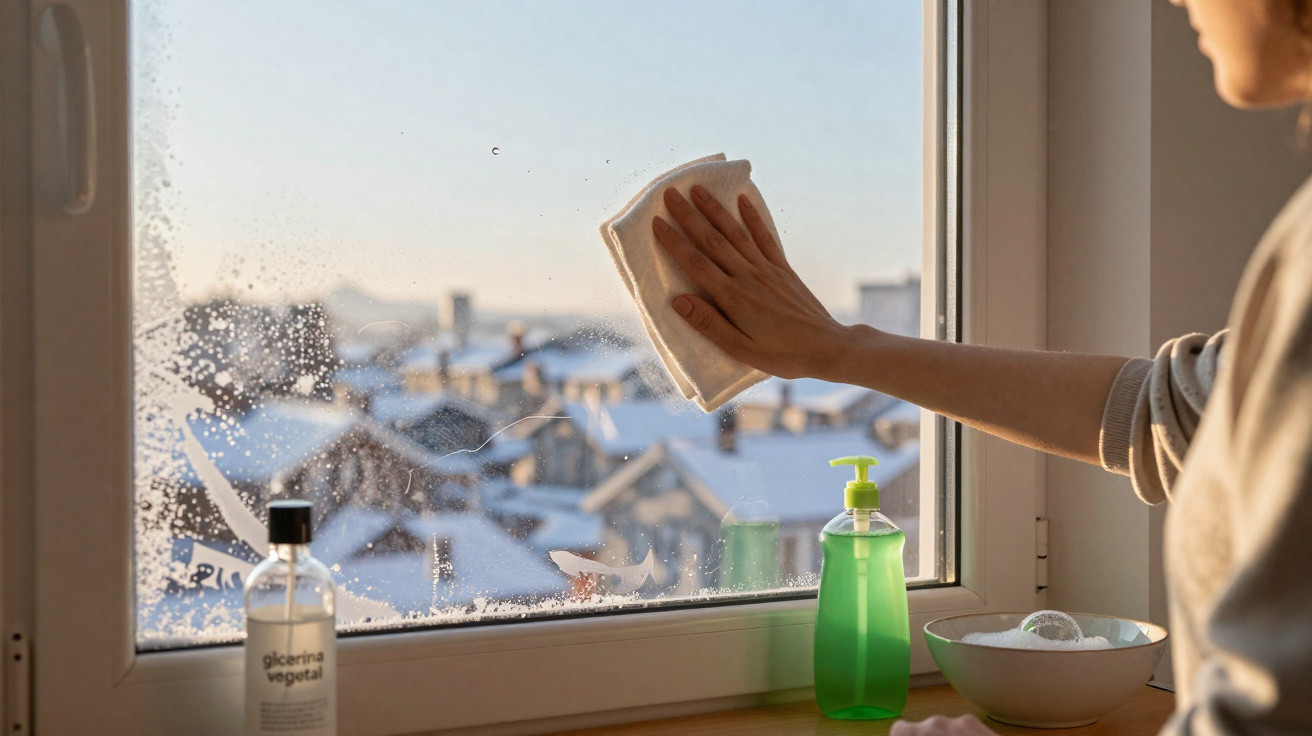
The winter routine is much the same across the UK and the US: you draw the curtains and discover the glass soaked with moisture, beads of water slipping into the window frames, and that unmistakable damp smell lingering indoors. But decades before dehumidifiers and smart thermostats became common, many households relied on a simple, everyday product to keep windows clearer.
Why winter turns your windows into waterfalls
Window condensation is not proof your home is “dirty” or “old”. It is straightforward physics. Inside, warm air collects moisture from cooking, showers, breathing and even houseplants. As soon as that moisture-laden air touches a cold pane, it cools quickly.
Once the air cools, it cannot retain the same amount of water vapour. The surplus turns into liquid water and gathers on the chilliest surfaces in the room - most often the windows. The point at which this happens is called the dew point.
When indoor air hits its dew point on cold glass, you do not just lose your view – you create a miniature swamp for mould.
If this happens day after day, it does more than ruin a clear morning view. Water tracks down into the frames and along the sills, particularly with older timber windows. Over time, that persistent damp may:
- Encourage black mould around seals and corners
- Rot wooden frames and damage paintwork
- Cause musty odours and a persistent feeling of humidity
- Trigger allergies or worsen asthma symptoms
Most people react in the usual ways. They mop the panes every day with towels. They turn the heating up, hoping it will “dry the room out”. They crack a window open, sending warmth straight out into the street. Those steps deal with what you can see, rather than what is causing it.
The old-fashioned trick: a thin, invisible film on the glass
Long before anti-fog sprays were widely sold, people had already worked out a quieter approach: change how water sits on the glass. Instead of trying to remove moisture from the entire room, they adjusted the pane’s surface so droplets could not cling in the same way.
The method uses something you may already have under the sink or in the bathroom cupboard: washing-up liquid or vegetable glycerine.
A microscopic film of dish soap or glycerine can stop water beading on the pane, so your window stays clear instead of milky.
Both are surfactants, meaning they change surface tension - the force that makes water pull into rounded droplets. On bare glass, that tension creates countless tiny beads that scatter light and produce the pale, fogged appearance.
When a very small amount of surfactant is spread across the pane, those droplets either flatten or move away more readily, turning into a thinner, more even layer that is much less noticeable. Light passes through more cleanly, so the window appears far clearer even if the room air remains humid.
Why this low-tech hack still works in 2026
Many modern homes are better insulated, yet often less well ventilated. Double glazing helps, but it can also trap moisture indoors more efficiently. That is why this low-key habit, remembered from older generations, still has a practical place today.
It brings several benefits at the same time:
- No electrical devices humming in the corner
- No specialist sprays or aerosols to buy
- An almost zero cost solution using products you already own
- Less daily wiping and fewer streaks on the glass
How to apply the anti-condensation film properly
The secret is not to overdo it. Use too much and the pane will look smeary and greasy. Use too little and the effect will fade quickly.
| Step | What to do | Why it matters |
|---|---|---|
| 1. Clean | Wash the interior glass and dry it fully. | Dirt trapped under the film creates streaks and patches. |
| 2. Prepare | Take a clean, slightly damp microfibre cloth. | Helps spread the product thinly and evenly. |
| 3. Add product | Apply just one small drop of washing-up liquid or glycerine to the cloth. | A tiny amount is enough for a full pane. |
| 4. Spread | Rub the inside of the window in circular motions, covering the entire surface. | Creates a uniform, invisible film across the glass. |
| 5. Buff | Use a second, dry cloth to polish until the glass looks crystal clear. | Removes visible residue while leaving a microscopic layer behind. |
Do not rinse the window after buffing. The remaining trace is exactly what keeps condensation at bay.
If you spot rainbowing or smudged areas, it usually just means the cloth carried a little too much product. A quick additional buff with a dry cloth is normally enough to put it right.
What difference can you expect the next morning?
On a freezing January morning, untreated panes will probably mist over as they always do. The treated panes should behave differently. The glass often stays largely clear, with any moisture appearing as a flatter, barely visible film rather than thick white fog.
In many homes, that change affects how the room feels as well. With less water collecting and dripping on cold glass, the space can feel less chilly and damp - which may stop people nudging the thermostat up another notch.
When condensation stops clinging to the glass, the room often feels warmer and drier, even at the same thermostat setting.
This is not a permanent fix. In kitchens and bathrooms where humidity is high, you may have to repeat the application every few days. In a bedroom with more moderate moisture, it can hold for a week or longer before fogging starts to return.
Glycerine or dish soap: which should you use?
Either option can work, but there are small differences in how they perform:
- Vegetable glycerine usually lasts longer and is commonly used in pharmacy preparations. When applied in an extremely thin layer, it forms a stable, clear film.
- Washing-up liquid is inexpensive and widely available, although some brands include dyes and fragrances that can leave faint marks if you apply too much.
If you have sensitive skin or respiratory conditions, it is better to choose unscented or “sensitive” versions. One bottle is often enough to cover all the windows in a flat throughout the season.
Going further: reducing moisture at the source
This older trick deals with what happens on the glass, but it does not remove moisture from the air itself. For a healthier indoor environment, pairing the window treatment with a few small habits can make a noticeable difference.
- Open trickle vents or a window for 5–10 minutes after showers and cooking.
- Keep lids on pans when boiling or steaming food.
- Dry clothes outdoors or near an extractor where possible, not on radiators.
- Move furniture slightly away from exterior walls to allow air circulation.
Used together, these steps help stop condensation simply moving from the pane to colder wall corners or the spaces behind wardrobes, where mould can spread quietly out of sight.
When condensation becomes a warning signal
A bit of misting on an exceptionally cold morning is normal in plenty of homes. Ongoing, heavy condensation, however, can point to wider issues with ventilation or insulation.
If you often see standing water on sills, black mould appearing on walls, or you live with a constant damp smell, an anti-fog film is only one part of the solution. It may be time to assess extractor fans, trickle vents, or even consider insulation improvements.
Even so, for households watching energy costs, this small step can be a rare kind of practical fix: inexpensive, quick to do, and immediately noticeable. The approach quietly used before central heating and double glazing can still sit alongside today’s higher-tech options.






Comments
No comments yet. Be the first to comment!
Leave a Comment