
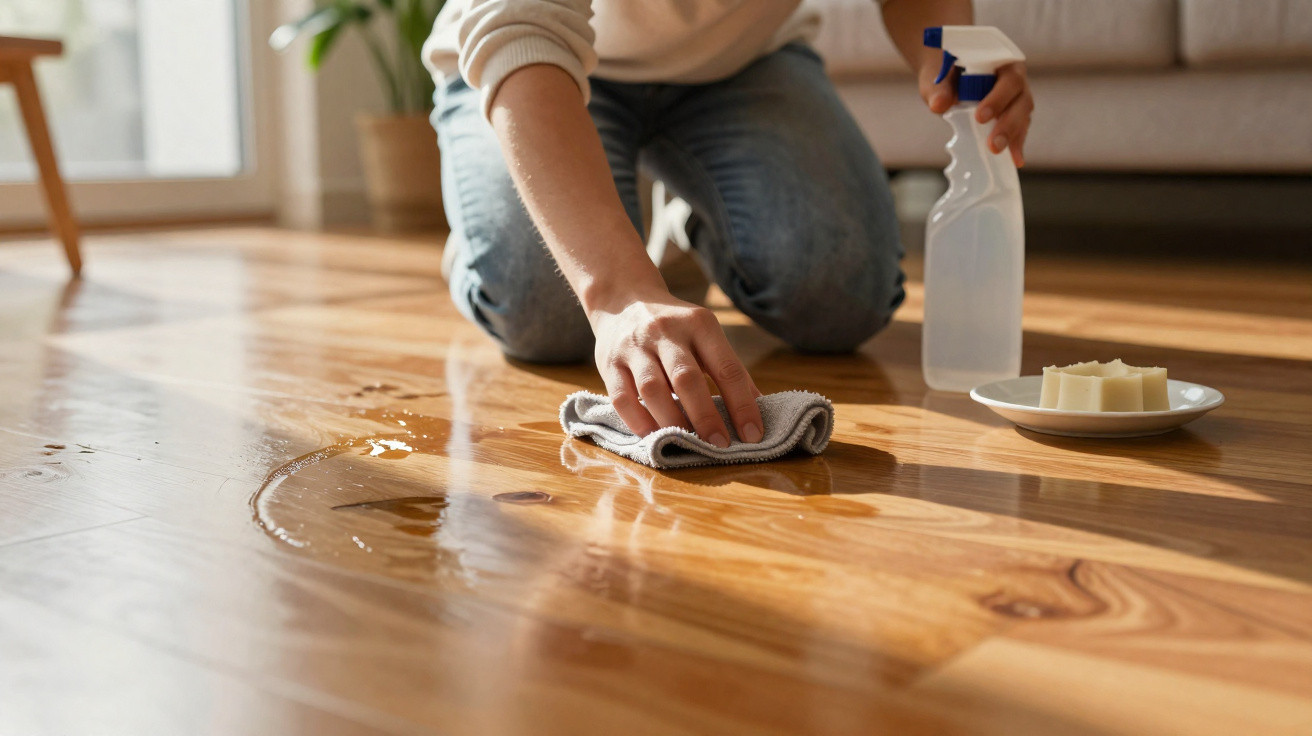
People often look at a scratched, dull floor and assume the only answer is to replace the whole lot. In reality, a few straightforward methods can bring the surface back to life and restore a clean, well-cared-for look without major work - as long as you understand what type of floor you have, what kind of damage you are dealing with, and which products suit each situation.
How do you start reviving a scratched and dull floor?
Before doing anything else, it is worth carrying out a simple clean and a quick visual check. That makes it easier to tell whether the marks are only on the surface, whether the issue is mainly a lack of shine, or whether the protective layer has already worn away more seriously.
Start by getting rid of loose dirt and built-up residue, because this acts like daily “sandpaper”. A thorough sweep or vacuum, followed by a damp cloth with diluted neutral detergent, can already improve the overall appearance and leaves the floor ready for more targeted treatments.
Watch a video on the MP Decorations YouTube channel that covers simple techniques for refreshing matt floors and bringing back shine to older, worn surfaces:
How can you clean the floor safely and choose the right products?
If your goal is to restore shine, it is best to steer clear of harsh DIY mixtures - such as too much vinegar, caustic soda, or concentrated bleach - as these can stain and eat into the finish. Instead, use cleaners designed for the specific material, compatible waxes, and purpose-made shine restorers for porcelain, ceramic, or laminate.
When applied correctly, these products can help disguise fine scratches and even out the finish without harming the floor’s protective layer. In high-traffic areas, they may also reduce how often you need more intensive cleaning.
What care is needed for each type of flooring?
The right recovery method depends entirely on what the floor is made from. A product that works well on ceramic can damage polished porcelain or leave laminate slippery, creating a bigger issue than the one you started with.
To make the choice easier, work out which category your floor falls into and follow guidance suited to that material:
- Porcelain: polished, satin, or glazed, which can lose its sheen through friction and unsuitable products;
- Ceramic: standard or glazed, generally tougher, but prone to ingrained dirt in grout lines;
- Laminate: wood or wood-effect, sensitive to moisture and not suitable for polishing.
With porcelain and ceramic, material-specific cleaners can remove old wax residue, grease, and built-up grime, often bringing back the original shine after careful rinsing. With laminate, the emphasis should be on gentle cleaning using a well-wrung cloth, applying laminate-safe refreshers and, if required, using colour-matched repair pens or filler compounds.
How can you make the results of floor revitalisation last longer?
Once the floor has been revived, how long it stays looking good depends largely on everyday habits. Mats by entrances help trap sand and small stones, while felt pads under furniture legs prevent new scratches when moving chairs, tables, and sofas.
It also helps to use a soft-bristle brush or a vacuum with a suitable head, stick to neutral detergent, and wipe up spills immediately - especially on laminate, which is more vulnerable to moisture. With these simple steps, a refreshed floor can look good for years, delaying replacement for as long as possible.


Comments
No comments yet. Be the first to comment!
Leave a Comment