
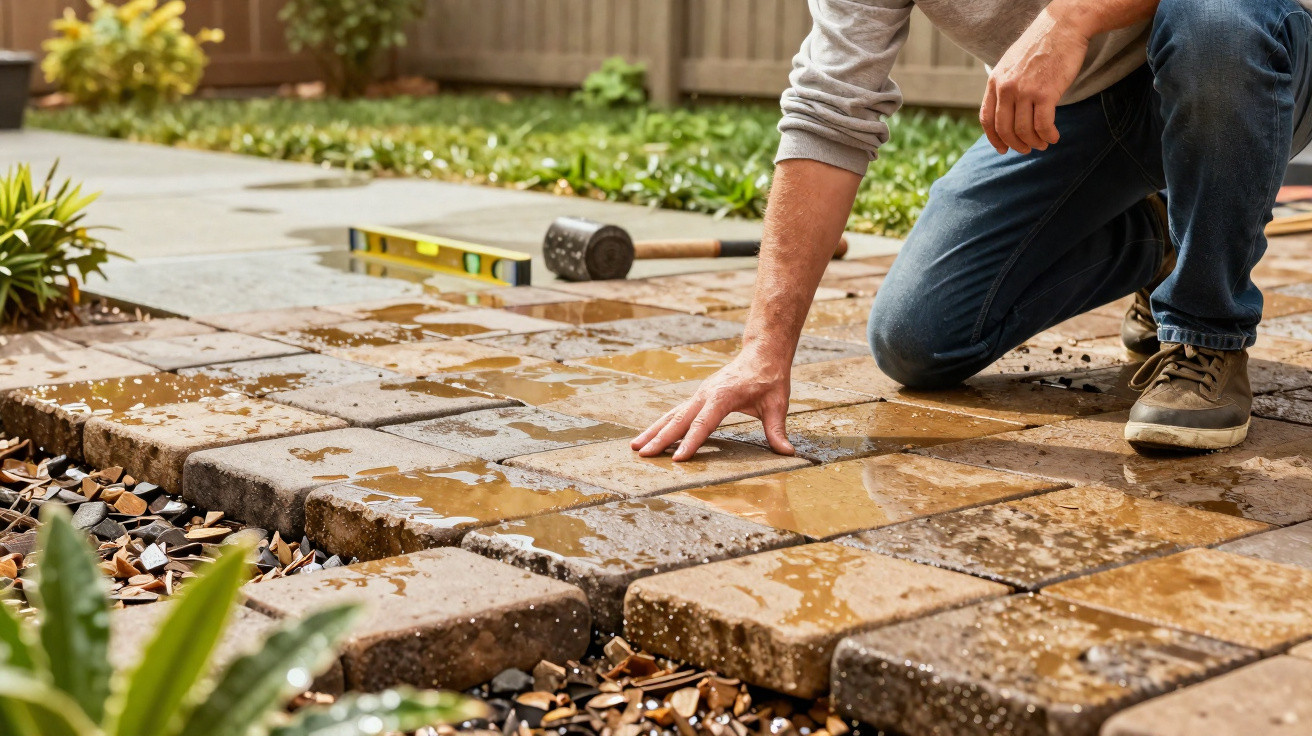
Creating an attractive outdoor area can be difficult when heavy rain is frequent. Conventional paving often holds on to moisture, but draining paving offers a smarter alternative for anyone who wants to get rid of puddles that keep forming in the back garden.
How does this innovative technology work on your property?
This modern system acts like a sieve laid over a properly prepared base. Rather than leaving rain water sitting on the surface, the porous material allows it to pass straight through into the ground, delivering continuous, efficient drainage.
By removing impermeable cement from the equation, day-to-day life becomes much easier. With this sustainable option, you prevent mud from building up on the patio and improve the look of the entire outdoor area in a practical, safe way, as you’ll see in the points below.
- Fast infiltration: Water goes directly into the soil instead of pooling on top.
- Improved safety: The porous surface greatly reduces the chance of dangerous slips.
- Modern appearance: A stone finish enhances the space’s architectural look.
What are the main benefits for your home?
Choosing this technology can quickly improve the family’s comfort. Keeping the ground dry helps stop slippery algae from appearing, so your space stays cleaner and safer even during long, intense summer downpours.
On top of that, the material’s long lifespan means fewer frequent repairs. This sensible choice tackles chronic flooding spots, turning an old, troublesome path into a refreshed area with contemporary design and well-planned functionality.
In a helpful, hands-on video published on the YouTube channel Faby Franco Works, Renovations and DIY, you can watch the real installation of this modern porous-stone finish and learn how to eliminate puddles on the outdoor ground in a definitive way:
How do you install it correctly in your back garden?
The work starts with careful preparation of the existing earth base. Compacting the soil thoroughly is essential to prevent future movement, ensuring the build can take the layers with full stability and strong long-term durability.
Using a polyester geotextile membrane
Essential protection against unwanted plant growth Applying the membrane over the compacted soil stops weeds pushing up between the natural stones in the finish.
This physical barrier holds back fine sediment while still allowing water to flow freely down towards the water table.
After this initial protection, the chosen stones are combined with a binding product. This special mix locks the particles together, producing a tough paving surface with an excellent visual finish, making the key parts of the structural approach clear.
- Soil properly compacted using suitable tools.
- Polyester membrane to control weeds.
- Decorative stones mixed with a high-bond resin.
What care keeps the system working efficiently?
Day-to-day upkeep for this modern surface is usually very straightforward. Clearing away dry leaves and small debris helps keep the permeable channels fully open, maintaining hydraulic performance and the original beauty of the space.
Using water jets at moderate pressure also supports deeper cleaning without harming the structure. Doing this periodically prevents fine dust collecting in the porous gaps, and following cleaning guidance helps extend the durability of the finish.
- Sweep fallen leaves regularly using a soft broom.
- Wash the surface with clean water at moderate pressure.
- Avoid heavy vehicle traffic beyond the recommended limit.
Is it worth investing in this solution for your house?
Opting for permeable surfaces is a sensible investment with a strong return. As well as boosting property value, this innovative approach solves long-standing infiltration issues and brings peace of mind to anyone who wants a harmonious home without annoying puddles.
In this way, updating the outdoor setting delivers practical advantages that outweigh the initial build costs. Combining sustainability with a contemporary look is an ideal route to make your space far more welcoming, with reliable protection and maximum technical efficiency.



Comments
No comments yet. Be the first to comment!
Leave a Comment