
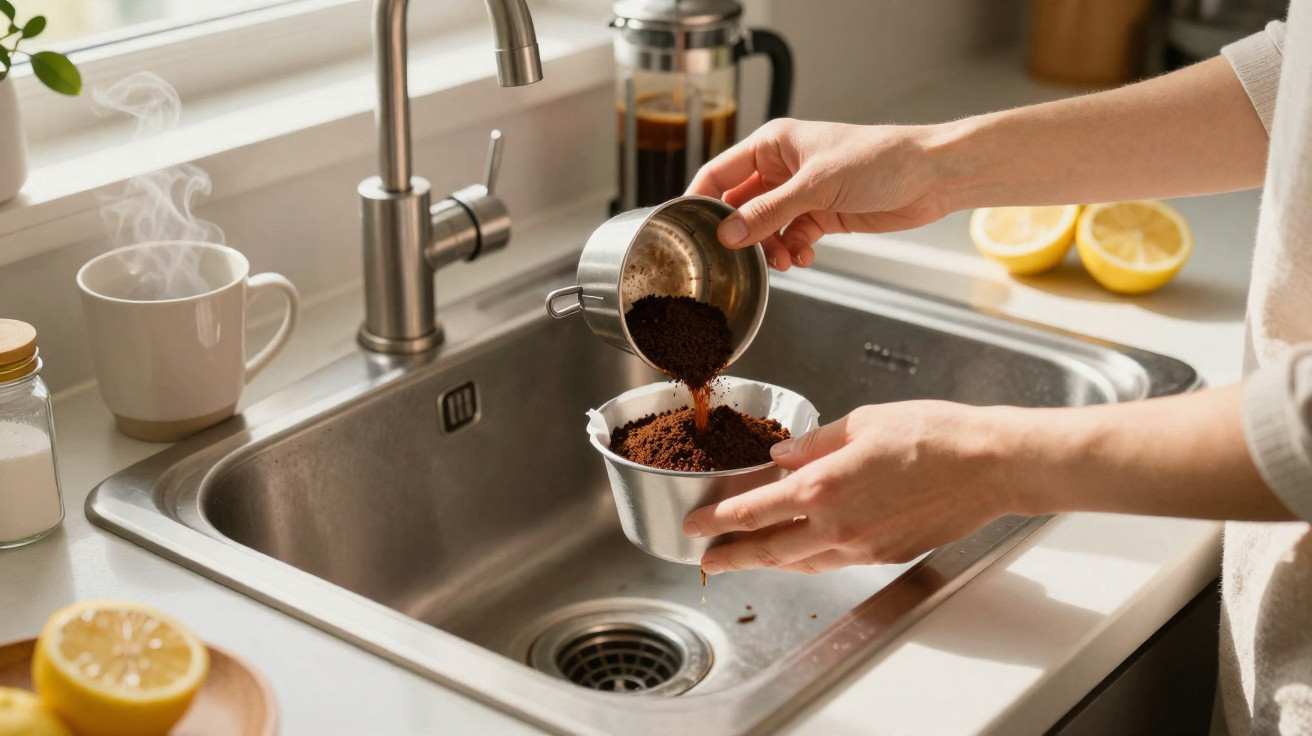
Pouring coffee grounds down the drain can seem like a handy way to get rid of waste and cut odours, but the grains do not dissolve. Instead, they collect alongside grease and soap, turning into a thick paste that encourages blockages in the pipework.
What is the point of putting used coffee in the drain, and why is it not recommended?
Coffee grounds stay solid after the drink is brewed and, once wet, they tend to clump together. Inside pipes, these particles stick to oil, food scraps and detergent residue, creating a dense mass that gradually narrows the route the water needs to flow through.
This usually develops slowly: at first the water drains more slowly, then you may notice bubbling, smells and even liquid backing up. Carrying on tipping coffee down at this stage increases the build-up near the waste trap and can turn a minor slow drain into a full obstruction.
The main issues caused by this habit include:
- Grounds: used grains do not dissolve inside the pipe.
- Grease: it traps the particles and creates a thick paste.
- Siphon: the bend can hold on to the mixture of waste.
- Odour: the smell of coffee only disguises the problem temporarily.
- Disposal: choose the organic bin or composter instead.
Why do coffee grounds collect mostly in the siphon?
The siphon (trap/U-bend) holds a small amount of water that blocks gases and odours coming back up from the drains. That same curve can also retain solid particles, which makes the combination of grounds and grease particularly troublesome in this region of household plumbing under the sink.
If the drain smells unpleasant, the cause may be grease stuck to the pipe, waste caught in the siphon, or the water seal having dried out. Coffee grounds only cover the odour for a short time and add extra solid material exactly where cleaning is needed.
What should you do when the water is already draining slowly?
If the water is still moving, remove any visible debris and wash the sink bowl with washing-up liquid. A small amount of bicarbonate of soda followed by vinegar can help with deodorising and loosening light grime, but that fizzing reaction will not break down a compact obstruction made of coffee and grease.
Fizzing is not a substitute for unblocking
The mixture only helps with light residue
Bicarbonate of soda and vinegar react quickly and create bubbles, but they do not dissolve large plugs of grease.
Never combine this method with bleach, chemical drain unblockers or any other products.
Finish by flushing with hot tap water (not necessarily boiling), especially if you are unsure what material the pipes are made from. If the slow draining continues, try a rubber plunger, clean a removable siphon, or call a professional-and avoid forcing the blockage further down.
For a minor obstruction, follow these precautions:
- remove excess standing water and any visible debris from the sink;
- use bicarbonate of soda and vinegar only for light dirt and odours;
- rinse with hot tap water and a little washing-up liquid;
- use a rubber plunger if the water is still slow;
- take the siphon apart only if you can refit it without causing leaks;
- contact a plumber if water backs up or the obstruction persists.
Which alternatives neutralise odours without blocking the drain?
Lemon peel should not be pushed into the drain, because pieces can catch and worsen a blockage. To enjoy the scent, rub the peel around the sink, leave it briefly, then put it in the rubbish or the composter.
Very hot water can help shift fresh grease when used with washing-up liquid, but boiling water may damage seals or certain plastic pipes. Use hot water that suits your pipework, and never pour oil down the sink, as it can solidify and trap particles in the siphon.
Safer options for keeping odours under control include:
- washing the waste fitting, strainer and the edges of the plughole with washing-up liquid;
- ensuring there is water in the siphon when the sink has not been used for a long time;
- using hot tap water with washing-up liquid for recent grease;
- rubbing lemon peel inside the sink bowl and disposing of it away from the drain;
- physically cleaning the siphon when residue has collected;
- not mixing different cleaning products or drain unblockers.
Where should you dispose of coffee grounds, and how can you prevent new blockages?
If you use lemon around the home, keep sink cleaning separate from disposing of waste via the drain. Peels can freshen surfaces, but they must be collected afterwards, while coffee grounds should go into the rubbish or into composting.
The best prevention is to fit a strainer in the plughole, scrape plates before washing up, and dispose of grease in a sealed container. With regular siphon cleaning and freely flowing water, smells reduce without resorting to tricks that add residue and damage your plumbing.





Comments
No comments yet. Be the first to comment!
Leave a Comment