
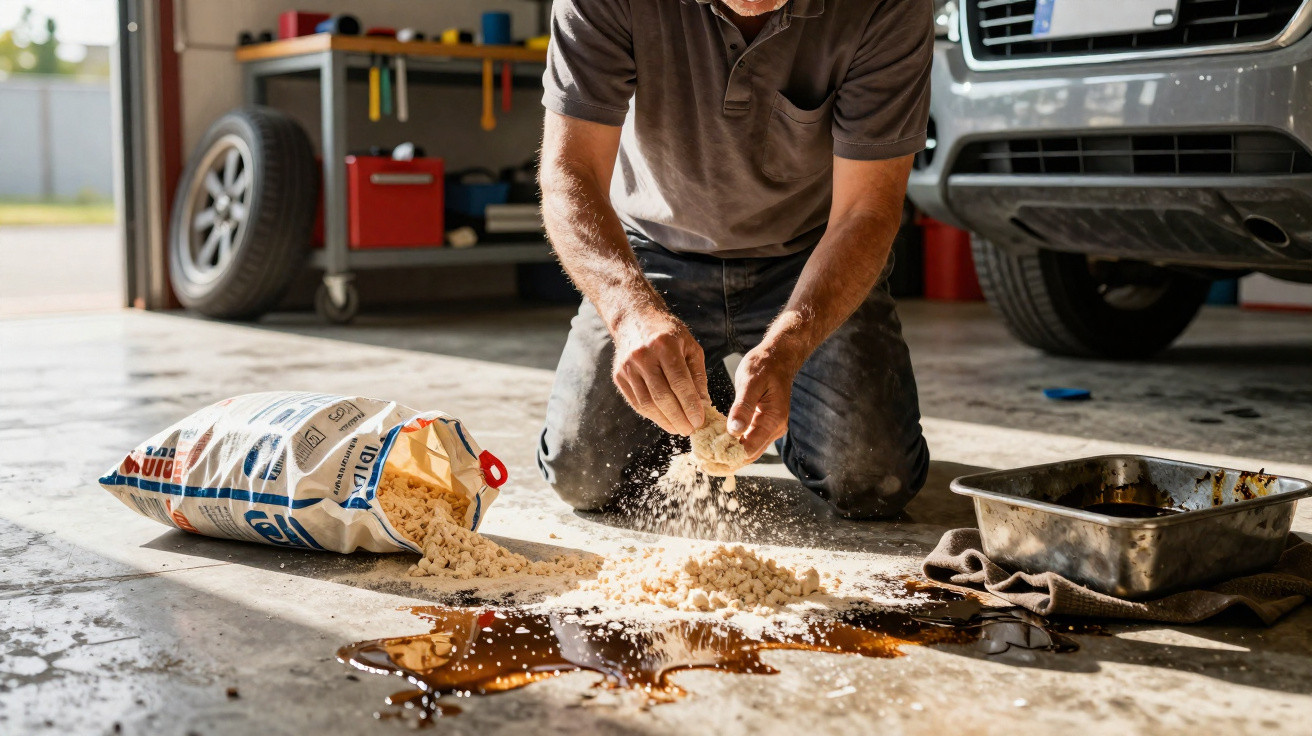
Automotive fluid leaks are common and they can leave stubborn marks on garage floors. Spreading an absorbent material immediately after a spill helps prevent accidents and protects the floor surface. Using dry sawdust is a highly practical alternative for dealing with this kind of mess.
Why does sawdust work so well on the floor?
Fine wood particles are highly porous, so they behave like a natural sponge when they come into contact with thick fluids. When you scatter it over a fresh stain, it draws out the liquid before it can sink deeply into the pores of rough concrete.
Acting quickly like this greatly cuts down on scrubbing time and stops the spill from spreading across the garage. It also makes the remaining material much easier to lift during sweeping with a sturdy stiff-bristled broom.
What happens when you throw salt on spilled oil?
Table salt has a surprisingly strong absorbing effect on greasy surfaces, working fast to hold the grime and making it easier to… Read more
What is the ideal time to leave it in place?
For the best outcome, you need to leave the product on the spill for a few minutes. This pause gives the plant fibres time to fully soak up the heavy oil, turning the wet stain into a dry paste.
Removing the mixture as soon as absorption is complete helps ensure the floor is left without sticky residue. If any grime remains, applying a second layer of fine powder provides complete containment of the remaining dirt without harming the surface.
Below is a video from the homesteady channel on YouTube demonstrating effective techniques for floor maintenance:
How do you finish cleaning the affected area?
Once all the contaminated powder has been swept up, the spot may still have a greasy film that is very slippery. Applying a good neutral detergent to the area, together with warm water, helps degrease the surface effectively.
Scrubbing the concrete with a stiff-bristled brush allows the soap to loosen any remaining residue. This hygiene step is essential to restore safety and reduce the risk of slips in the garage.
Oil Containment Guide
Recommended items for removal - Keep these materials to hand to deal with garage leaks easily:
- Dry sawdust from clean wood;
- A durable stiff-bristled broom;
- Concentrated detergent with degreasing action.
What precautions should you take when disposing of the waste?
The collected residue should not be put in ordinary household waste or poured into domestic drains. Because the powder has absorbed automotive chemicals, it requires responsible disposal to prevent soil contamination.
Sealing the powder in a lidded plastic container helps stop odours and any leftover fluid from leaking through the house. Looking for dedicated collection points or partner workshops is the best way to handle the contaminated material with full responsibility.
See the key steps for disposing of the waste safely:
- Put the used powder into a heavy-duty plastic bag;
- Keep the container away from heat sources;
- Take the waste to a suitable recycling or disposal facility.
Why is this technique mechanics’ favourite?
Workshop professionals favour this approach because it is inexpensive and extremely efficient in day-to-day use. Since it is easy to store, any business can keep the area clean without spending money on costly containment chemicals.
Making this simple habit part of routine vehicle maintenance creates a safer, more hygienic working space for everyone. Keeping the floor clean helps prevent serious falls and extends the life of your garage structure.




Comments
No comments yet. Be the first to comment!
Leave a Comment