
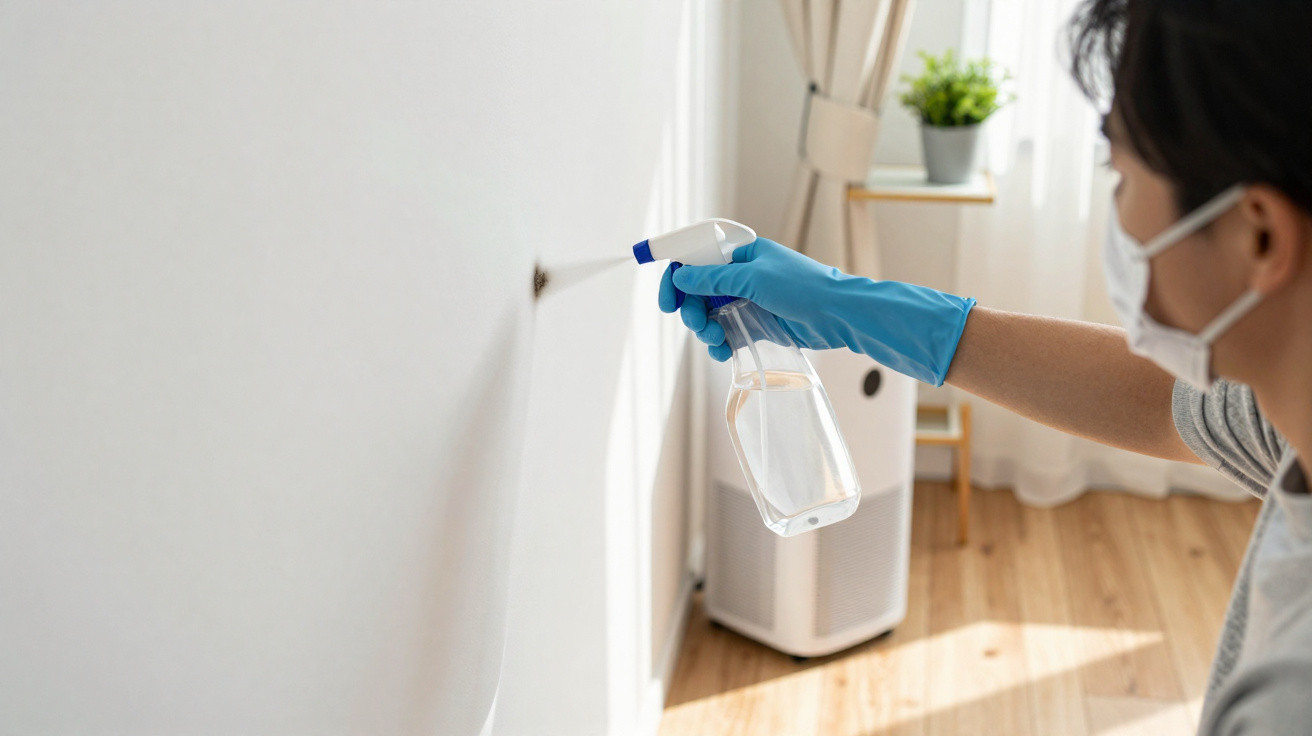
Mould on the wall develops when airborne spores find moisture, poor ventilation and a suitable surface to grow on. Wiping away the stain can improve the room, but the effect will only be short-lived if the damp source-such as water ingress, a leak or condensation-remains.
What should you check before you start cleaning?
Start by working out how widespread the issue is and where the moisture is coming from. Small patches on durable, washable surfaces can usually be dealt with at home. However, large areas, crumbling plaster, or mould that keeps coming back may point to an underlying problem that needs professional repair.
- Check for leaks from roofs, pipework and windows;
- Look for signs of condensation in bathrooms and kitchens;
- Pull furniture away to inspect any hidden sections of wall;
- Wear gloves, eye protection and a suitable mask;
- Open doors and windows before applying any product;
- Keep children and pets away while you clean.
How do you clean a small patch of mould on the wall?
Dampen the affected area before you scrub so you do not spread spores into the air. On a washable surface, use warm water with washing-up liquid, gently clean with a sponge or soft brush, then wipe away residue with a clean cloth. Afterwards, dry the wall completely.
How you remove mould marks may depend on the paint and wall finish. Before using any solution, test it on an inconspicuous area, as stronger products can discolour paintwork or damage the surface.
Which mistakes should you avoid during cleaning?
A common mistake is painting straight over the patch. Paint only masks the problem for a while and may peel if moisture continues to pass through the wall. You should also avoid scraping or brushing mould when it is completely dry.
- Do not mix bleach with vinegar, ammonia or detergents;
- Do not apply several products at the same time;
- Do not sand a mouldy wall without protection and dust control;
- Do not put furniture back until the surface is fully dry;
- Do not use anti-mould paint to hide water ingress;
- Do not reuse contaminated cloths without washing them properly.
When can bleach be used?
Bleach is not needed for every clean, and it may not soak in properly on porous materials. On painted walls and hardwearing surfaces, it is better to begin with water and washing-up liquid, physically removing the mould and drying the area thoroughly. Plasterboard, wallpaper and other heavily contaminated materials may need to be replaced.
If you do use a chlorine-based product, follow the exact dilution shown on the label, keep the space well ventilated and wear protective equipment. Never mix bleach with any other cleaning product, as the combination can release dangerous gases.
How can you stop mould coming back?
The key is moisture control. Fix leaks and water ingress, use extraction in bathrooms and kitchens, open windows daily, and leave a gap between furniture and cold walls. Any wet surfaces should be dried quickly so the fungus does not have the conditions it needs to grow again.
If the stain returns soon afterwards, there is a strong damp smell, or the affected area approaches 1 square metre, seek specialist help. Only once the cause has been removed, the surface has been cleaned, and everything has dried fully should you apply a sealer and repaint.




Comments
No comments yet. Be the first to comment!
Leave a Comment