
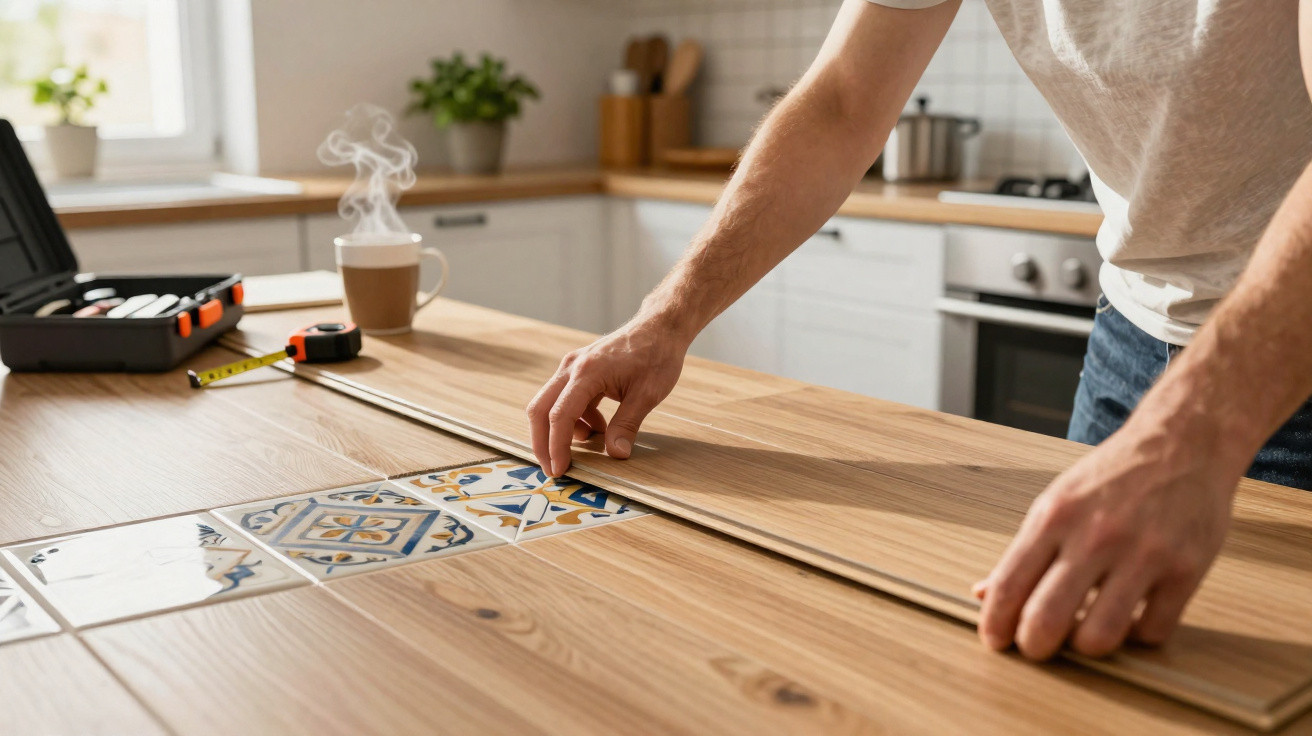
Kitchen refurbishments in 2026 are increasingly moving towards solutions that are quick, clean and far less disruptive at home. Instead of ripping up tiles, dealing with rubble and living with weeks of building work, more people are opting for finishes that can be laid straight over the existing floor, delivering a big visual change with a simpler installation. Vinyl flooring has become the top choice for anyone who wants to refresh a kitchen without heavy work and without turning day-to-day life upside down.
Why has vinyl flooring become so popular in kitchens in 2026?
Vinyl flooring has taken centre stage in kitchens because it can update the room without removing the previous covering-provided the subfloor is solid, level and dry. This “floor over floor” approach cuts out several traditional stages of a renovation, shortens the timetable and dramatically reduces mess, which is ideal for people who need to remodel without completely losing use of the kitchen.
A further key reason is the breadth of finishes available. The material can convincingly recreate timber, a polished-concrete look, natural stone, or patterns that echo ceramic-so you can achieve a modern kitchen without structural changes. That makes it possible to freshen an older space while keeping existing cabinets, worktops and the current layout, which is particularly helpful in rented properties, where invasive work is often not allowed or simply not worth the cost.
- No demolition: installed directly over the existing floor (as long as it is level and sound), avoiding removal, rubble and the upheaval of weeks of work
- Modern design choice: replicates wood, polished concrete, natural stone and ceramic with a finish that doesn’t compromise the look of the room
- Very easy maintenance: a damp cloth and a mild, neutral detergent are enough-no grout to scrub, no tiles coming loose, and no mould building up in joints
- Warmer underfoot and quieter: more comfortable to walk on than cold ceramic, with some ranges also offering a slightly anti-slip surface
- Ideal for rented homes: click systems are reversible and can be lifted without damaging the original floor when the tenant needs to hand the property back
How vinyl flooring is installed over existing tiles
Before anything else, the existing surface needs a proper technical check. Loose tiles, holes and uneven spots must be fixed before laying vinyl, because defects in the base will show through and can become more noticeable over time. Once repairs are done, the floor is thoroughly cleaned to remove grease, dust and residues from cleaning products-helping adhesion and preventing future failures.
In kitchens, there are two common fitting methods, chosen according to how the room is used and what the base allows. Glued-down vinyl flooring is bonded to the floor with a specific adhesive and suits high-traffic areas where maximum stability matters. Click vinyl flooring uses planks or tiles that lock together, creating a continuous surface that, in many cases, is fully reversible-making it the best option for renters or for anyone who wants the ability to replace only damaged sections later without redoing the entire floor.
What vinyl flooring delivers that conventional tile can’t
Compared with traditional ceramic flooring, vinyl stands out for faster installation and a much less invasive process, since it avoids heavy demolition and the removal of waste. In many situations, the kitchen can remain partly usable, with disruption limited to specific areas, which reduces the impact on the household routine. For families with children, older relatives or pets at home, that benefit can be a major deciding factor.
Care tips that maximise the lifespan of vinyl flooring in the kitchen
Four factors that determine whether the result lasts for years-or only months.
Choose versions rated for wet areas and heavy residential foot traffic-not all vinyl flooring offers the same moisture resistance, and kitchens and utility rooms require the right technical specification. Check the finished floor height against doors and adjoining spaces before installation, planning transition strips to avoid awkward steps or visible height differences between rooms.
Follow the manufacturer’s cleaning guidance, steering clear of abrasive products and very stiff scrubbers that can damage the vinyl’s protective top layer. Make sure the base is completely level and dry before fitting-any unevenness or trapped moisture will undermine both adhesion and durability, regardless of the quality of the product you buy.
Ongoing care is one of the clearest contrasts with standard ceramic. With no grout lines to scrub, no tiles working loose and no mould collecting between joints, kitchen cleaning becomes a simple wipe with a damp cloth and a neutral detergent. Anyone who has spent hours attacking grout with a brush will know exactly how much that changes everyday life.
Who this solution makes the most sense for in 2026
Laying vinyl flooring over existing tiles is especially well suited to three groups: people who rent and want a better space without funding a renovation that benefits the landlord; homeowners who want to upgrade with less disruption and in less time; and anyone renovating in stages who needs the kitchen back up and running as quickly as possible.
With correct installation over a level base and basic maintenance, vinyl flooring can turn a kitchen refurbishment into a fast, predictable project with strong value for money. The trend that arrived in 2026 isn’t only about looks-it’s a practical answer to the fatigue of long, expensive and invasive building work that many Brazilian families want to avoid. Share this with anyone planning a kitchen update who doesn’t want weeks of demolition at home.





Comments
No comments yet. Be the first to comment!
Leave a Comment