
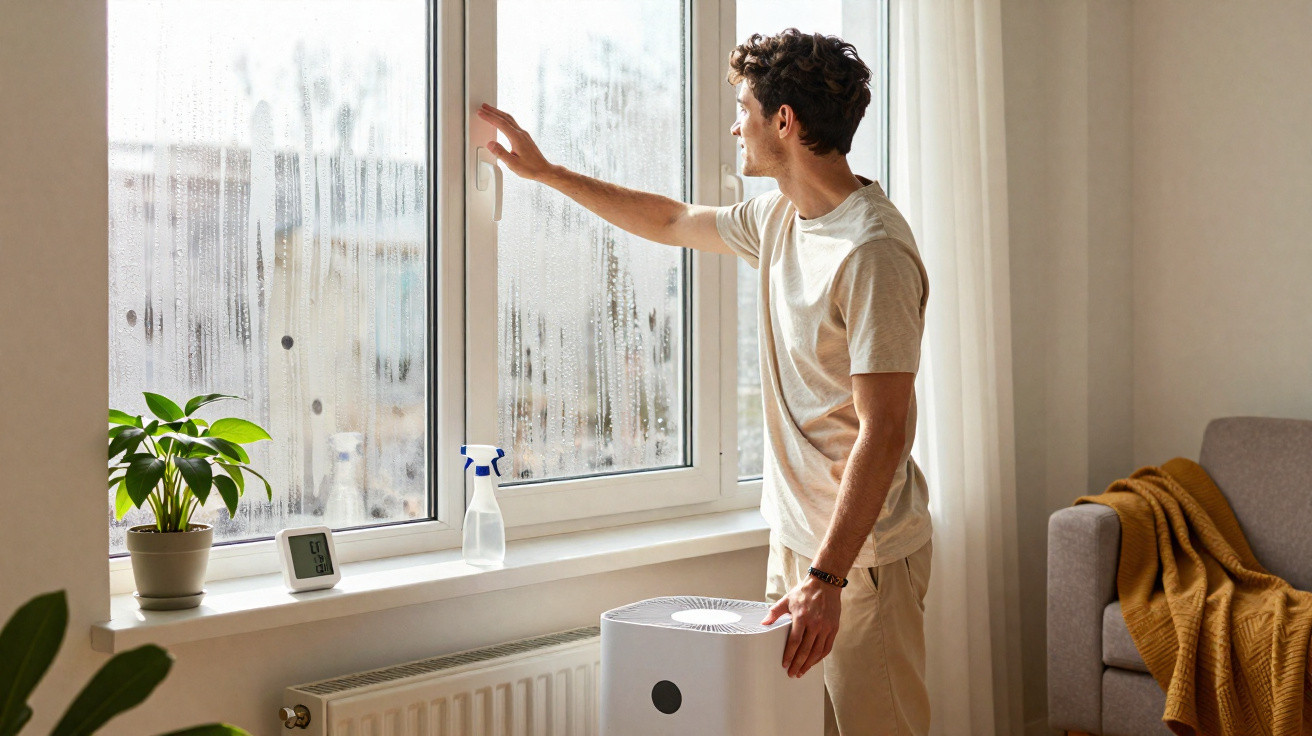
The first chilly mornings often bring an uninvited, quiet guest into the home: beads of water on the window, a musty smell, and misted-up glass.
What looks like a mere cosmetic annoyance is usually a sign that something is out of balance indoors - and it can affect your finances, your comfort, and even the health of everyone living there.
Why moisture clings to windows in particular
It is a familiar pattern: a cold night, the house shut up, the heating on, or several people sharing the same room. By morning, the panes are wet. The reason is straightforward physics.
Warm air can hold more water vapour than cold air. Inside the home, that vapour comes from breathing, hot showers, simmering pans, and washing left to dry on an indoor airer. When this damp air meets a colder surface - such as window glass - the temperature drops abruptly. The vapour turns into tiny droplets: condensation.
"When the surface is cold and the air is humid, the window becomes the perfect meeting point for condensation - and for mould."
If that moisture builds up day after day, with no drying and little ventilation, timber swells, paint flakes, and the rubber seals around frames begin to rot. Before long, dark marks appear, the air smells unpleasant, and fungal spores start circulating indoors.
From the window to your lungs: the impact on health
Persistent damp around windows does not stay on the glass. It creates an indoor microclimate that encourages mould and dust mites to thrive - both well-known triggers for allergies and respiratory problems.
- Rhinitis and sinusitis flare-ups become more common;
- People with asthma may notice worsening symptoms;
- Children and older adults are more prone to respiratory infections;
- Anyone with bronchitis or COPD may feel more short of breath.
These effects rarely show up overnight. The issue is the gradual build-up: months of breathing air laden with fungi and particles released from mouldy walls and window areas.
Ventilation and heating: the basic double act against condensation
The most direct way to tackle window moisture comes down to two essentials: fresh-air exchange and a reasonably steady indoor temperature.
Daily ventilation, even when it is cold
In colder weather, most people keep everything closed. The problem is that this traps both water vapour and indoor pollutants. Air-quality specialists give simple guidance: create a quick “through-draught” every day.
- Open the windows for 10 to 15 minutes in the morning;
- Create cross-ventilation by opening at least two windows on opposite sides;
- Do it again after a hot shower or cooking a heavy meal.
"Just a few minutes with the windows open each day can make more difference to indoor humidity than hours of heating on its own."
Steady heating instead of constant “on and off”
Another habit that promotes condensation is turning the heating off completely overnight and then blasting it on in the morning. That sharp swing leaves surfaces cold and creates thermal shock - ideal conditions for droplets to form.
Keeping the home at a moderate, even temperature helps narrow the gap between the air and the glass. That reduces the likelihood of vapour turning into liquid on the window. Even without a heater, it helps to stop rooms dropping too low by sealing external draughts and insulating doors to exposed areas.
Bedroom: the champion of wet windows
The bedroom is often where people first spot the issue. Overnight, windows stay shut, our bodies release moisture through breathing, and the heating is often turned down. By morning, the window can look like a sheet of water.
A few everyday habits can make a real difference:
- Keep a minimum temperature rather than switching everything off in one go;
- Avoid drying clothes in the bedroom;
- Open the window as soon as you get up, even if only for a few minutes;
- Pull wardrobes slightly away from cold walls to prevent hidden mould.
"Each body sleeping in a bedroom releases moisture. In small, closed rooms, the window ends up ‘taking’ almost all of it as condensation."
Kitchen: how to control the invisible cloud of steam
Boiling pans, pasta water, the oven running, coffee brewing - the kitchen generates a volume of moisture that is easy to underestimate.
Small changes when preparing meals
A handful of simple steps can significantly cut the humidity that ends up on windows throughout the house:
- Use the cooker hood or extractor fan whenever you cook;
- Put lids on pans whenever possible;
- Keep the kitchen door closed while cooking;
- Open the kitchen window straight after the meal.
If you do not have an extractor, use cross-ventilation instead: open the kitchen window and another nearby window for a few minutes to pull the steam outside.
Bathroom: the home’s steam laboratory
Hot showers are one of the biggest drivers of indoor humidity spikes. In small bathrooms, the mist concentrates and then drifts into hallways and bedrooms - where it meets… cold windows.
Measures that help include:
- Keep the shower enclosure door or curtain properly closed while showering;
- Switch on the extractor before you turn the shower on, where available;
- Open the window as soon as you finish and leave it open for a few minutes;
- Quickly wipe down walls and the enclosure in bathrooms without adequate ventilation.
Dehumidifier: when the problem has gone too far
In very damp homes, or in regions where the air is naturally moisture-laden, ventilation alone may not be enough. In those situations, a dehumidifier can be a useful ally.
| Type of solution | How it works | Main use case |
|---|---|---|
| Electric dehumidifier | Draws in air, condenses the vapour and collects the water in a tank | Larger spaces or very damp rooms |
| Refill dehumidifier (salts) | Absorbs moisture using hygroscopic products | Cupboards, wardrobes and small bathrooms |
| Ceiling fan or pedestal fan | Keeps air moving, helping distribute humidity more evenly | Closed rooms that trap steam |
"A dehumidifier does not replace ventilation, but it can correct excess humidity in homes where the problem is already out of control."
Direct protection for windows: film, sealing and maintenance
Alongside improving indoor air, it is worth looking closely at the windows themselves. Cold surfaces can be “softened” with a few practical measures.
Films and anti-condensation products
Specialist window films add a layer that reduces thermal shock between warm indoor air and a cold pane. Some versions also improve thermal insulation, helping keep the glass less icy.
There are also liquid products applied directly to the window, designed to spread water more evenly and prevent large droplets running down into the frame. They do not address the root cause, but they can reduce the day-to-day feeling of everything being soaked.
Checking seals and frames
Perished rubber, gaps between the glass and the frame, and rusting metal parts all make it easier for very cold air to get in - increasing the contrast with indoor conditions. A yearly inspection, with replacement of damaged seals, can substantially reduce where condensation forms.
When humidity is a symptom of something bigger
Breathing, bathing and cooking are not always the only culprits. Windows that are constantly wet may point to structural issues: water ingress, leaking pipework, internal cracking, or walls in direct contact with damp ground.
Warning signs include:
- Walls that feel cold to the touch, even on mild days;
- Mould spreading beyond the windows into ceiling corners and along skirting boards;
- Paint that has lifted, blistered, or is peeling behind furniture;
- A patch of floor that stays damp in the same spot for no obvious reason.
In that situation, simply opening windows or running a dehumidifier will not solve it. A technical assessment is worth seeking, because long-term moisture in the structure can affect both the building fabric and the property’s sanitary safety.
Humidity, thermal comfort and energy bills: a chain reaction
Humid air holds heat better, yet it can feel colder when it touches the skin and evaporates. In very damp homes, people often turn the heating up, which strengthens the cycle: more heating, more vapour, more condensation on the windows.
Two contrasting scenarios make this easier to see:
- House A: little ventilation, lots of laundry drying indoors, and windows that are always wet. The family runs the heater for long periods, trying to overcome the clammy cold feeling.
- House B: daily ventilation, control of steam sources, and occasional dehumidifier use on the worst days. Heating is used more gently and for fewer hours, because drier air feels more comfortable at the same temperature.
In practice, House B tends to use less energy and deal with less mould and fewer respiratory flare-ups, even with the same type of heating.
For households with children, older people, or anyone with allergies, managing humidity becomes almost as important as choosing the heating system. The aim is not only dry glass, but control of a set of factors that together determine the air you breathe indoors every day.




Comments
No comments yet. Be the first to comment!
Leave a Comment