
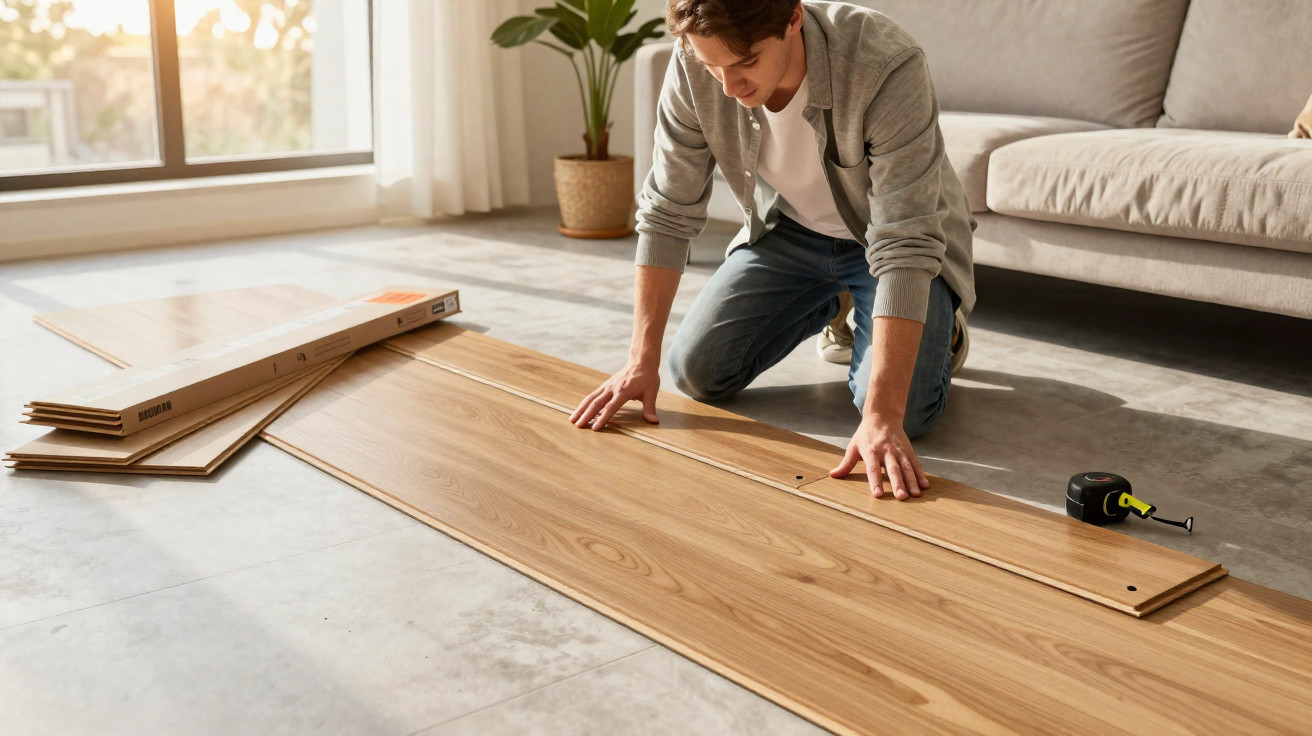
In recent years, traditional ceramic tiles have been steadily losing ground in both high-end residential interiors and the refurbishment of compact flats. In 2026, architects and interior designers are increasingly backing vinyl flooring in plank or sheet form with an almost invisible joint, often paired with tall skirting boards. It stands out for coping well with everyday foot traffic, being straightforward to clean, and cutting down the areas where dirt typically gathers along edges and in visible grout lines.
What is the vinyl flooring that is replacing standard ceramic tiles?
Vinyl flooring is made primarily from PVC plus additives, and is manufactured as planks, tiles, or rolls (sheet). Unlike standard ceramic tiles-which rely on mortar and wider grout joints-vinyl can be glued down or installed with a click/locking system, creating a more continuous surface with minimal joins.
The latest options include protective layers designed to resist scuffs, stains, and moderate moisture, which has widened its use into kitchens and cloakrooms. Stiffer SPC and WPC variants combine vinyl with other materials, delivering better dimensional stability and finishes that replicate wood, polished concrete, and natural stone.
Why is vinyl flooring more durable, practical, and hygienic?
The durability of vinyl flooring for 2026 comes from its multi-layer build, especially the wear layer engineered to handle scratching, heavy daily circulation, and furniture being moved around. In many situations it also deals with knocks better than standard ceramic tiles, which can chip or crack, while providing noticeably improved thermal comfort and sound reduction.
From a hygiene perspective, the key advantage is the reduction of visible grout lines. Because planks meet with very small gaps, there are fewer places for dust and cooking grease to build up. Routine cleaning is quick-typically a damp cloth and a neutral detergent-making it a practical choice for homes with children, pets, or allergy sufferers.
- Less dirt trapped at edges thanks to almost invisible joints
- A uniform surface that makes everyday cleaning easier
- Warmer underfoot than standard ceramic tile flooring
- Reduced footfall noise compared with rigid finishes
How does modern vinyl flooring installation work?
Installing modern vinyl flooring depends on having a subfloor that is level, clean, and dry. In many cases it can be laid over existing ceramic tiles, provided they are firmly bonded and there are no major uneven areas. This appeals to anyone looking to renovate with less demolition and a shorter build programme.
To get a clearer picture, it helps to know the basic professional process, which supports long-term performance, prevents bubbling, and improves the final finish around doorways, skirting boards, and transitions between rooms.
- Inspect the subfloor or existing tiles, repairing defects and cracks.
- Level the surface with a self-levelling compound where required.
- Lightly sand and thoroughly clean, removing dust and residue.
- Set out the room to define the direction of planks or tiles.
- Apply the specified adhesive or click the pieces together, keeping joints minimal.
- Fit skirting boards, finishing trims, and transitions between spaces.
How much does vinyl flooring cost in 2026 and how does it change interiors?
In 2026, the average price of vinyl flooring varies with thickness, wear-layer rating, and brand-ranging from budget lines suited to bedrooms and hallways to premium options for larger living rooms and open-plan spaces. Beyond the product itself, you also need to factor in subfloor preparation, professional fitting, and either new skirting boards or added acoustic underlay.
Visually, vinyl creates a continuous base without the strong grid of grout that ceramic tiles tend to show, which can make smaller areas feel larger and help connect kitchens, living rooms, and corridors. Wood-effect designs add warmth, grey tones that echo concrete bring a more contemporary feel, and this mix of up-to-date aesthetics, comfort, and low-effort upkeep helps explain why vinyl is taking a bigger role in homes of many different styles.




Comments
No comments yet. Be the first to comment!
Leave a Comment