
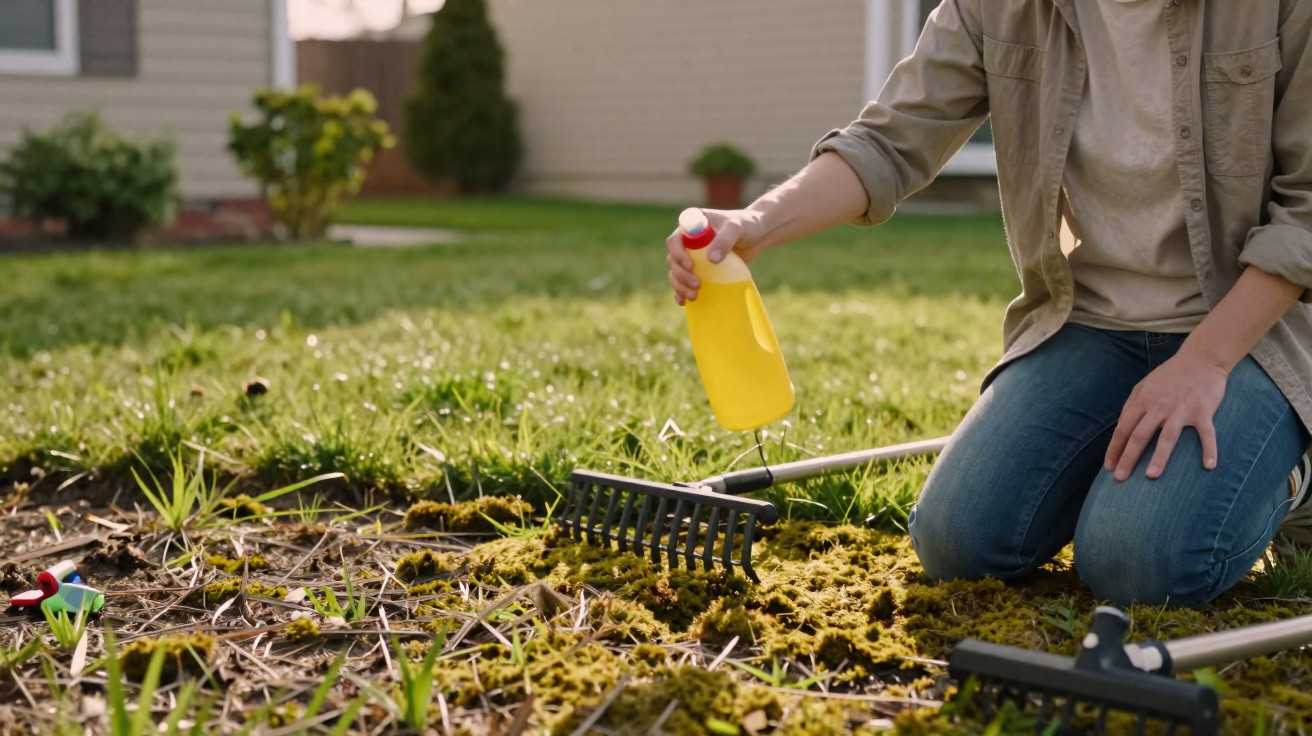
Many people act on impulse - and that’s exactly when they make the biggest mistake.
After the first mild days, lots of garden owners take a hard look at their lawn - and instead of lush green they find dark, felted mats. A “quick fix” does the rounds in forums and videos: add a bit of washing-up liquid to the watering can, pour it over, job done. It sounds clever, but it’s a classic boomerang for any lawn.
Moss after winter: why the lawn suddenly tips
It’s the same pattern every year. As soon as winter is over, moss cushions appear in corners of the garden that barely registered before. The worst-hit spots are typically shaded areas, damp patches and compacted ground, such as:
- under dense trees
- along hedges
- on the north side of houses
- where people constantly walk
Months of cold, wet weather and low light leave the lawn weakened. The grasses grow more slowly, thin out and develop bare patches. Moss takes advantage of those gaps ruthlessly. It doesn’t need deep roots, copes with low nutrient levels and thrives in damp, shady conditions.
Soil scientists and garden experts have been pointing out for years: heavy moss growth isn’t really a “moss problem” - it’s a site and soil problem. Common triggers include:
- compacted soil, for example from frequent foot traffic
- nutrient deficiency because fertiliser is never applied, or applied incorrectly
- persistently wet ground, for instance due to poor drainage
- long-term shade and mowing the lawn too short
"Where moss feels at home, the lawn has already lost. If you only fight the moss, you’re treating the symptom - not the cause."
Why washing-up liquid on the lawn is a risky dead end
Anyone who searches for “moss lawn home remedy” will quickly come across recipes involving washing-up liquid. The logic is that a surfactant-based soapy mix will “burn” the moss without the cost of specialist products. In reality, the bill is paid by the soil - and ultimately by your lawn.
Washing-up liquid is formulated to shift grease and food residue in the kitchen, not to be used on living garden soils. The cleaning agents can interfere with structures that are essential beneath the turf. They may:
- damage or dry out fine grass roots
- attack the protective waxy layer on grass blades
- worsen soil structure
- disrupt micro-organisms and soil life
That’s why professionals in landscaping and environmental advice regularly warn against using household chemicals in the garden. Even if the moss turns brown in the short term, you’re left with a weakened lawn - perfectly primed for the next wave of moss.
"If you pour washing-up liquid on the lawn, you might solve a small problem - and create a bigger one."
The simple core approach: mow, rake, and let air reach the soil
The good news is you don’t need anything toxic or aggressive. What a lawn really needs in spring is a mix of mechanical work and proper care - effort, not a magic trick.
Step 1: Mow correctly
At the start of the season, it’s fine to cut the lawn a little shorter than you would in midsummer. That slightly weakens the moss layer and makes it easier to reach. Still, don’t scalp it down to nothing: 3 to 4 centimetres is a solid guideline, depending on the grass type.
Step 2: Rake thoroughly
After mowing, it’s time for a rake. With a sturdy leaf rake or lawn rake, you can remove a surprising amount of moss from the surface. Key points:
- rake in different directions, not just one
- remove moss and thatch completely - don’t leave it behind
- on larger lawns, work in sections so you don’t stress the grass too much
If you’re willing to risk a bit of muscle ache, you’ll often be rewarded: beneath the moss layer there can be surprisingly healthy grasses that finally get air and light again.
Step 3: Scarify if the problem is persistent
If moss and thatch have been dominating for a long time, a rake on its own won’t do. That’s when a scarifier helps, scratching the surface a few millimetres deep. This “claw work”:
- removes matted material
- opens the soil to air and water
- stimulates the grasses to grow stronger roots
After scarifying, the lawn can look alarmingly bad. Many areas appear patchy, brown and scratched. That’s the point where hobby gardeners panic - and professionals stay calm. In most cases, grass seed and remaining roots make very good use of the newly created space over the following weeks.
"A lawn that looks briefly 'catastrophic' after scarifying often has the best chance of becoming a dense, resilient turf."
Don’t skip the follow-up: overseed and feed
Where scarifying has opened up gaps, they should be filled with grass seed. Ideally, choose a mix suited to the site - there are dedicated seed blends for shady areas that cope better with reduced light.
A practical way to tackle it:
- remove all scarifying debris and moss completely
- spread suitable grass seed evenly
- lightly rake in or roll
- keep the area consistently moist during the first few weeks
At the same time, the soil needs nutrients. An organic or organo-mineral lawn fertiliser in spring helps the grasses outcompete moss. A dense, vigorous lawn simply leaves less room for new moss cushions to establish.
What if moss has already taken over everything?
Some lawns are largely made up of moss. In that situation, many people reach for chemical treatments designed to damage moss directly, for example products based on iron salts. These can work quickly: the moss turns black and can then be raked out.
Even so, soil experts advise caution. One-sided use can alter the pH level and, over time, upset the balance of soil life. If you do use such products, you should:
- follow the dosage precisely
- avoid blanket applications every single year
- always combine treatment with soil improvement and lawn renovation
Often, it makes more sense to test natural measures in parallel - improving drainage, applying sand to heavy soils, and consistent aeration using aerating tools or even a simple hand fork.
Long-term prevention: how moss doesn’t stand a chance
If you find yourself fighting moss every spring, you’re usually turning the wrong dial. The aim should be to change conditions so grass can win. That includes, among other things:
- regular fertilising (2–3 times per year, depending on expectations)
- an appropriate mowing height - in summer, closer to 4–5 centimetres
- avoiding heavy foot traffic on wet ground where possible
- removing old leaves in autumn so the lawn doesn’t rot under a damp layer
If you have very dark corners in the garden, it’s also worth asking: does grass really need to grow here? In deep shade, ground-covering perennials or shade-tolerant plants are often lower maintenance and look better than a lawn that’s constantly struggling.
What terms like scarifying and aerating actually mean
Many guides casually use terms that can sound like workshop jargon to occasional gardeners. But two key techniques genuinely help a lawn:
- Scarifying: cutting slits into the turf with blades to remove thatch and moss.
- Aerating: ventilating the soil by making holes, for example with spikes or hollow tines that remove small plugs of soil.
Scarifying works mainly at the surface, while aerating addresses deeper layers. On heavy, clay-rich soils in particular, regular aerating combined with sand can reduce waterlogging and remove the habitat moss relies on.
A practical example also helps put it into context: in heavily used routes - such as the path from the patio to the garage - moss is almost inevitable if the ground compacts with every pass. A simple stepping stone or a narrow walkway can achieve more than even the most elaborate moss treatment.
Anyone who treats their lawn as a long-term project will do better than someone who chases the latest “secret trick” from social media each year. Mechanical care, thoughtful fertilising and a site that genuinely suits a lawn will beat any washing-up liquid trick - however tempting it looks at first glance.





Comments
No comments yet. Be the first to comment!
Leave a Comment