
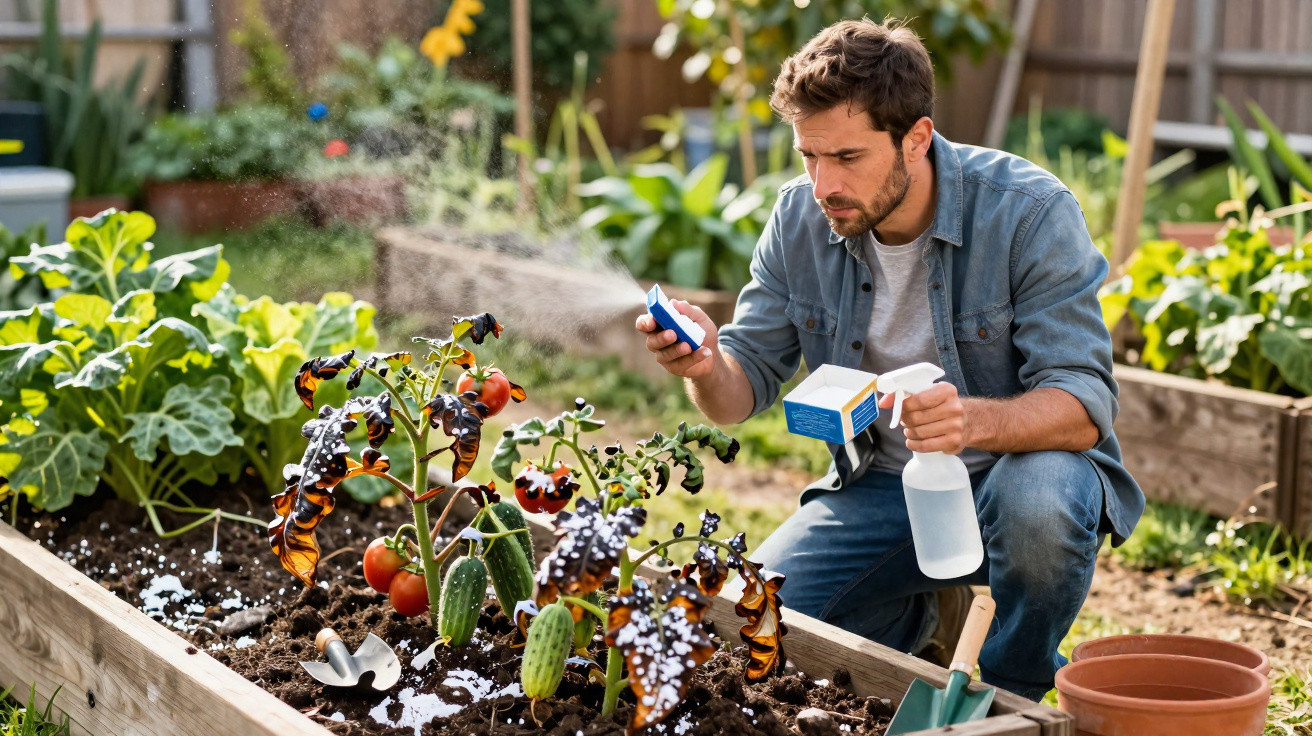
Many amateur gardeners now reach for a white tub of powder instead of a bottle of chemicals. What sounds like a clever shortcut can, however, turn into a quiet plant killer - particularly if you use bicarbonate of soda in the garden the same way you would when cleaning the kitchen.
How a household staple became a supposed garden miracle
Bicarbonate of soda sits in almost every kitchen: for baking, cleaning, and neutralising smells. In guides and across social media, it’s increasingly promoted as a one-size-fits-all solution outdoors too - said to help with fungal diseases, weeds, pests and stale odours in the compost.
The pitch is tempting: a “natural” powder that’s cheap, easy to find and harmless to people - so surely ideal for a “toxin-free” veg bed? That’s exactly where many people get caught out. Something that feels safe around the house isn’t automatically safe for plants.
“What works wonders on tiles and grout can quite literally scorch delicate leaves.”
It’s a blunt comparison, but an accurate one: you wouldn’t spray your houseplants with oven cleaner just because it makes a baking tray shine. With bicarbonate of soda, that boundary often gets blurred because it seems so gentle and it’s edible. Plants, though, respond very differently from kitchen tiles or a T-shirt.
Trying to tackle powdery mildew “naturally” - and the crash
The problem that set this off was a classic garden nuisance: powdery mildew, that white, floury coating on leaves of courgettes, cucumbers, roses or grapevines. For years, forums have circulated a “organic recipe” based on bicarbonate of soda that countless gardeners mix up at home.
The formula goes like this: 1 litre of water, plus 1 teaspoon of bicarbonate of soda, 1 teaspoon of liquid plant soap or black soap cleaner, and 1 tablespoon of vegetable oil. It sounds like a gentle, homemade spray treatment - and versions of it appear in countless gardening blogs.
That exact mix was applied generously to tomatoes, courgettes and roses. The leaves were thoroughly wetted on both the top and underside, on a bright, mild day. For the first few days, it even looked encouraging: the white coating retreated and the patches shrank.
Then everything changed. Brown, dried-out areas appeared along the leaf edges and slowly spread. Leaves turned stiff and brittle; some began to curl. The plants looked limp, as if they hadn’t been watered for weeks - even though the soil was damp. On the roses, flower buds blackened and dropped off. The “healing” mixture had effectively turned into a herbicide.
What bicarbonate of soda does to plants, chemically
Chemically speaking, bicarbonate of soda is sodium hydrogen carbonate. The key issue is the sodium component. In larger amounts, sodium causes problems for many cultivated plants - both on the foliage and in the soil.
Salt stress on the leaf
If the concentration is too high, the solution can резко increase salt load on the leaf surface. The leaf’s natural protective layer - the waxy cuticle - gets damaged, cells lose water, and scorch marks follow.
- brown, sharply defined patches
- dry, crackly areas of leaf tissue
- dried, crispy leaf margins
- twisted or rolled leaves
At the same time, the soap and oil in the mixture can further irritate the leaf surface. Together, the combination can behave like an overly harsh cleaning agent - except it’s acting on living tissue.
Hidden damage in the soil
Some of the spray always drips down into the ground. The sodium stays there and, with each application, builds up. This creates what’s known as salt stress or osmotic stress.
“The soil feels moist, but the plant ‘dies of thirst’ - the water is effectively held back by the salt.”
Roots struggle to take up water even when there’s plenty of moisture available. The plant appears wilted, grows more slowly and yields less. At the same time, the pH shifts: the soil becomes more alkaline. That can push nutrients such as iron, magnesium or phosphorus into a kind of “blocked zone” - present in the soil, but harder for the plant to access.
A typical sign is yellowing leaves with green veins, known as chlorosis. Soil microorganisms - vital for healthy soil life and nutrient availability - can also react sensitively to raised salt levels and higher pH.
Is there a safe way to use bicarbonate of soda in the garden?
Bicarbonate of soda doesn’t have to be banned outright in the garden. It’s the dose that matters. Against powdery mildew, a very heavily diluted solution can sometimes help for a while, because the fungus struggles with an alkaline environment on the leaf surface. Three things are crucial: concentration, how often you apply it, and how precisely you target it.
Recommended minimum dosage
If you still want to try it, stick to clearly lower amounts than many “recipe videos” suggest:
- 1 litre of water, ideally rainwater
- 1–2 grams of bicarbonate of soda (at most half of a level teaspoon tip)
- only a few drops of mild soap as a wetting agent
Mist the mix finely and spray only the affected leaves, early in the morning or in the evening - not in strong sun and not during high heat. Leave at least 7 to 10 days between applications, preferably longer. If spots or scorch marks appear after the first treatment, stop immediately.
Gentler alternatives for powdery mildew and similar problems
Many gardeners are now switching to milder approaches. Fungal diseases can often be reduced, at least to some extent, through prevention and gentler household remedies.
Milk, whey and plant strengthening
One widely used option is a mix of milk or whey with water, at roughly a 1:9 ratio. It’s sprayed onto at-risk leaves or those with early signs of infection. The lactic acid bacteria and other components in milk can help stabilise the leaf surface and make life harder for fungi, without burning the plant.
On top of that, there are classic plant tonics many people already know:
- Nettle feed: provides nitrogen and trace elements, encouraging growth
- Horsetail decoction: rich in silica, strengthening cell walls and natural defences
- Compost tea: supports soil life and helps stabilise the root system
These extracts don’t act like an “instant hammer”; they work more like a vaccination, making plants tougher overall so fungi and pests have fewer weak points to exploit.
Good cultivation practices instead of powder magic
If powdery mildew shows up in the same places every year, it’s worth focusing on the conditions first. Many issues come from planting too densely and from leaves staying wet for long periods.
Everyday adjustments that make a difference:
- don’t plant too close together so air can circulate
- water close to the soil in the morning, rather than spraying the foliage
- after severe infection, remove plant debris and don’t add it to the compost
- cover the soil with organic mulch to reduce drought stress
- where fungal pressure is high, choose robust, resistant varieties more often
If you get these basics right, drastic measures are usually unnecessary. A light powdery mildew coating doesn’t automatically mean total crop failure - in many cases it’s more of a cosmetic issue than a serious hit to yields.
Why “natural” is often misunderstood in the garden
Wanting to garden without synthetic products is understandable. But there’s a big gap between “less chemistry” and “anything that sounds like a home remedy is harmless”. Bicarbonate of soda, vinegar, salt, methylated spirits - all are normal in the kitchen, yet can cause major damage in a bed or border.
“Many amateur gardeners simply swap the label - from a chemical product to a kitchen tub - but don’t change how they handle it.”
Household substances almost never have approval as plant protection products. That means their effects on plants, soils, beneficial insects and groundwater have rarely been systematically tested in a garden setting. People end up experimenting with mixes and doses - and often only notice the mistake once leaves drop or beds start to decline.
There’s also the long game: salt build-up from repeated use doesn’t disappear overnight. If you spray concentrated bicarbonate solutions several times a year, you can create a persistent soil issue that later takes heavy watering, soil improvement and a lot of patience to reduce.
What amateur gardeners can take away from the bicarbonate of soda fiasco
Every garden is its own small ecosystem. The simpler a fix sounds - “just this one powder and all problems vanish” - the more it pays to look closely. In rare cases, used with very careful, targeted dosing, bicarbonate of soda can help, but it remains a salt with side effects.
Anyone aiming for healthy beds over the long term will do better with strong fundamentals: humus-rich soil, appropriate varieties, companion planting, crop rotation, adequate spacing and a watchful eye for early stress signals. Home remedies can play a part - just not as an untouchable miracle weapon from the kitchen cupboard.




Comments
No comments yet. Be the first to comment!
Leave a Comment