
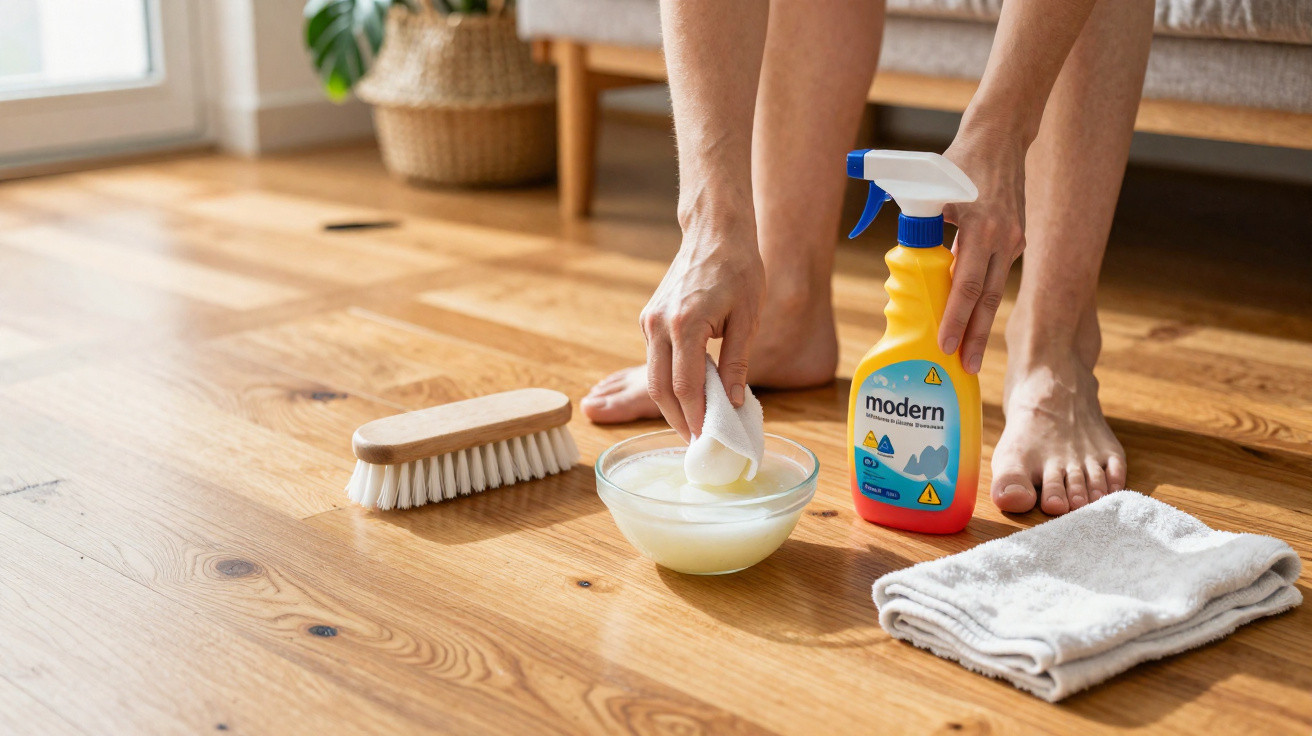
The scent of “fresh cleanliness” was still hanging in the room when the first streaks appeared. For a few minutes the living-room parquet shone like a showroom floor; then, almost abruptly, it looked dull, patchy - tired, even. The bottle of super-shine cleaner was still sat right in the middle of the room, promising “hygienic deep action” and an “active protective formula”. On the label it sounds like a spa treatment for your floor; in real life it can feel more like a crash diet for wood.
If you watch closely for long enough, you start to see the pattern: modern chemistry cleans aggressively - and little by little it strips the material of its character.
At some point you find yourself thinking, quietly: How much shine will my wood cost me in the end?
Why modern cleaners often make wood age faster
Anyone who has ever stepped into an old farmhouse knows the feeling. The floorboards creak, they carry scratches and the marks of decades - yet they still seem warm, lived-in, almost comforting. Many of those floors were never “treated” with special products: more like soapy water, the occasional wax, and that was it. No disinfectant claims, no “triple active complex”.
Now compare that with today’s interior magazines: mirror-like surfaces, zero tolerance for marks, everything meant to look as though it has just rolled out of a showroom. That’s exactly where the trouble starts.
A parquet fitter I know once told me about a client with a high-quality, oiled oak floor that was only eight years old. Visually, it looked like worn-out cheap laminate from a bargain shop. The problem wasn’t the timber - it was the cleaning cupboard. Three different multipurpose cleaners, an “antibacterial floor cleaner”, and now and then a degreaser intended for kitchen tiles - over the years, all of it ended up on the parquet as well.
When a specialist inspected it, the verdict was clear: the harsh chemicals had attacked the oiled surface, opened up micro-cracks, and made the wood practically porous to moisture and dirt. It wasn’t everyday use that had aged the floor too soon - it was the obsession with cleaning.
Wood isn’t a dead material, and it isn’t plastic where it’s simply “clean” or “dirty”. It absorbs moisture and releases it again; it reacts to temperature, to pH levels, to surfactants, to solvents. Many modern cleaners are engineered to break down grease, proteins, and bacteria quickly - exactly what you want in kitchens and bathrooms. The catch is that wood surfaces, especially oiled and waxed ones, depend on a fine balance: a protective layer paired with an open-pored structure. Strong products soften that protective layer, draw fats and resins out of the wood, and leave it more vulnerable.
And let’s be honest: hardly anyone reads the technical information panel on the back of the bottle every single time.
How to clean wood properly without “caring” it to death
The unglamorous approach that actually works starts with something simple: far less product, far more water - and the right cleaner for the right finish. Oiled floors need dedicated wood floor soaps or cleaners that contain re-oiling (re-fatting) components. They don’t just lift dirt; with each use they also rebuild a small amount of protection.
A rule an old joiner once gave me sounds almost too basic: “After mopping, wood shouldn’t look wet - it should just look calm.” A well-wrung cloth, lukewarm water, a mild product: on most normal days, that’s all a wooden floor asks of you.
A lot of damage isn’t caused by one disastrous clean, but by a consistently wrong routine. If you mop weekly with strongly alkaline multipurpose cleaners, apply cross-linking acrylic layers, or scrub with microfibre and pressure, you’re working against the material. We all know the moment, in a rush, when we “just use whatever is there”.
Bathrooms and kitchens are where it often starts: the same cleaner gets used for tiles, for wooden cupboard fronts, and sometimes even for solid-wood worktops. It’s convenient in the short term; over time you end up with dull, blotchy areas, swollen edges, and hairline cracks in the lacquer. The emotional moment only arrives later, when someone says, “The floor is basically finished - it needs to come out” - years earlier than it ever should have.
“Most wooden floors don’t die from wear; they die from well-meant care,” a restorer once remarked dryly while sanding an old oak floor.
- Don’t use multipurpose cleaners on oiled or waxed floors - they usually strip too much grease.
- Only dampen microfibre cloths lightly and avoid scrubbing - especially not against the grain.
- For lacquered parquet, stick to cleaners explicitly labelled as “suitable for parquet”.
- Plan at least one maintenance treatment with oil or a care product each year, not just cleaning.
- Treat stains locally instead of “disinfecting” the entire floor every time.
What changes when you treat wood as a long-term partner
Once you truly accept that a good wooden floor can last for generations, you clean differently. It stops being about turning every visible mark into something Instagram-ready on a Saturday morning. Instead, it becomes about maintaining a relationship with a material that allows scratches, dents, and patina as part of its story.
Modern cleaners often promise to erase that story - to reset everything back to “as new”. Wood, quietly but firmly, refuses to work that way.
Many tradespeople say they’re struck, in older houses, by floors whose life is visible in their marks rather than their level of shine. Those floors made it through decades with very little chemistry and a lot of everyday sense: keep dirt at the door, only damp-mop when it’s genuinely needed, and re-oil now and then. No cleaning drama, no over-care.
If you choose products that fit the wood and limit today’s “power cleaners”, you’re making a surprisingly unfashionable decision: slower, longer-lasting, calmer housekeeping.
Maybe that’s the real counterpoint to the speed of modern life: wood that doesn’t gleam perfectly, but stays for decades. A floor that isn’t thrown away after a few years, but refurbished. A tabletop that carries the traces of children’s birthdays, glasses of red wine, and laptop edges - without turning dull and grey.
And if next time you’re in the supermarket or chemist you pause for a second and put that bottle back on the shelf, you’re not only saying no to an over-perfumed blast of “freshness”. You’re choosing a quieter, more honest way to live with materials - and rejecting the illusion that more chemistry automatically means more cleanliness.
| Key message | Detail | Benefit for the reader |
|---|---|---|
| Modern “power cleaning” weakens wood surfaces | Harsh cleaners dissolve oil and wax layers, open the pores, and speed up wear | Understands why floors can look dull and blotchy despite light use |
| Gentle, wood-appropriate products extend lifespan | Wood floor soaps and explicitly suitable cleaners clean and care at the same time | Can choose products that protect the value of parquet and furniture |
| Less chemistry, better routine | Damp-mop, avoid frequent deep cleans, re-oil regularly instead of over-cleaning | Gains a simple, everyday strategy for good-looking wood for many years |
FAQ:
- Question 1: How can I tell whether my current cleaner is unsuitable for wood?
If the label includes phrases like “strong degreasing”, “limescale remover”, “hygiene cleaner”, or “antibacterial”, and it doesn’t mention wood, parquet, or oiled finishes, be cautious.- Question 2: How often should I mop a wooden floor?
In day-to-day life, once a week with a well-wrung cloth is usually enough - with light use, often less. More important is regular sweeping or vacuuming so grit doesn’t act like sandpaper.- Question 3: Can I use microfibre on wood?
Yes, as long as the cloth is soft, only slightly damp, and you don’t apply pressure or scrub - aggressive microfibre can scratch delicate surfaces.- Question 4: What should I do about sticky or dull patches caused by the wrong cleaner?
Often a deep clean with a specialist parquet cleaner and plenty of clean water helps. If in doubt, a professional should check whether light sanding and re-oiling is needed.- Question 5: Do I really need specialist products, or is mild soap enough?
For oiled floors, wood floor soaps are ideal. For lacquered finishes, mild, pH-neutral cleaners can work - specialist products aren’t mandatory, but they’re often better matched.

Comments
No comments yet. Be the first to comment!
Leave a Comment