
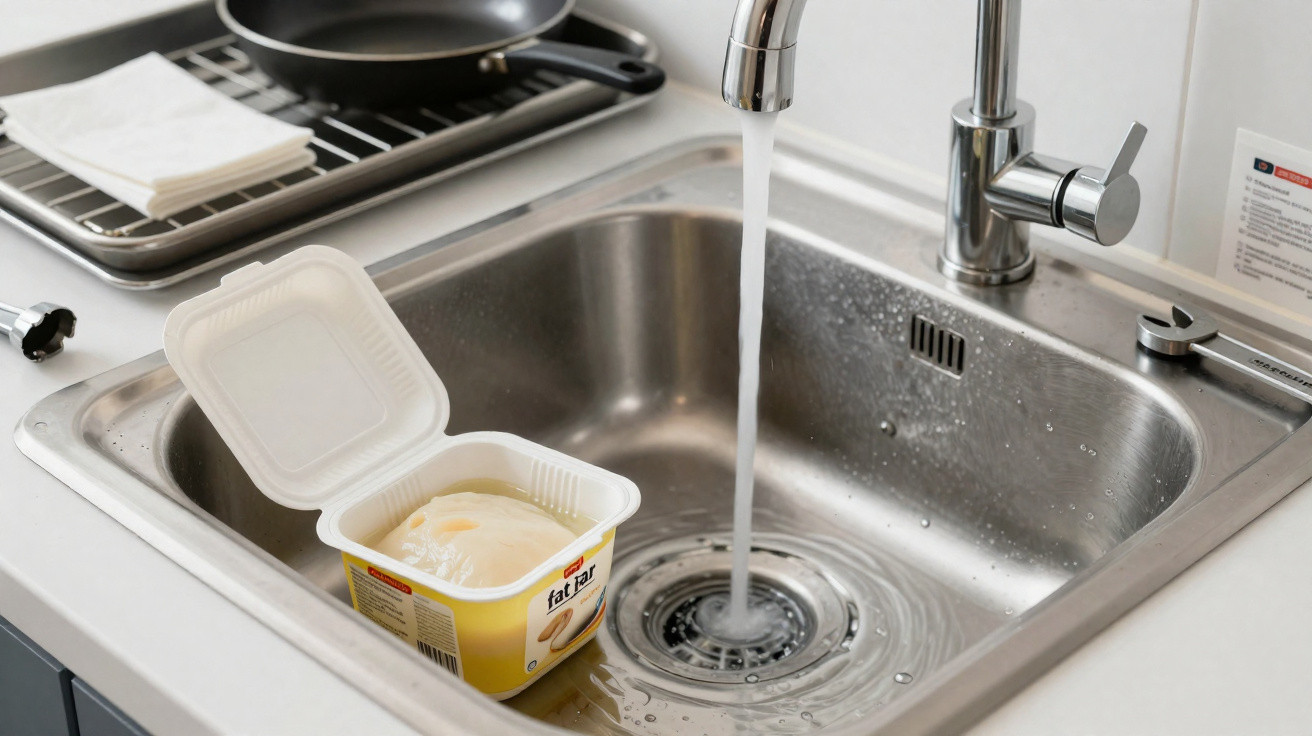
The plughole gave a noise like a bored teenager - part sigh, part objection - and a narrow, grey strand of water just lingered there, unwilling to disappear. I reacted the way most of us do: put the kettle on, prodded at the opening with the handle of a wooden spoon, tipped in a heroic squeeze of washing-up liquid, and convinced myself it would sort itself out. By teatime the kitchen carried a faint whiff of yesterday’s chips plus something harder to name - damp, metallic, a bit like pennies. The next day a white van pulled up with a sticker saying “No.1 in Unblocking,” and out stepped a man with an easy grin who would permanently change how I treat my sink. He offered one warning that has stuck in my head ever since.
The call-out that changed how I look at my sink
He was called Dean, and he had the steadiness of someone who has witnessed everything: extensions under water, wedding rings lost to traps, even ferrets pressed into service as drain cameras back in the day. He flicked on a head torch and, with a smooth, practised twist, removed the U-bend like a magician revealing a hidden compartment. What slid out seemed almost innocent at first - soft, pale, a touch waxy. Then the smell arrived: warm, meaty, persistent. He gave it a nudge with a gloved thumb and it trembled, like a jelly that had set where it absolutely shouldn’t.
“That,” he said, “is your Sunday roast.” Without judgement, he reeled off the usual suspects: the roasting tin you rinsed while it was still hot, the bacon fat you let run like lava, the pan of chip oil you believed boiling water would chase away. He didn’t need to pull a face. The proof was right there on the worktop, slowly gathering itself into a small puck of regret.
I tried, “But I pour hot water. Loads of washing-up liquid. Doesn’t that… help?” He gave me the kind of smile you reserve for a child who’s sure the moon is following the car. The reality was straightforward, and a bit uncomfortable: grease isn’t something you simply scrub off like a mark; it behaves like a material with its own temperament.
The hidden plate in the pipe
Dean said something I still can’t unhear. Hot water doesn’t melt the problem, it only escorts it deeper. Up at the sink, the grease is warm and compliant. Further down, where the pipe is cold, it stiffens and grips the sides like candle wax clinging to a glass jar. Add fluff from the washing machine drain, a scattering of coffee grounds, a disloyal strand of spaghetti, and you’ve started building a barrier. A plate in the pipe, he called it.
We scraped the gunk into an old takeaway tub; it landed with a soft thwack against the plastic. I felt both queasy and oddly embarrassed, the way you do when someone finds your bad habit in solid form. Dean rinsed the U-bend as though it were a patient - careful and gentle, the tap only half on. “No big drama,” he said. “Just don’t do it again.” It sounded easy. It wasn’t.
The quiet science in your Sunday roast
Fats and oils act like people at a party: warm and relaxed indoors, then cold and stubborn the moment they step outside. Butter, lard, dripping, the glossy runoff from a roasting tin - all of it pours when hot and sets when it cools. Your pipework is that cold night air. Even if the sink is steaming, the stack below is a chilly run of metal or plastic threaded through the bones of the house.
Washing-up liquid is hopeful. For a little while it grabs the fat and breaks it into tiny droplets - a short-lived truce in a cloudy bowl of water. But once that soap is diluted further along and the water cools, the truce collapses. Those droplets find one another again like old mates and turn back into clumps. It doesn’t take much for them to adhere to rough pipe surfaces, tiny joints, and the faint, slippery film of bacteria that lives down there.
The layout of your plumbing doesn’t do you any favours either. Bends slow everything down and create little ledges where cooled fat can settle. Vertical stacks lose heat quickly; horizontal sections are more likely to collect debris. In older houses, pipes were often coaxed into place rather than cut and fitted to the millimetre. If you’ve ever heard that wet gulp from a plughole, that’s the sound of space shrinking.
The fatberg lurking under your street
What you rinse away in your sink doesn’t politely stay in your sink. Any grease that slips beyond the U-bend doesn’t vanish; it recruits. In the sewers beneath UK cities, there are grotesque monuments to this - fatbergs the size of buses, even small whales, built from cooking fat, wet wipes, nappies, dental floss, and the everyday chemistry of a million hurried households. London has had them; Birmingham has too. Crews in waders hack at them with tools that look medieval. It’s foul work, it costs a fortune, and it never really finishes.
There’s something museum-like about their hardness. They dry into a rock-ish mass - porous, rancid - and they don’t always shift without a fight. Most of us never see one; we just notice a road partly closed and a sign about works underneath. The bill is folded into budgets and water charges - an invisible convenience tax. The Titanic in our sewers turns out not to be a myth; it’s made of what we call “liquid” when it’s warm, and then promptly forget.
Myths, shortcuts and that one dangerous habit
Every household has its little hack. Boiling water after a fry-up. A dramatic swirl of washing-up liquid like you’re mixing a cocktail. A quick splash of vinegar because the internet swore by it. We’re not stupid - we’re busy. These rituals feel like doing the grown-up thing, right up until, months later, there’s a gurgle, then a stink, then a charge.
The soap trick that doesn’t stick
Soap can make fat play nicely and pretend it’s water - briefly. That’s brilliant for a sink full of plates. It’s useless in a pipe running through a cold cavity wall. The grease droplets don’t disappear; they wait. They drift until they reach the cool, slow spot at a bend, or they latch on to a hair, a bit of eggshell, a bloom of coffee grounds - and then they stop moving. Grease doesn’t go away; it just moves until it sticks.
Boiling water and the feel-good flush
The kettle method feels effective because it looks like action. You get steam, a cleared bowl, and a tiny sense of victory. The heat loosens the fat and shunts it onwards beyond your sightline. Then the rules of physics reassert themselves. The pipework cools, the fat sets again - only now it’s further away, harder to reach, and surrounded by friends.
The coffee grounds “deodoriser”
There’s a belief that coffee grounds freshen drains. They smell pleasant for about two minutes and then behave like gravel trapped in fat. Grounds are rough and clingy, and they give grease more to grab on to. Put them in the bin, or add them to the garden if your soil likes the acidity. Don’t donate them to your U-bend.
What plumbers wish you did instead
Dean’s guidance wasn’t a sermon - more a set of small changes that are dull but logical. Let the fat cool in the pan, then scrape it into a jar or an old yoghurt pot. Before washing, wipe greasy trays with kitchen roll. Keep a “fat jar” by the cooker and treat it like an ashtray for oil. When it’s full, put the lid on and drop it in the rubbish, unless your council offers an oil recycling point. Plenty do, usually at household waste sites, and they’re quite happy turning chip oil into biodiesel.
He told me to see strainers and paper as allies. A steel strainer in the sink catches the worst of the nonsense. A folded sheet of kitchen paper lifts the invisible slick from a pan that looks clean but isn’t. It isn’t glamorous and it won’t go viral, but it does save you the drama later. And yes - nobody manages this perfectly every day. Do it most days and your pipes will hardly know you exist.
If you use a deep fryer or you’re serious about a Sunday roast, treat oil as its own task. Decant it, let it cool, strain it, store it, reuse it once or twice if it’s still decent, then send it off with a bit of dignity. Some neighbourhoods in the UK run cooking oil collection schemes, so it’s worth a quick look on the council website. If you’ve got a septic tank, be stricter still: tanks don’t like fats - they starve the bacteria you rely on and block the outlet like a cork.
The rule that saves pipes and friendships
In house-shares, the kitchen turns into a tiny parliament: who left the spoon in the sink, who owns the haunted Tupperware, who keeps dodging the rota. The row nobody wants is the one about smells, because smells don’t compromise. Sending grease down the drain is a direct route to that argument. A stinking sink turns the whole room into a weapon.
The first time you walk in from outside and catch that sour, chippy note, you know you’ve got a problem no candle will solve. It’s the smell of fat with nowhere left to go. If you rent, it can end with your deposit on life support and a landlord suddenly very reachable. One simple house rule - no oil down the sink, ever - beats any rota and strips the drama back to almost nothing. Wipe, jar, bin. Done.
The quiet costs you don’t see
You feel the plumber’s fee directly; that’s the bit that lands on your doormat. Everything else is spread out: water companies spending millions each year prising fatbergs from sewers, blockages causing overflows when storms arrive, crews working ridiculous hours just to keep the city functioning. There’s a climate cost too. Moving and treating water uses energy, and when clogs slow the system, pumps have to work harder. This isn’t only about the smell in your kitchen.
There’s also the price of misplaced confidence. We buy products that promise magic: enzymes, foams, liquids with lightning bolts on the label. A few help in a pinch; most don’t reverse habits. If you want your plumber to smile on the doorstep instead of sigh, show them your grease jar. Show them a clean U-bend. Show them you’ve learnt to be a bit boring in the best possible way.
Other liquids that read as “harmless” but aren’t
This is mainly a tale of cooking oil and fat because they’re the repeat offenders. But sinks collect other disasters too. Paint is a nightmare downstream; even water-based types can set and peel into flakes that act like confetti. Bleach feels powerful, but it doesn’t dissolve fat - it just stings your eyes and kills the friendly bacteria in your pipes. Milk seems harmless, yet in large quantities it steals oxygen in rivers and sewers. The point is simple: a drain isn’t a magic hole. It’s a narrow road with neighbours.
We’ve all had that moment: dinner hissing away, friends laughing in the next room, and you want the tray dealt with so you can rejoin the good bit. That’s when the rule matters most. Stop. Let the fat cool. Grab the jar. You’ll be grateful the next morning when the plughole doesn’t answer back.
A tiny habit, a lighter sink
After Dean left, the kitchen felt strangely hushed. I turned on the tap and the water spun away in a cheerful spiral - the sound of a small promise being kept. On the worktop sat the takeaway tub of set grease, pale and undeniable, a badge of what I’d learnt. I labelled a jar, put it by the hob, and felt faintly ridiculous and quietly pleased. It isn’t a grand lifestyle change. It’s just a habit you can start in the time it takes the kettle to boil.
Once you’ve seen what fat looks like when it’s not pretending to be liquid, you can’t unseen it. That’s useful. It turns a vague instruction - don’t pour oil down the drain - into an image that shows up every time your hand reaches for the tap. You stop trusting the hot-water myth. You start looking after the metres of pipe beneath your feet and the river waiting beyond the last valve. A jam jar costs nothing; a call-out can cost your weekend and your savings.
Maybe this is the unglamorous version of being grown-up: the person who keeps drains boring and kitchens liveable; the person who doesn’t help build a monster under the street. There’s no prize for it - just fewer gurgles, fewer smells, and a plumber who waves rather than knocks. And on a wet Monday in Kent, or anywhere else, that feels like winning in the quiet way.



Comments
No comments yet. Be the first to comment!
Leave a Comment